
Uncover History’s Secrets with Daily Updates!
Daily News Entertainment
  • Home
  • History
  • Biographies
  • Eras
  • Regions
  • Timeline
No Result
View All Result
History Ours
  • Home
  • History
  • Biographies
  • Eras
  • Regions
  • Timeline
No Result
View All Result
History Ours
No Result
View All Result
Home Timeline

Timeline: The Berlin Wall — Rise, Life, and Collapse

in Timeline
Timeline: The Berlin Wall — Rise, Life, and Collapse

Erecting the barrier, August 1961

On the night of August 13, 1961, East German forces began sealing off West Berlin with barbed wire and hastily erected concrete blocks. What started as a razor-wire cordon soon became a permanent, fortified boundary. The official aim from the German Democratic Republic (GDR) was to stop the flow of people to the West; the effect was to split neighborhoods, families, and workplaces overnight. Photographs from those first days—soldiers climbing, residents staring, a young border guard named Conrad Schumann famously leaping over barbed wire—captured the shock of a city walled in.

Life with the Wall, 1961–1980s

The Berlin Wall was not a single structure but a shifting series of barriers. Early concrete blocks were replaced in the mid-1960s by a wider, more elaborate system: a ‘death strip’ of sand, floodlights, watchtowers, and inner and outer walls. Checkpoint Charlie became the most visible flashpoint; in October 1961, tanks faced off in a tense standoff that underscored how close Berlin came to armed conflict.

Daily life adjusted in small, stubborn ways. Commuters rerouted their journeys, mail took longer, and office friendships dissolved across an invisible seam. Some people risked tunnels, false-bottomed cars, or forged papers. Others paid the ultimate price: more than a hundred people died trying to reach West Berlin, and each death added to a quiet tally of grievance and grief that spanned generations.

Despite the repression, the Wall also became a stage. Western leaders visited to show solidarity—most famously President John F. Kennedy’s 1963 trip—and artists used the concrete as a canvas for protest. Inside East Berlin, citizens lived under a surveillance state that tightened and loosened with political tides, from harsh crackdowns in the 1950s and 1960s to the cautious openings of détente and Ostpolitik in the 1970s.

The unmaking, 1989

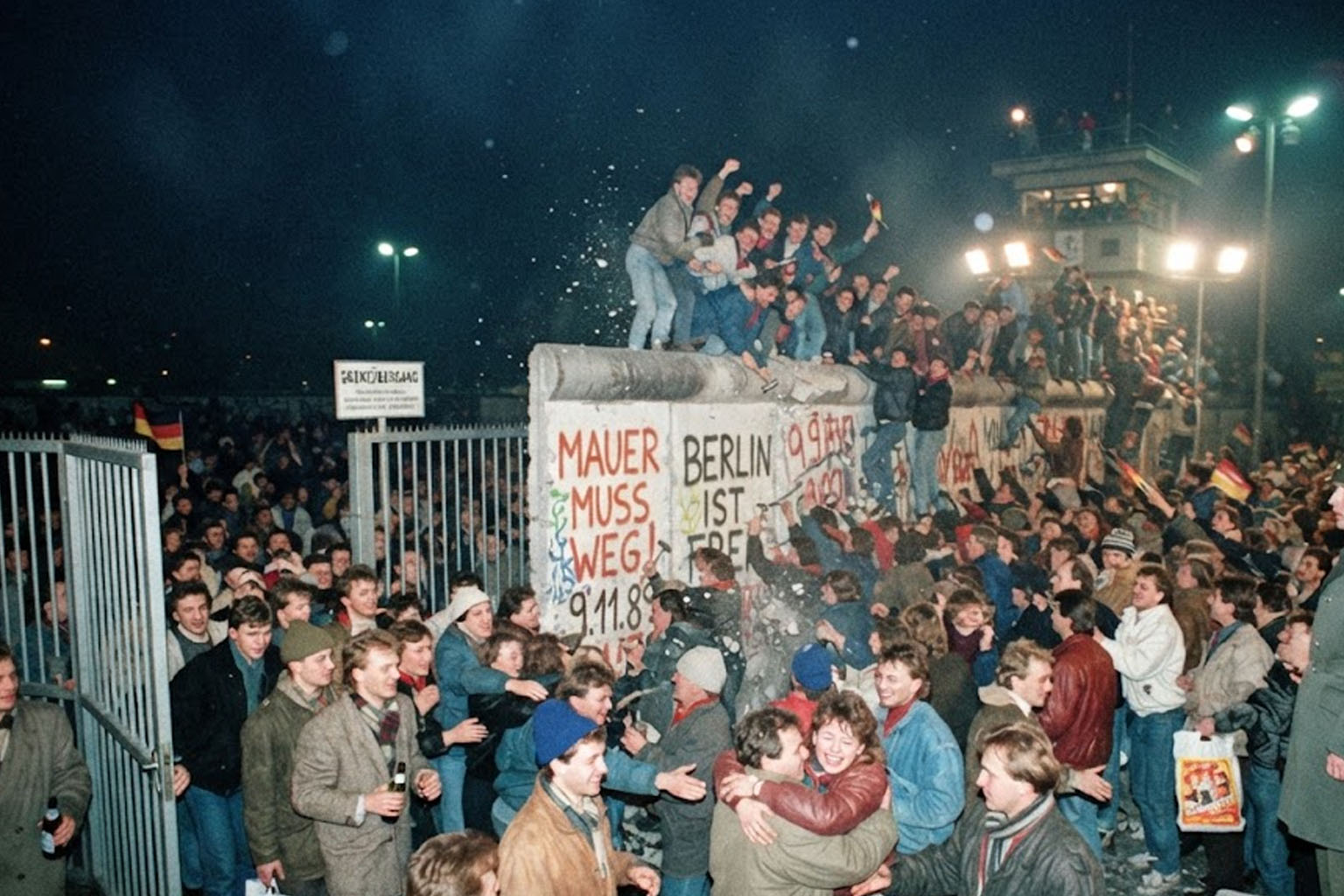
By the late 1980s economic stagnation, reform movements in other Eastern Bloc countries, and rising public demonstrations in East Germany changed the mood. Mass protests swelled in Leipzig and elsewhere through 1989. On November 9, a confused announcement by an East German official about new travel rules led thousands to gather at border crossings. Faced with crowds and mounting pressure, border guards opened the gates. People poured through in jubilant waves, chipping at concrete with hammers, embracing strangers, and carrying away pieces of the Wall as souvenirs. What had begun as a sudden closure three decades earlier ended in a sudden, exuberant unravelling.

Conclusion

The Berlin Wall’s life—erected fast, fortified slowly, brought down faster—left a visible scar on the city and an intangible one on memory. Where concrete once cut the map, parks, memorials, and painted murals now trace a timeline of division and reunion. The Wall remains an object lesson: political lines can be drawn quickly, but their social consequences last long after the concrete is gone.

Previous Post

A Short Timeline of the 1918 Influenza: Waves, Closures, and Aftermath

Related Posts

A Short Timeline of the 1918 Influenza: Waves, Closures, and Aftermath
Timeline

A Short Timeline of the 1918 Influenza: Waves, Closures, and Aftermath

September 18, 2026
How Haiti Broke Its Chains: A 1791–1804 Timeline
Timeline

How Haiti Broke Its Chains: A 1791–1804 Timeline

September 15, 2026
From Horses to Wires: How the Pony Express Met the Telegraph
Timeline

From Horses to Wires: How the Pony Express Met the Telegraph

September 15, 2026
From Swamps to Shortcut: A Timeline of the Panama Canal
Timeline

From Swamps to Shortcut: A Timeline of the Panama Canal

September 15, 2026

Search..

No Result
View All Result

Recent Articles

Timeline: The Berlin Wall — Rise, Life, and Collapse

Timeline: The Berlin Wall — Rise, Life, and Collapse

September 18, 2026
A Short Timeline of the 1918 Influenza: Waves, Closures, and Aftermath

A Short Timeline of the 1918 Influenza: Waves, Closures, and Aftermath

September 18, 2026
How the Ruhr Became Germany’s Engine and Then Its Archive

How the Ruhr Became Germany’s Engine and Then Its Archive

September 17, 2026
Salt, Walls, and Ships: How Dalmatia Became a Maritime Frontier

Salt, Walls, and Ships: How Dalmatia Became a Maritime Frontier

September 17, 2026
Edo: Japan’s Urban Revolution of Lanterns and Printshops

Edo: Japan’s Urban Revolution of Lanterns and Printshops

September 16, 2026

Subscribe Us

By clicking submit, I authorize History Ours and its affiliated companies to: (1) use, sell, and share my information for marketing purposes, including cross-context behavioral advertising, as described in our Terms of Service and Privacy Policy, (2) supplement the information that I provide with additional information lawfully obtained from other sources, like demographic data from public sources, interests inferred from web page views, or other data relevant to what might interest me, like past purchase or location data, (3) contact me or enable others to contact me by email with offers for goods and services from any category at the email address provided, and (4) retain my information while I am engaging with marketing messages that I receive and for a reasonable amount of time thereafter. I understand I can opt out at any time through an email that I receive, or by clicking here

Subscribe To Our Newsletter

By clicking submit, I authorize History Ours and its affiliated companies to: (1) use, sell, and share my information for marketing purposes, including cross-context behavioral advertising, as described in our Terms of Service and Privacy Policy, (2) supplement the information that I provide with additional information lawfully obtained from other sources, like demographic data from public sources, interests inferred from web page views, or other data relevant to what might interest me, like past purchase or location data, (3) contact me or enable others to contact me by email with offers for goods and services from any category at the email address provided, and (4) retain my information while I am engaging with marketing messages that I receive and for a reasonable amount of time thereafter. I understand I can opt out at any time through an email that I receive, or by clicking here.

© 2026 History Ours | All Rights Reserved

  • Contact Us
  • Privacy Policy
  • Terms of Service
  • Unsubscribe
  • Privacy Choices
  • Contact Us
  • Privacy Policy
  • Terms of Service
  • Unsubscribe
  • Privacy Choices

© 2026 History Ours | All Rights Reserved

No Result
View All Result
  • Home
  • History
  • Biographies
  • Eras
  • Regions
  • Timeline

© 2026 History Ours | All Rights Reserved

Skip to content
Open toolbar Accessibility Tools

Accessibility Tools

  • Increase TextIncrease Text
  • Decrease TextDecrease Text
  • GrayscaleGrayscale
  • High ContrastHigh Contrast
  • Negative ContrastNegative Contrast
  • Light BackgroundLight Background
  • Links UnderlineLinks Underline
  • Readable FontReadable Font
  • Reset Reset