

Launch and the Rush West (April 1860)
In spring 1860, three Missouri freightmen—William H. Russell, Alexander Majors, and William B. Waddell—launched the Central Overland California and Pikes Peak Express Company to stitch California to the eastern states. Their hope was simple and urgent: speed up mail between St. Joseph, Missouri, and Sacramento, California. The first runs began in April, and the route—nearly 1,900 miles across plains, deserts, and mountain passes—cut delivery time to about ten days, a remarkable improvement over stagecoach schedules.
How it Worked: Riders, Stations, and the Mochila
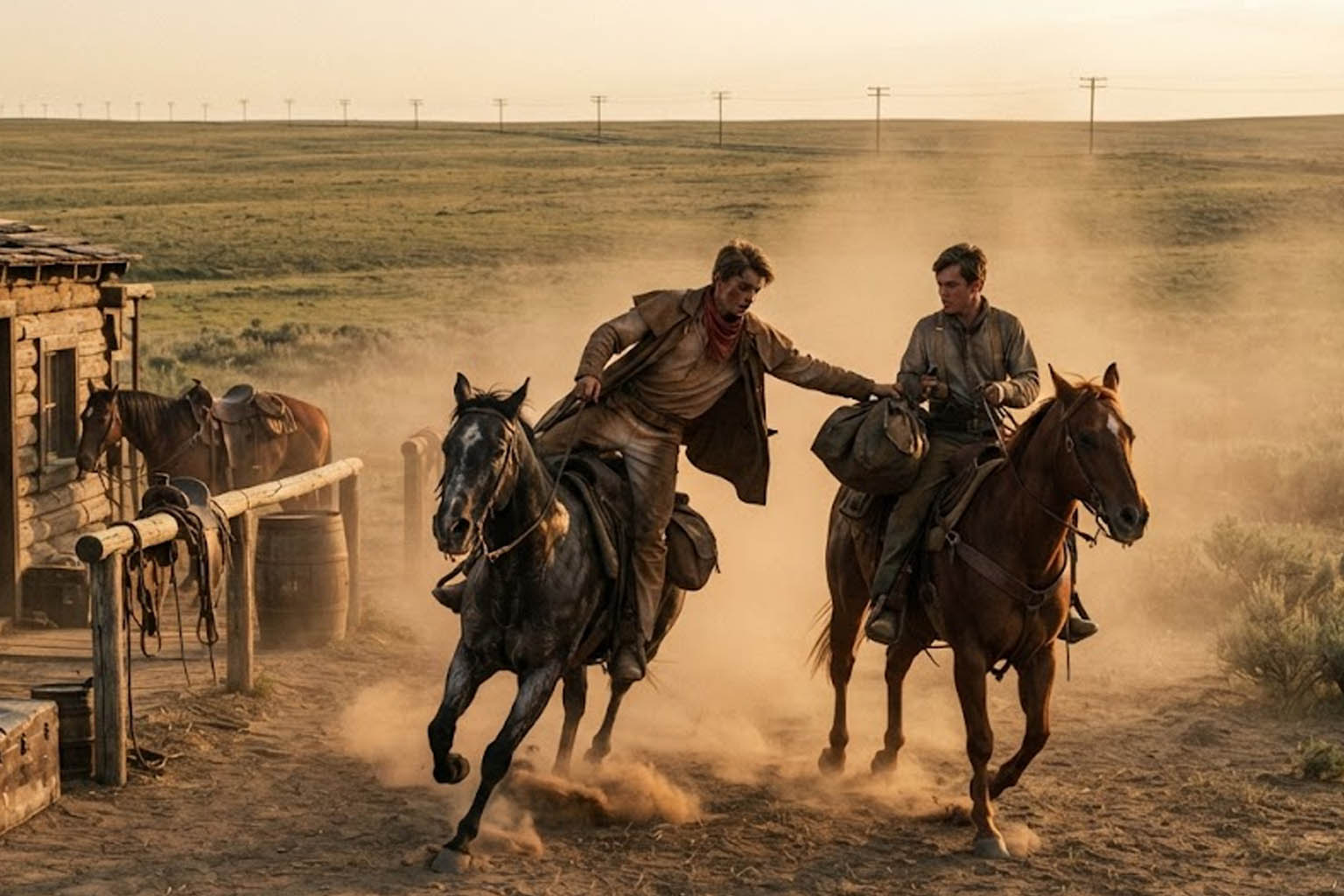
What made the Pony Express fast was discipline and repetition. Relay stations were spaced roughly 10–15 miles apart. A rider galloped into a station, handed his mail pouch—a leather mochila strapped over the saddle—to the waiting rider, swapped to a fresh horse, and rode on. Riders were light, often teenagers, chosen for endurance and speed rather than brute strength. Horses were changed frequently; the record-keeping and coordination required at hundreds of stations turned a wild landscape into a paced chain of movement.
The mail itself was expensive to send. Customers paid a premium—reports from the time cite fees as high as $5 per half-ounce—so the service mostly carried urgent letters, business papers, and government dispatches. Riders faced more than distance. They rode through blizzards in the Sierra Nevada, baking heat in the deserts, and stretches where outlaws and hostile encounters were real dangers. The venture traded safety for speed and, often, legend.
Short Reign and Sudden End (1861)
Despite its fame, the Pony Express was never a profitable enterprise. The company struggled against high operating costs, horse losses, and the limits of seasonal staffing. Its celebrity burnished quickly: tales of young riders racing through storms gave the service a heroic image, but the practical facts of commerce and technology were working against it.
The decisive blow came from wires, not holsters. The transcontinental telegraph reached across the continent in October 1861. Once telegraph lines linked east and west directly—finishing on October 24, 1861—news and official messages could travel almost instantly. Within weeks the Pony Express became redundant; by late 1861 its operations ceased. Speed had found a faster rival.
Conclusion
In just a year and a half the Pony Express moved from daring startup to historical icon. Its practical life was brief, but its image endured: a symbol of audacity, empty landscapes bridged by human concentration, and the American appetite for speed. More than a method of delivery, it became a story about a moment when courage and necessity met—and were overtaken by technology almost as fast as a rider changing horses.