
Uncover History’s Secrets with Daily Updates!
Daily News Entertainment
  • Home
  • History
  • Biographies
  • Eras
  • Regions
  • Timeline
No Result
View All Result
History Ours
  • Home
  • History
  • Biographies
  • Eras
  • Regions
  • Timeline
No Result
View All Result
History Ours
No Result
View All Result
Home Biographies

Approaching Lives: Practical Guide to Thoughtful Biography

in Biographies
Approaching Lives: Practical Guide to Thoughtful Biography

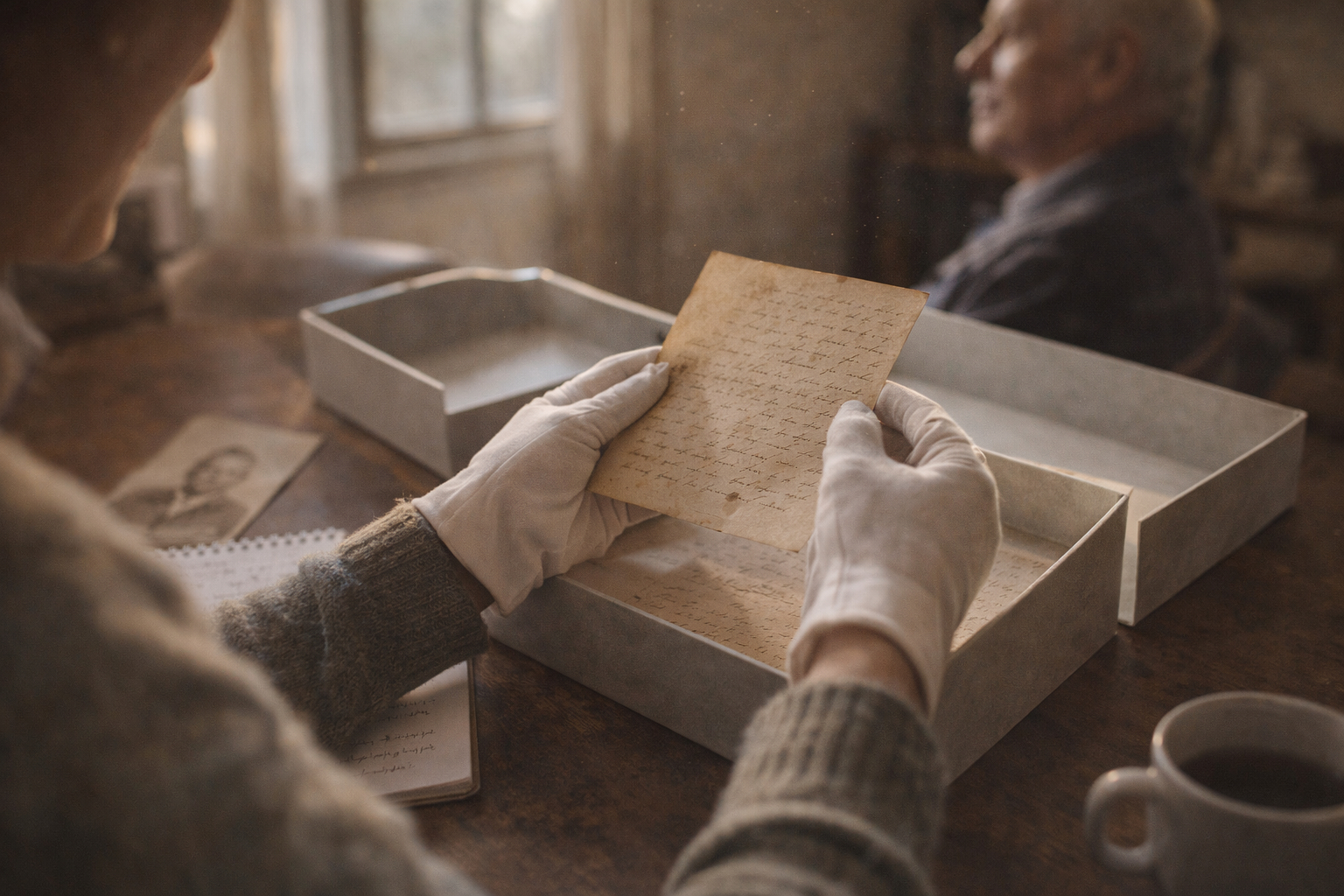
Writing a biography requires more than assembling dates; it asks us to translate fragments into a coherent, humane story. Good biographical work balances careful source work with attention to the subject’s social and cultural context. Practitioners must learn to read absences as deliberately as they read records to avoid easy assumptions. This piece outlines pragmatic approaches to researching, framing, and presenting lives with respect and clarity.

Research Foundations

Start with a wide sweep of primary and secondary materials, then narrow your focus as patterns emerge. Primary sources—letters, diaries, official records—reveal the subject’s voice and immediate concerns, while secondary literature provides interpretive frameworks and necessary context. Where records are sparse, seek related materials: community archives, newspapers, property listings, and oral histories can fill gaps. Keep meticulous notes on provenance and uncertainty so that later narrative choices remain traceable and defensible.

Establishing a reliable chronology is crucial, but remember that dates alone do not explain motives. Cross-reference contradictory accounts and treat conjecture as provisional. Aim to convert archival detail into a narrative that acknowledges limits without inventing certainty.

Balancing Narrative and Evidence

Crafting a compelling biography means weaving rigorous evidence into an engaging narrative thread that respects the subject’s complexity. Use narrative techniques—scene setting, selective detail, and thematic structuring—while anchoring each interpretive move in documented facts. Avoid forcing a modern framework onto historical actors; instead let themes arise from the sources. Transparency about interpretive leaps strengthens the reader’s trust and enriches the story.

When choosing emphasis, prefer explanations that fit multiple pieces of evidence rather than single, dramatic documents. Clear signaling of hypothesis versus fact helps maintain scholarly integrity in public-facing prose.

Ethics and Contextual Detail

Ethical biography foregrounds consent, dignity, and the potential impact of publication on descendants or communities. Consider the consequences of revealing sensitive information and favor anonymization or contextual framing when harm is possible. Contextual detail—economic structures, social norms, and local institutions—transforms isolated actions into meaningful decisions. This contextualization also guards against simplistic judgments and helps readers understand choices on the subject’s terms.

Respectful presentation includes careful use of quotations, citation of sources, and clear discussion of bias in records. Balancing empathy with critical distance preserves both narrative interest and factual reliability.

Conclusion

Thoughtful biography combines diligent research, clear narrative choices, and ethical care. It seeks to illuminate a life while admitting uncertainty and respecting those connected to it. By grounding storytelling in sources and context, biographers produce work that is both engaging and responsible.
Previous Post

Biographical Practice: Ethical Research and Narrative Techniques

Next Post

Practical Criteria for Identifying Meaningful Historical Eras

Related Posts

The Disguise That Broke Chains: Ellen and William Craft
Biographies

The Disguise That Broke Chains: Ellen and William Craft

September 15, 2026
Bass Reeves: The Marshal Who Hunted Outlaws in Indian Territory
Biographies

Bass Reeves: The Marshal Who Hunted Outlaws in Indian Territory

September 15, 2026
Ellen Craft: Passing as a Planter to Secure Freedom
Biographies

Ellen Craft: Passing as a Planter to Secure Freedom

September 15, 2026
Chien‑Shiung Wu: The Physicist Who Proved Parity’s Failure
Biographies

Chien‑Shiung Wu: The Physicist Who Proved Parity’s Failure

September 15, 2026
Next Post
Practical Criteria for Identifying Meaningful Historical Eras

Practical Criteria for Identifying Meaningful Historical Eras

Search..

No Result
View All Result

Recent Articles

The Disguise That Broke Chains: Ellen and William Craft

The Disguise That Broke Chains: Ellen and William Craft

September 15, 2026
Bass Reeves: The Marshal Who Hunted Outlaws in Indian Territory

Bass Reeves: The Marshal Who Hunted Outlaws in Indian Territory

September 15, 2026
How the Crystal Palace Turned Glass and Iron into a Modern Stage

How the Crystal Palace Turned Glass and Iron into a Modern Stage

September 15, 2026
Anne Bonny: The Pirate Who Broke Rules and Expectations

Anne Bonny: The Pirate Who Broke Rules and Expectations

September 15, 2026
How Haiti Broke Its Chains: A 1791–1804 Timeline

How Haiti Broke Its Chains: A 1791–1804 Timeline

September 15, 2026

Subscribe Us

By clicking submit, I authorize History Ours and its affiliated companies to: (1) use, sell, and share my information for marketing purposes, including cross-context behavioral advertising, as described in our Terms of Service and Privacy Policy, (2) supplement the information that I provide with additional information lawfully obtained from other sources, like demographic data from public sources, interests inferred from web page views, or other data relevant to what might interest me, like past purchase or location data, (3) contact me or enable others to contact me by email with offers for goods and services from any category at the email address provided, and (4) retain my information while I am engaging with marketing messages that I receive and for a reasonable amount of time thereafter. I understand I can opt out at any time through an email that I receive, or by clicking here

Subscribe To Our Newsletter

By clicking submit, I authorize History Ours and its affiliated companies to: (1) use, sell, and share my information for marketing purposes, including cross-context behavioral advertising, as described in our Terms of Service and Privacy Policy, (2) supplement the information that I provide with additional information lawfully obtained from other sources, like demographic data from public sources, interests inferred from web page views, or other data relevant to what might interest me, like past purchase or location data, (3) contact me or enable others to contact me by email with offers for goods and services from any category at the email address provided, and (4) retain my information while I am engaging with marketing messages that I receive and for a reasonable amount of time thereafter. I understand I can opt out at any time through an email that I receive, or by clicking here.

© 2026 History Ours | All Rights Reserved

  • Contact Us
  • Privacy Policy
  • Terms of Service
  • Unsubscribe
  • Privacy Choices
  • Contact Us
  • Privacy Policy
  • Terms of Service
  • Unsubscribe
  • Privacy Choices

© 2026 History Ours | All Rights Reserved

No Result
View All Result
  • Home
  • History
  • Biographies
  • Eras
  • Regions
  • Timeline

© 2026 History Ours | All Rights Reserved

Skip to content
Open toolbar Accessibility Tools

Accessibility Tools

  • Increase TextIncrease Text
  • Decrease TextDecrease Text
  • GrayscaleGrayscale
  • High ContrastHigh Contrast
  • Negative ContrastNegative Contrast
  • Light BackgroundLight Background
  • Links UnderlineLinks Underline
  • Readable FontReadable Font
  • Reset Reset