
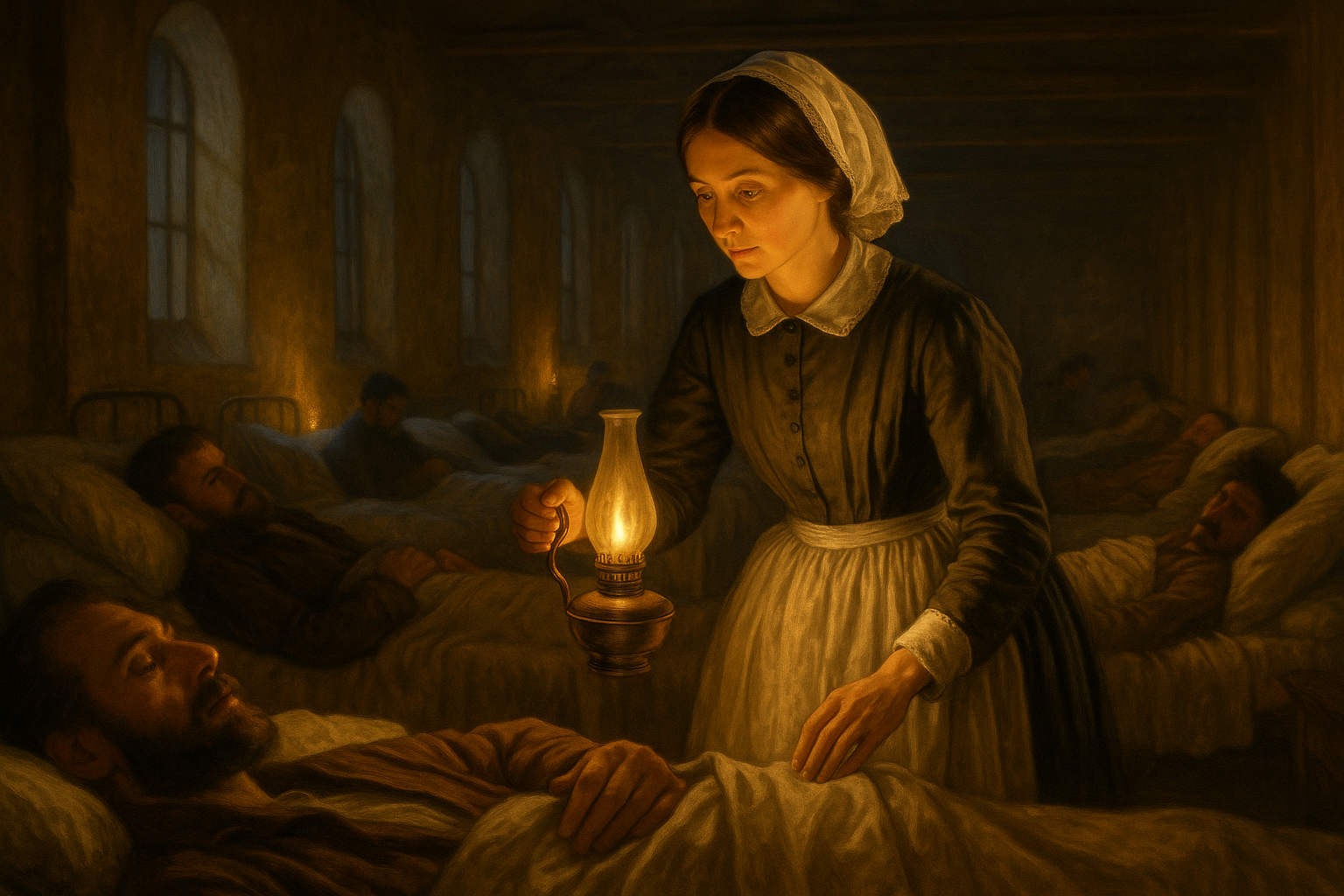
Known as “The Lady with the Lamp,” Florence Nightingale transformed the field of nursing and laid the foundation for modern healthcare. Her compassion, intellect, and unwavering dedication during a time of war reshaped how the world viewed medicine and the role of women in it. Nightingale’s legacy is one of courage, reform, and an enduring belief that science and empathy can coexist in healing humanity.
Early Life and Calling
Born in 1820 into a wealthy British family, Florence Nightingale defied the expectations of her era. While women of her status were encouraged to pursue marriage and social life, she felt a divine calling to serve others through nursing — a profession then considered lowly and unsuitable for women of her class. Her determination to bring dignity and professionalism to nursing marked the beginning of a lifelong mission to improve healthcare standards.
The Crimean War: Where Change Began
Nightingale rose to prominence during the Crimean War (1853–1856). Sent to oversee nursing care for British soldiers in Scutari (modern-day Istanbul), she found appalling conditions — overcrowded hospitals, unsanitary wards, and rampant disease.
With determination and discipline, she reorganized the hospital’s sanitation systems, implemented hygiene protocols, and ensured that patients received proper nutrition and care. Her nightly rounds with a lamp became a symbol of hope for wounded soldiers.
Under her reforms, mortality rates dropped dramatically, proving that cleanliness, order, and compassion could save lives.
A Legacy of Reform and Data-Driven Change
After the war, Nightingale used her fame to push for systemic healthcare reform. Her 1859 book, “Notes on Nursing: What It Is and What It Is Not,” became a cornerstone of nursing education. She also pioneered the use of data visualization, creating innovative statistical charts to demonstrate how poor sanitation caused preventable deaths — a revolutionary approach that influenced public health policy.
In 1860, she founded the Nightingale Training School for Nurses at St. Thomas’ Hospital in London, professionalizing nursing and inspiring generations of caregivers.
Impact on Modern Healthcare
Florence Nightingale’s influence extends far beyond nursing. She established principles of hospital design, sanitation, and evidence-based medicine that continue to guide healthcare today. Her emphasis on hygiene, patient-centered care, and data-driven decision-making set a new global standard.
Beyond her scientific contributions, she also broke barriers for women, proving that intelligence, leadership, and compassion could bring meaningful change in a male-dominated field.
Conclusion
Florence Nightingale was more than a nurse — she was a visionary who transformed healthcare into a science guided by empathy and evidence. Her lamp illuminated not just the dark corridors of wartime hospitals, but the path toward modern medicine itself. Her legacy endures as a beacon of care, compassion, and progress, reminding us that true healing begins with both knowledge and kindness.