
Uncover History’s Secrets with Daily Updates!
Daily News Entertainment
  • Home
  • History
  • Biographies
  • Eras
  • Regions
  • Timeline
No Result
View All Result
History Ours
  • Home
  • History
  • Biographies
  • Eras
  • Regions
  • Timeline
No Result
View All Result
History Ours
No Result
View All Result
Home Biographies

Layering Evidence and Empathy in Short Biographies

in Biographies
Layering Evidence and Empathy in Short Biographies

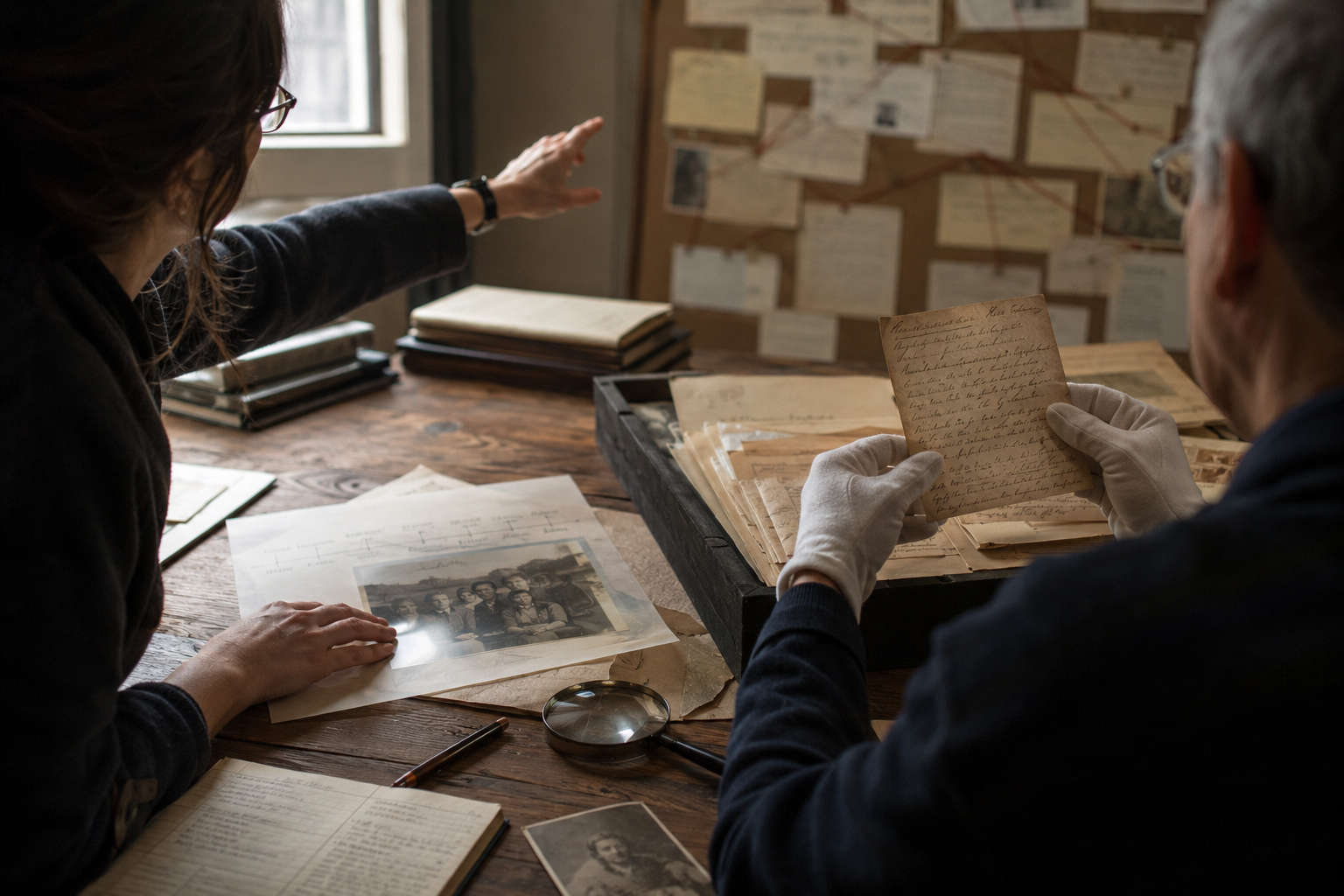
Writing short biographies from sparse records requires attention to both evidence and human detail. Each fragment—a ledger entry, a letter, a photograph—can suggest patterns but rarely tells a whole story. The task is to assemble these hints into a narrative that respects uncertainty while offering insight. This introduction outlines practical steps to balance documentation, interpretation, and respect for the subject.

Research Practice

Begin with a meticulous mapping of sources and their limitations, noting provenance, gaps, and potential biases. Cross-check names, dates, and contexts against related documents and institutional records to reduce error. Treat oral accounts and family lore as leads rather than conclusions, and record where interpretation is unavoidable. This helps keep the biography anchored in verifiable detail while indicating where judgment fills space.

  • Track each claim to its original source.
  • Record uncertainties openly in notes and drafts.
  • Use timelines to reveal inconsistencies or convergences.

These habits produce a transparent research backbone, making later narrative choices defensible. Readers and other researchers can then see how conclusions were reached and where questions remain.

Weaving Narrative

With a foundation of sources, focus on creating a concise narrative that highlights change, motivation, and consequence. Choose scenes or episodes that illuminate character or context rather than attempting exhaustive coverage. Use specific details to ground general claims, and avoid speculative leaps that the evidence cannot support. A sharply focused story often communicates more about a life than a longer, unfocused account.

Prioritize clarity and economy: each paragraph should advance an idea or describe a moment that illuminates the subject. Careful phrasing signals where evidence is strong and where interpretation is provisional.

Ethical Considerations

Biographical responsibility involves respecting privacy, avoiding sensationalism, and acknowledging power imbalances in archives. Consider the subject’s likely perspective and the consequences of your portrayal for communities connected to them. Explicitly note when identities or actions are inferred and refrain from embedding contemporary judgments without context. Ethical practice sustains credibility and preserves dignity.

When publicizing short biographies, include a brief methodology or source note whenever possible. This fosters trust and invites constructive critique from readers and specialists.

Conclusion

Short biographies succeed when they combine careful sourcing with humane interpretation.
They speak to both what is known and what remains uncertain.
Practiced discipline and empathy produce work that informs and respects its subjects.
Previous Post

Everyday Architecture: How Houses Shaped Market Town Life

Next Post

Narrating Lives: Practical Approaches for Modern Biographers

Related Posts

The Disguise That Broke Chains: Ellen and William Craft
Biographies

The Disguise That Broke Chains: Ellen and William Craft

September 15, 2026
Bass Reeves: The Marshal Who Hunted Outlaws in Indian Territory
Biographies

Bass Reeves: The Marshal Who Hunted Outlaws in Indian Territory

September 15, 2026
Ellen Craft: Passing as a Planter to Secure Freedom
Biographies

Ellen Craft: Passing as a Planter to Secure Freedom

September 15, 2026
Chien‑Shiung Wu: The Physicist Who Proved Parity’s Failure
Biographies

Chien‑Shiung Wu: The Physicist Who Proved Parity’s Failure

September 15, 2026
Next Post
Narrating Lives: Practical Approaches for Modern Biographers

Narrating Lives: Practical Approaches for Modern Biographers

Search..

No Result
View All Result

Recent Articles

The Disguise That Broke Chains: Ellen and William Craft

The Disguise That Broke Chains: Ellen and William Craft

September 15, 2026
Bass Reeves: The Marshal Who Hunted Outlaws in Indian Territory

Bass Reeves: The Marshal Who Hunted Outlaws in Indian Territory

September 15, 2026
How the Crystal Palace Turned Glass and Iron into a Modern Stage

How the Crystal Palace Turned Glass and Iron into a Modern Stage

September 15, 2026
Anne Bonny: The Pirate Who Broke Rules and Expectations

Anne Bonny: The Pirate Who Broke Rules and Expectations

September 15, 2026
How Haiti Broke Its Chains: A 1791–1804 Timeline

How Haiti Broke Its Chains: A 1791–1804 Timeline

September 15, 2026

Subscribe Us

By clicking submit, I authorize History Ours and its affiliated companies to: (1) use, sell, and share my information for marketing purposes, including cross-context behavioral advertising, as described in our Terms of Service and Privacy Policy, (2) supplement the information that I provide with additional information lawfully obtained from other sources, like demographic data from public sources, interests inferred from web page views, or other data relevant to what might interest me, like past purchase or location data, (3) contact me or enable others to contact me by email with offers for goods and services from any category at the email address provided, and (4) retain my information while I am engaging with marketing messages that I receive and for a reasonable amount of time thereafter. I understand I can opt out at any time through an email that I receive, or by clicking here

Subscribe To Our Newsletter

By clicking submit, I authorize History Ours and its affiliated companies to: (1) use, sell, and share my information for marketing purposes, including cross-context behavioral advertising, as described in our Terms of Service and Privacy Policy, (2) supplement the information that I provide with additional information lawfully obtained from other sources, like demographic data from public sources, interests inferred from web page views, or other data relevant to what might interest me, like past purchase or location data, (3) contact me or enable others to contact me by email with offers for goods and services from any category at the email address provided, and (4) retain my information while I am engaging with marketing messages that I receive and for a reasonable amount of time thereafter. I understand I can opt out at any time through an email that I receive, or by clicking here.

© 2026 History Ours | All Rights Reserved

  • Contact Us
  • Privacy Policy
  • Terms of Service
  • Unsubscribe
  • Privacy Choices
  • Contact Us
  • Privacy Policy
  • Terms of Service
  • Unsubscribe
  • Privacy Choices

© 2026 History Ours | All Rights Reserved

No Result
View All Result
  • Home
  • History
  • Biographies
  • Eras
  • Regions
  • Timeline

© 2026 History Ours | All Rights Reserved

Skip to content
Open toolbar Accessibility Tools

Accessibility Tools

  • Increase TextIncrease Text
  • Decrease TextDecrease Text
  • GrayscaleGrayscale
  • High ContrastHigh Contrast
  • Negative ContrastNegative Contrast
  • Light BackgroundLight Background
  • Links UnderlineLinks Underline
  • Readable FontReadable Font
  • Reset Reset