Uncover History’s Secrets with Daily Updates!
Daily News Entertainment
  • Home
  • History
  • Biographies
  • Eras
  • Regions
  • Timeline
No Result
View All Result
History Ours
  • Home
  • History
  • Biographies
  • Eras
  • Regions
  • Timeline
No Result
View All Result
History Ours
No Result
View All Result
Home Biographies

Narrating Lives: Practical Approaches for Modern Biographers

in Biographies
Narrating Lives: Practical Approaches for Modern Biographers

Biographical work turns fragments into coherent human stories, balancing evidence with empathetic imagination. Good short biographies illuminate patterns of choice, constraint, and context without overstating what sources cannot show. This piece outlines practical steps for researchers and writers who aim to craft measured, engaging life portraits from uneven records. The guidance emphasizes source grounding, respectful interpretation, and narrative clarity.

Research Foundations

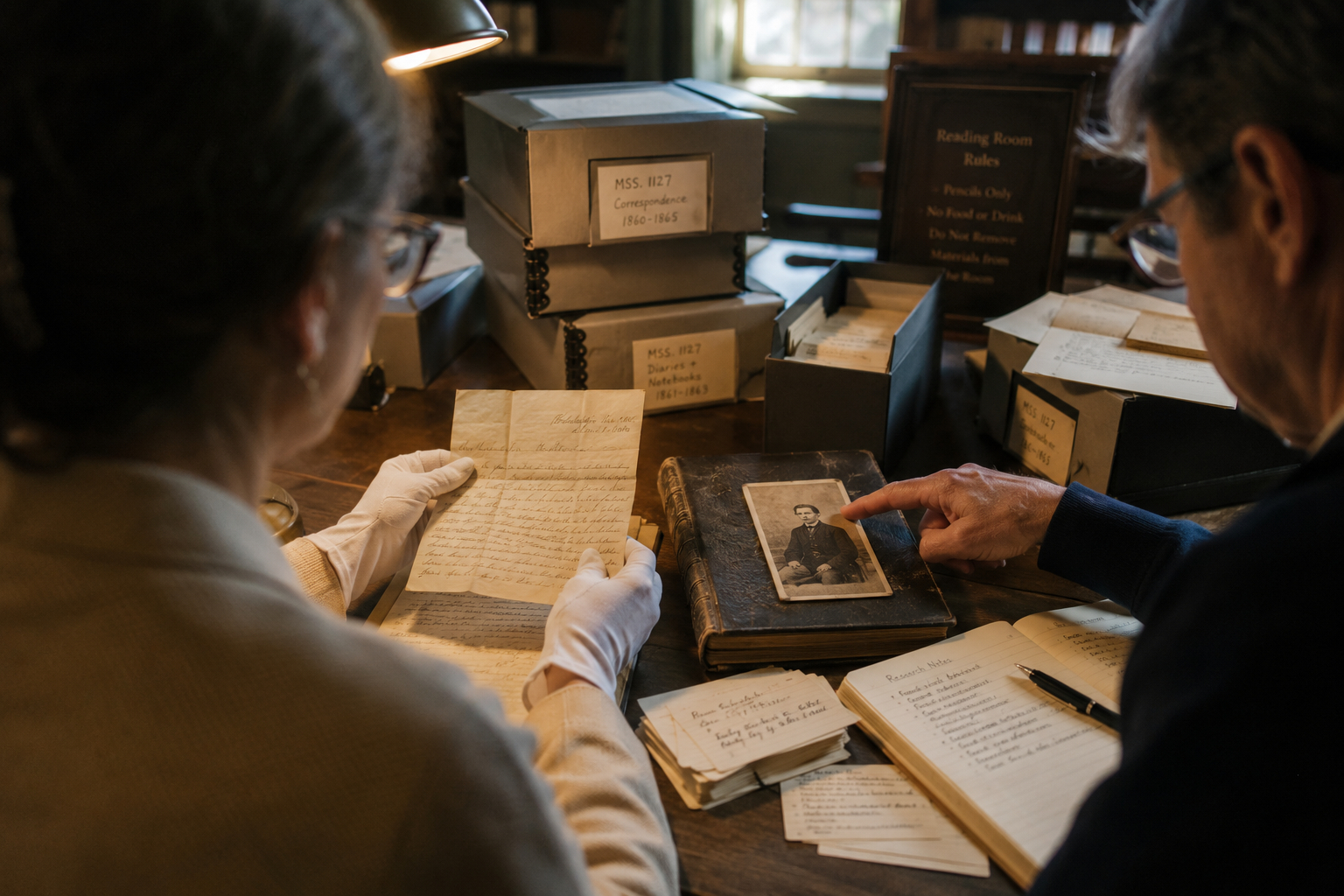
Begin by mapping the documentary terrain: official records, letters, newspapers, and oral accounts each carry distinct biases and affordances. Prioritize corroboration and note silences—what is missing may be as revealing as surviving documents. Use contextual sources to situate individual actions within social, economic, and institutional frameworks, avoiding speculative leaps. Keep careful provenance notes so future readers can trace your conclusions back to evidence.

These practices make biographies transparent and defensible. They also create a scaffold for interpretation that honors uncertainty while still offering meaningful insight.

Crafting Narrative

Translate evidence into a clear narrative arc that respects complexity: identify turning points, recurring tensions, and the constraints shaping decision-making. Use concrete details to anchor claims, and let primary quotes and artifacts carry much of the subject’s voice when possible. Short biographies benefit from focusing on a few vivid episodes rather than attempting exhaustive coverage. Maintain chronological markers, but allow thematic threads to unify disparate moments.

Balancing pace and depth helps readers engage without losing sight of source limits. Thoughtful narrative choices can make compact life sketches feel rounded and alive.

Ethical Considerations

Biographers routinely face ethical choices about privacy, representation, and the potential consequences of publication. Where living descendants or sensitive material are involved, weigh public interest against harm and consider anonymizing details when appropriate. Avoid sensationalism and respect the subject’s dignity, even when evidence is fragmentary or unflattering. Cite sources clearly and acknowledge interpretive gaps instead of smoothing them over.

Ethical attention builds trust with readers and the communities connected to your subject. It also fosters more responsible scholarship and storytelling.

Sources and Interpretation

Assess the scale and reliability of different source types, and assign interpretive weight accordingly. Diaries and letters offer intimacy but reflect selective self-presentation; official records document actions but can erase everyday meanings. Cross-check dates, names, and events to avoid cumulative errors and be alert to transcription mistakes in digitized collections. When gaps remain, use analogues—similar cases or institutional histories—to suggest plausible contexts while flagging them clearly as inference. Maintain a living bibliography and versioned notes to track how interpretations evolve over time.

Transparent sourcing clarifies where evidence ends and interpretation begins. Readers appreciate candor about uncertainty.

Conclusion

Writing measured biographies requires both archival rigor and narrative care. By grounding interpretation in evidence, foregrounding context, and attending to ethics, writers can render complex lives with honesty and resonance. These practices help ensure biographies inform and engage readers while respecting the past.

Previous Post

Layering Evidence and Empathy in Short Biographies

Next Post

Cutting Time: Practical Approaches to Drawing Historical Lines

Related Posts

Mary Seacole: The Jamaican Nurse Who Went to War
Biographies

Mary Seacole: The Jamaican Nurse Who Went to War

October 30, 2026
Ada Lovelace: The Poet Who Helped Imagine Modern Computers
Biographies

Ada Lovelace: The Poet Who Helped Imagine Modern Computers

October 30, 2026
Katherine Johnson: The Numbers Behind America’s First Orbits
Biographies

Katherine Johnson: The Numbers Behind America’s First Orbits

October 25, 2026
Bessie Coleman: How a Texan Manicurist Conquered the Skies
Biographies

Bessie Coleman: How a Texan Manicurist Conquered the Skies

October 25, 2026
Next Post
Cutting Time: Practical Approaches to Drawing Historical Lines

Cutting Time: Practical Approaches to Drawing Historical Lines

Search..

No Result
View All Result

Recent Articles

1453: The Fall of Constantinople — A Brief Timeline

1453: The Fall of Constantinople — A Brief Timeline

November 2, 2026
How Penicillin Went from Petri Dish to Battlefield Medicine

How Penicillin Went from Petri Dish to Battlefield Medicine

November 2, 2026
How Carrara’s Marble Carved a Peculiar Mountain Region

How Carrara’s Marble Carved a Peculiar Mountain Region

November 1, 2026
The Great Dismal Swamp: Refuge, Labor, and a Hidden Region

The Great Dismal Swamp: Refuge, Labor, and a Hidden Region

November 1, 2026
The Salon Era: How Conversation Shaped the Enlightenment

The Salon Era: How Conversation Shaped the Enlightenment

October 31, 2026

Subscribe Us

By clicking submit, I authorize History Ours and its affiliated companies to: (1) use, sell, and share my information for marketing purposes, including cross-context behavioral advertising, as described in our Terms of Service and Privacy Policy, (2) supplement the information that I provide with additional information lawfully obtained from other sources, like demographic data from public sources, interests inferred from web page views, or other data relevant to what might interest me, like past purchase or location data, (3) contact me or enable others to contact me by email with offers for goods and services from any category at the email address provided, and (4) retain my information while I am engaging with marketing messages that I receive and for a reasonable amount of time thereafter. I understand I can opt out at any time through an email that I receive, or by clicking here

Subscribe To Our Newsletter

By clicking submit, I authorize History Ours and its affiliated companies to: (1) use, sell, and share my information for marketing purposes, including cross-context behavioral advertising, as described in our Terms of Service and Privacy Policy, (2) supplement the information that I provide with additional information lawfully obtained from other sources, like demographic data from public sources, interests inferred from web page views, or other data relevant to what might interest me, like past purchase or location data, (3) contact me or enable others to contact me by email with offers for goods and services from any category at the email address provided, and (4) retain my information while I am engaging with marketing messages that I receive and for a reasonable amount of time thereafter. I understand I can opt out at any time through an email that I receive, or by clicking here.

© 2026 History Ours | All Rights Reserved

  • Contact Us
  • Privacy Policy
  • Terms of Service
  • Unsubscribe
  • Privacy Choices
  • Contact Us
  • Privacy Policy
  • Terms of Service
  • Unsubscribe
  • Privacy Choices

© 2026 History Ours | All Rights Reserved

No Result
View All Result
  • Home
  • History
  • Biographies
  • Eras
  • Regions
  • Timeline

© 2026 History Ours | All Rights Reserved

Skip to content
Open toolbar Accessibility Tools

Accessibility Tools

  • Increase TextIncrease Text
  • Decrease TextDecrease Text
  • GrayscaleGrayscale
  • High ContrastHigh Contrast
  • Negative ContrastNegative Contrast
  • Light BackgroundLight Background
  • Links UnderlineLinks Underline
  • Readable FontReadable Font
  • Reset Reset