

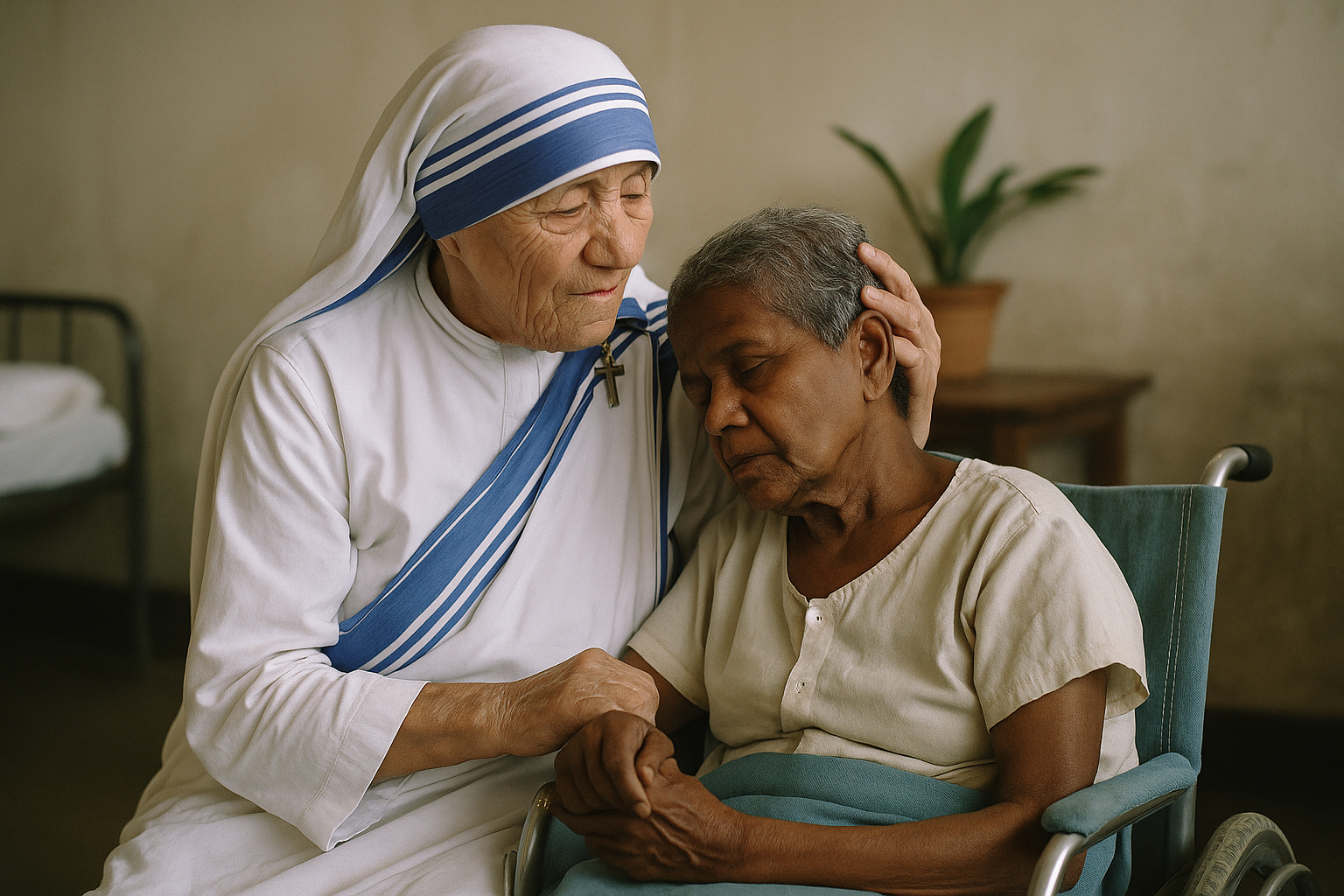
Few figures in modern history have embodied compassion as deeply as Mother Teresa. Her name has become synonymous with selflessness, humility, and love for humanity. Though she began her journey in a small convent, her mission reached far beyond the borders of nations, religions, and social divisions. Through tireless service to the poor and suffering, Mother Teresa proved that one individual’s compassion can ripple across the world — transforming not just lives, but the very meaning of service itself.
A Calling to Serve
Born in 1910 in what North Macedonia is now, Agnes Gonxha Bojaxhiu felt a calling to a life of faith and service from an early age. She joined the Sisters of Loreto and moved to India, where she taught at a girls’ school in Kolkata. It was there, surrounded by poverty and hardship, that she experienced her “call within a call” — a spiritual awakening that urged her to leave the convent and live among those most in need. She founded the Missionaries of Charity, an order dedicated to caring for “the poorest of the poor,” marking the beginning of a lifelong mission that would touch millions.
Love in Action
For Mother Teresa, compassion was not an emotion — it was an action. She believed that love was most meaningful when expressed through service. Her work in the slums of Kolkata brought dignity to the dying, comfort to the sick, and hope to the forgotten. From small beginnings, her movement expanded into a global network of homes, hospitals, and orphanages in over 100 countries. Her message was simple yet profound: every human being deserves to be seen, cared for, and loved, regardless of status or faith.
Faith, Humanity, and Humility
Despite her global recognition, Mother Teresa lived a life of simplicity. Dressed in her iconic white sari with blue borders, she carried her faith quietly but firmly. She often spoke of finding God in the faces of those she served — a belief that transcended religion and resonated universally. Even amid fame and honors, including the Nobel Peace Prize in 1979, she remained grounded in humility. Her legacy reminds the world that greatness lies not in wealth or power, but in empathy and presence.
Compassion Without Borders
Mother Teresa’s impact extended far beyond her immediate surroundings. Her approach to charity inspired thousands to follow in her footsteps, from medical volunteers to humanitarian workers. She showed that compassion knows no borders — that suffering in one corner of the world is humanity’s shared responsibility. Her mission crossed lines of race, politics, and creed, uniting people through kindness. In an era of growing division, her example continues to remind us of the power of unity through compassion.
A Complex Legacy, A Timeless Lesson
While her methods and faith have been subjects of debate, her dedication remains undeniable. Mother Teresa’s work challenged society to confront poverty not as a problem to be solved from afar, but as a human reality requiring personal involvement. Her life teaches that compassion isn’t about perfection; it’s about presence — showing up for others with an open heart.
Conclusion
Mother Teresa’s legacy is not confined to time or geography. Her life was a testament to what one person’s unwavering compassion can achieve. In a world often defined by self-interest, her message endures: that love, in its purest form, can heal divisions and restore dignity. She redefined charity as an act of shared humanity — a reminder that compassion, when lived authentically, has no borders at all.