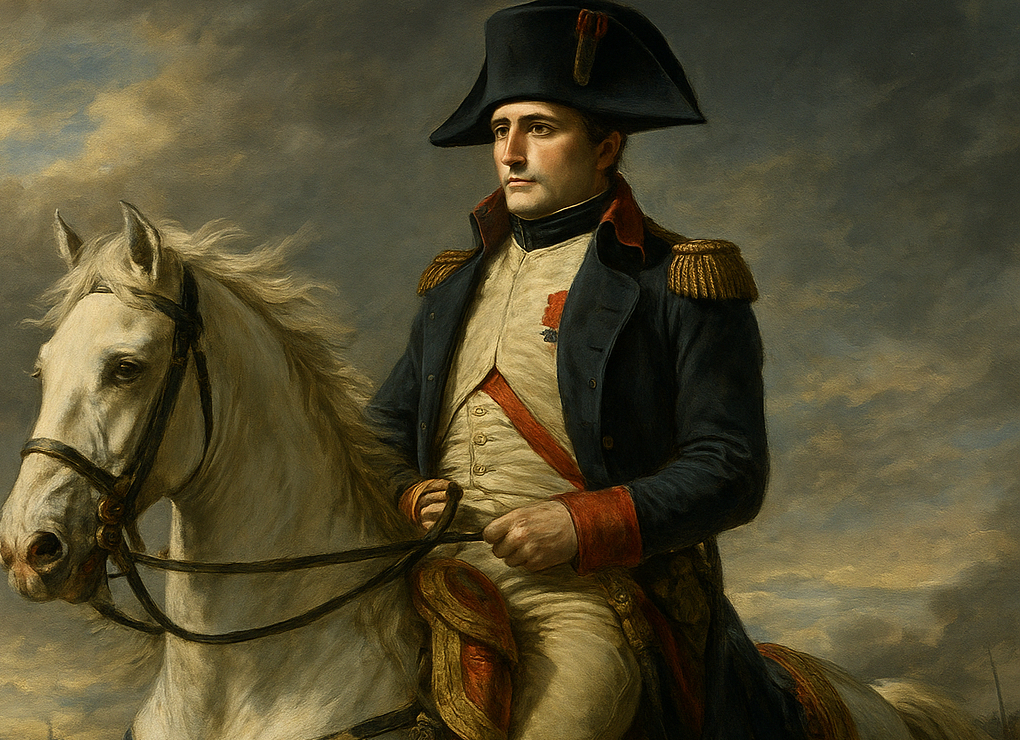
Few figures in history have inspired as much fascination as Napoleon Bonaparte. His life is the story of brilliance and ambition, leadership and downfall — a testament to both the heights of human achievement and the limits of power. From his rapid rise as a military strategist to his dramatic fall from the throne, Napoleon’s journey remains one of history’s most compelling tales of success, resilience, and consequence.
The Making of a Military Genius
Napoleon’s ascent began with his remarkable talent for strategy and leadership. Trained as an artillery officer, he quickly distinguished himself through intelligence, discipline, and an instinct for seizing opportunity. His early victories showcased his ability to command loyalty and inspire troops, turning battlefield precision into political influence. By his early thirties, he had risen from relative obscurity to become the leader of a powerful nation.
The Birth of an Empire
Once in power, Napoleon envisioned a restructured Europe — one unified under efficient administration, merit-based systems, and reformed laws. His Napoleonic Code standardized legal principles that continue to influence civil law today. Economically and politically, he modernized governance, education, and infrastructure, laying the groundwork for a more organized society. However, his desire to expand influence beyond his borders soon transformed reform into conquest.
Ambition and Overreach
Napoleon’s ambition, though unmatched, eventually became his undoing. His military campaigns, though initially successful, stretched his resources and strained his alliances. The invasion of vast territories — most notably into Eastern Europe — proved costly in both manpower and morale. As resistance grew, the same brilliance that had secured his victories became overshadowed by an unwillingness to retreat. Over time, his empire began to fracture under its own weight.
The Fall from Power
Defeated by combined forces and betrayed by shifting loyalties, Napoleon’s first abdication marked the beginning of his decline. Exiled but unbroken, he returned briefly to reclaim power during the famous “Hundred Days” — a testament to his enduring charisma and influence. Yet, his final defeat brought an end not just to his reign, but to an era of continuous conflict that had reshaped Europe’s political landscape. His final years in exile were spent reflecting on the empire he built and the world he changed.
Legacy of a Complex Leader
Napoleon’s legacy defies simple definition. To some, he was a visionary reformer who modernized governance, education, and law. To others, he was a conqueror whose ambition led to unnecessary wars and suffering. What remains certain is his impact: Napoleon redefined leadership, nationalism, and the idea of destiny itself. His life is studied not just for its victories, but for its lessons on the balance between power and restraint.
Conclusion
Napoleon Bonaparte’s story is one of extraordinary rise and inevitable fall — a reminder that greatness and downfall often share the same source: ambition. His vision shaped nations, inspired revolutions, and left a legacy that continues to influence politics and leadership today. In the end, Napoleon stands as both a symbol of what humanity can achieve and a warning of what it must guard against — the relentless pursuit of power without limit.