Uncover History’s Secrets with Daily Updates!
Daily News Entertainment
  • Home
  • History
  • Biographies
  • Eras
  • Regions
  • Timeline
No Result
View All Result
History Ours
  • Home
  • History
  • Biographies
  • Eras
  • Regions
  • Timeline
No Result
View All Result
History Ours
No Result
View All Result
Home Biographies

Sophie Germain and the Quiet Power of Mathematical Inquiry

in Biographies
Sophie Germain and the Quiet Power of Mathematical Inquiry

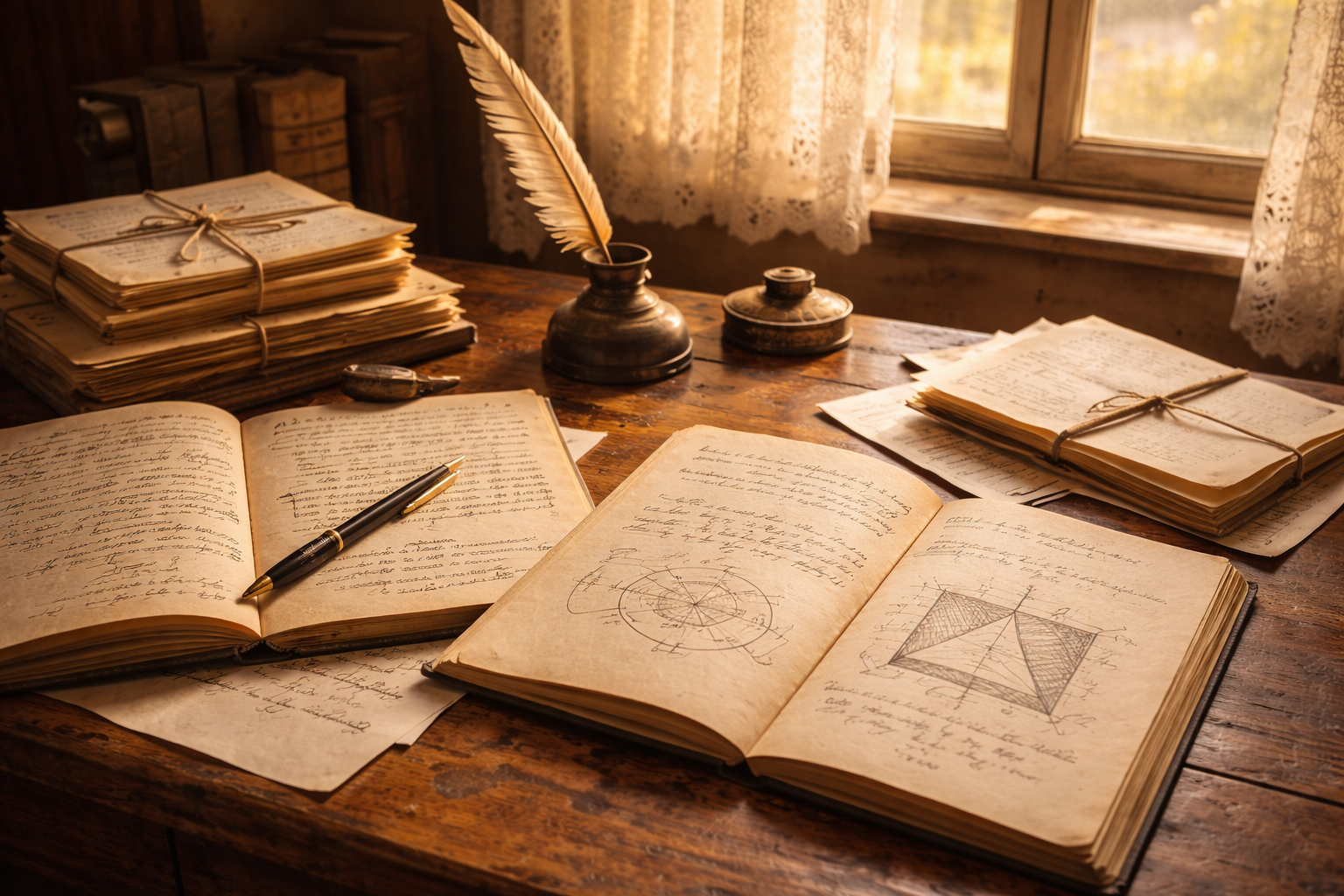
Sophie Germain pursued mathematics with a persistence that belied her modest public profile.
She learned by reading, copying, and corresponding at a time when formal study was often closed to her.
Her work bridged pure theory and practical problems, leaving a legacy beyond her lifetime.
This article explores how curiosity, method, and correspondence shaped her contributions and recognition.

Early curiosity and self-directed study
Sophie Germain developed a strong appetite for numbers early in life and converted curiosity into disciplined study. She relied on books, private notes, and the mentorship she could secure through letters, often teaching herself advanced topics. Denied easy access to academic institutions, she cultivated knowledge through determined independent work and careful reconstruction of proofs. This foundation formed the habits that allowed her later breakthroughs in theory and applied mathematics.

– She used available texts and reconstructed arguments to master difficult topics.
– Private tutoring and exchanges by correspondence extended her learning beyond local constraints.

Her self-directed approach became a model of intellectual resilience, and it highlights how nontraditional study paths can foster original thinking.

Contributions to number theory and elasticity
Germain made significant advances in number theory, addressing deep questions about primes and modular relationships that prefigured later developments. Her work included inventive approaches to classical problems and the development of techniques that influenced future mathematicians. In applied mathematics, she investigated elasticity and vibrations, showing an ability to move between abstract reasoning and physical problems. This dual focus broadened the relevance of her research and demonstrated the practical value of rigorous theoretical methods.

– Important advances addressed relationships among prime exponents and modular residues.
– Research on elasticity contributed to the mathematical modeling of vibrating surfaces.

Her contributions show how theoretical insight can inform applied questions and how interdisciplinary thinking enhances both fields.

Barriers, correspondence, and eventual recognition
Germain faced institutional and social barriers that limited formal acknowledgment of her work during her lifetime. She engaged in extended correspondence with established mathematicians, using letters to present ideas, test proofs, and build intellectual credibility. Over time, this epistolary network helped transmit her results to a broader audience, even when publication channels were constrained. While recognition arrived slowly, later historians and mathematicians have acknowledged the originality and influence of her work.

Her experience illustrates both the obstacles and the strategies used by overlooked scholars to make lasting contributions. It also underscores the role of communication and persistence in scientific progress.

Conclusion
Sophie Germain combined rigorous self-study with bold problem-solving to make lasting contributions to mathematics.
Her career shows the impact of determined, independent inquiry and the value of intellectual exchange through correspondence.
Her legacy endures as a reminder that sustained curiosity and methodical work can reshape fields even from the margins.

Previous Post

Practices of Message Delivery Before Modern Postal Systems

Next Post

The Cartographer Who Redrew the World’s Coastal Knowledge

Related Posts

The Disguise That Broke Chains: Ellen and William Craft
Biographies

The Disguise That Broke Chains: Ellen and William Craft

September 15, 2026
Bass Reeves: The Marshal Who Hunted Outlaws in Indian Territory
Biographies

Bass Reeves: The Marshal Who Hunted Outlaws in Indian Territory

September 15, 2026
Ellen Craft: Passing as a Planter to Secure Freedom
Biographies

Ellen Craft: Passing as a Planter to Secure Freedom

September 15, 2026
Chien‑Shiung Wu: The Physicist Who Proved Parity’s Failure
Biographies

Chien‑Shiung Wu: The Physicist Who Proved Parity’s Failure

September 15, 2026
Next Post
The Cartographer Who Redrew the World’s Coastal Knowledge

The Cartographer Who Redrew the World's Coastal Knowledge

Search..

No Result
View All Result

Recent Articles

The Disguise That Broke Chains: Ellen and William Craft

The Disguise That Broke Chains: Ellen and William Craft

September 15, 2026
Bass Reeves: The Marshal Who Hunted Outlaws in Indian Territory

Bass Reeves: The Marshal Who Hunted Outlaws in Indian Territory

September 15, 2026
How the Crystal Palace Turned Glass and Iron into a Modern Stage

How the Crystal Palace Turned Glass and Iron into a Modern Stage

September 15, 2026
Anne Bonny: The Pirate Who Broke Rules and Expectations

Anne Bonny: The Pirate Who Broke Rules and Expectations

September 15, 2026
How Haiti Broke Its Chains: A 1791–1804 Timeline

How Haiti Broke Its Chains: A 1791–1804 Timeline

September 15, 2026

Subscribe Us

By clicking submit, I authorize History Ours and its affiliated companies to: (1) use, sell, and share my information for marketing purposes, including cross-context behavioral advertising, as described in our Terms of Service and Privacy Policy, (2) supplement the information that I provide with additional information lawfully obtained from other sources, like demographic data from public sources, interests inferred from web page views, or other data relevant to what might interest me, like past purchase or location data, (3) contact me or enable others to contact me by email with offers for goods and services from any category at the email address provided, and (4) retain my information while I am engaging with marketing messages that I receive and for a reasonable amount of time thereafter. I understand I can opt out at any time through an email that I receive, or by clicking here

Subscribe To Our Newsletter

By clicking submit, I authorize History Ours and its affiliated companies to: (1) use, sell, and share my information for marketing purposes, including cross-context behavioral advertising, as described in our Terms of Service and Privacy Policy, (2) supplement the information that I provide with additional information lawfully obtained from other sources, like demographic data from public sources, interests inferred from web page views, or other data relevant to what might interest me, like past purchase or location data, (3) contact me or enable others to contact me by email with offers for goods and services from any category at the email address provided, and (4) retain my information while I am engaging with marketing messages that I receive and for a reasonable amount of time thereafter. I understand I can opt out at any time through an email that I receive, or by clicking here.

© 2026 History Ours | All Rights Reserved

  • Contact Us
  • Privacy Policy
  • Terms of Service
  • Unsubscribe
  • Privacy Choices
  • Contact Us
  • Privacy Policy
  • Terms of Service
  • Unsubscribe
  • Privacy Choices

© 2026 History Ours | All Rights Reserved

No Result
View All Result
  • Home
  • History
  • Biographies
  • Eras
  • Regions
  • Timeline

© 2026 History Ours | All Rights Reserved

Skip to content
Open toolbar Accessibility Tools

Accessibility Tools

  • Increase TextIncrease Text
  • Decrease TextDecrease Text
  • GrayscaleGrayscale
  • High ContrastHigh Contrast
  • Negative ContrastNegative Contrast
  • Light BackgroundLight Background
  • Links UnderlineLinks Underline
  • Readable FontReadable Font
  • Reset Reset