

Uncover History’s Secrets with Daily Updates!
Daily News Entertainment
  • Home
  • History
  • Biographies
  • Eras
  • Regions
  • Timeline
No Result
View All Result
History Ours
  • Home
  • History
  • Biographies
  • Eras
  • Regions
  • Timeline
No Result
View All Result
History Ours
No Result
View All Result
Home Eras

Building Clear Periods: A Practical Guide to Era-Making

in Eras
Building Clear Periods: A Practical Guide to Era-Making

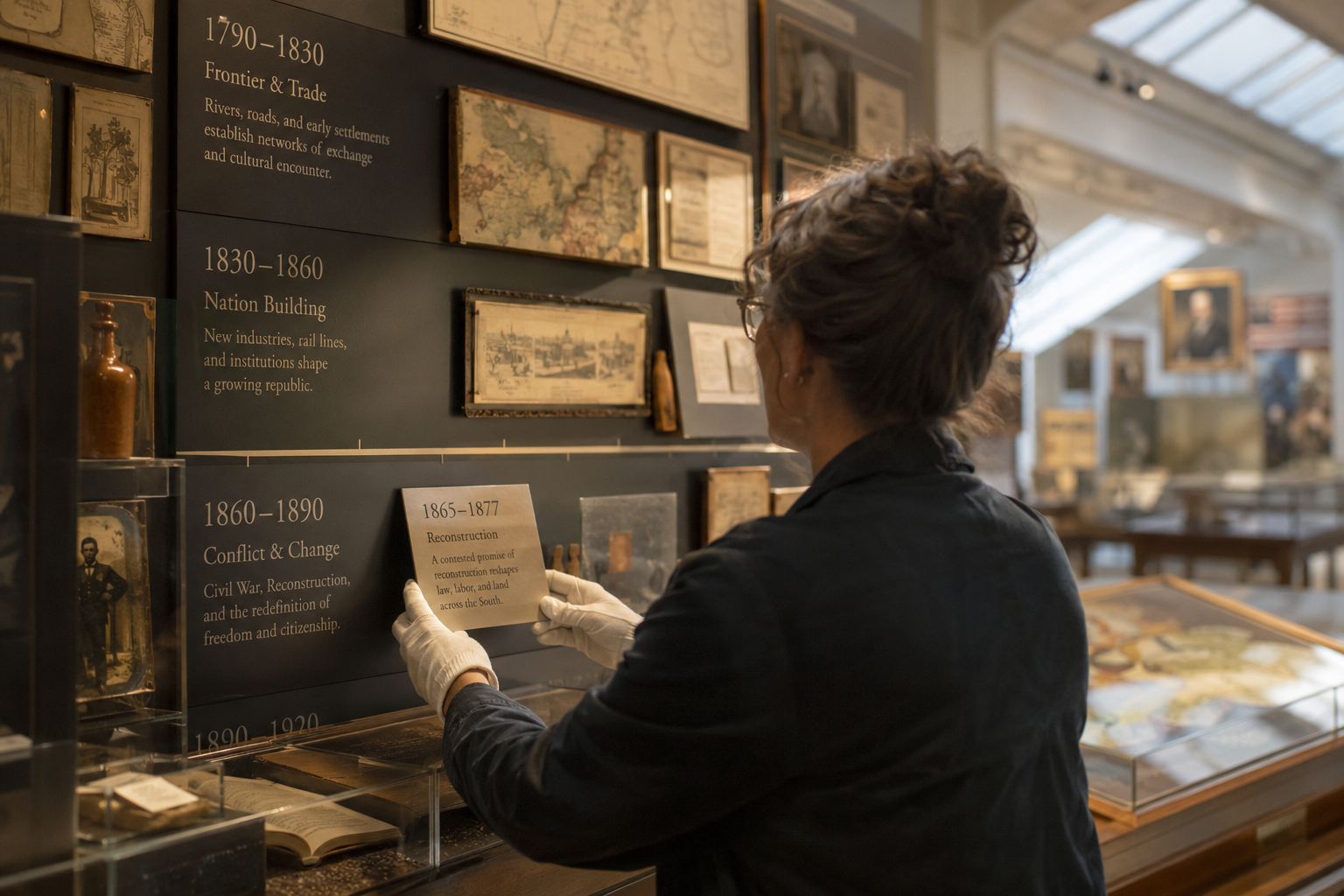
Historians and educators rely on eras to translate complex pasts into usable narratives that reveal patterns and change. Choosing boundaries involves balancing evidence, scale, and audience needs so a period explains rather than obscures. Good periodization highlights causal links and lived experience while remaining defensible in sources and argument. This guide outlines practical steps to design eras that communicate clearly and remain analytically robust.

Why periodization matters

Defining an era organizes events into a coherent frame that helps readers grasp long-term shifts and short-term ruptures together. When eras are clear and purposeful, they guide interpretation, teaching, and public engagement without flattening regional or social differences. Poorly chosen periods can mislead, suggesting uniformity where diversity and overlap existed. Thoughtful eras make comparison possible while acknowledging contingency and complexity.

Applied thoughtfully, periodization improves research design and public history projects by setting manageable scopes. Clear eras also make it easier to identify continuities, discontinuities, and turning points for a wide range of audiences.

Criteria for defining an era

Start by stating the analytic question your period should answer: does it explain technological change, social transformation, political consolidation, or cultural exchange? Use multiple types of evidence—texts, material culture, demographic data—to justify start and end points rather than relying on single events. Consider scale carefully: regional, transregional, or thematic periods will have different boundaries and implications. Aim for parsimony, choosing the simplest framework that still captures important variation and causality.

  • Significant, sustained change in key variables.
  • Coherent causal story linking beginning to end.
  • Utility for comparative or pedagogical purposes.

Make these criteria explicit in any presentation or publication so readers understand why the era was chosen and how it should be applied.

Handling overlaps and multiple scales

Eras rarely align neatly; political shifts, cultural movements, and economic transformations can intersect without coinciding. Embrace layered periodization by acknowledging concurrent eras at different scales rather than forcing a single timeline. Use cross-references in texts and timelines to show overlap, and explain which scale is primary for your argument. This approach preserves nuance while maintaining clarity for readers.

Visual tools like nested timelines or thematic maps can illustrate these relationships effectively. When overlaps are central to the question, frame them as part of the analysis rather than problems to be erased.

Communicating eras to public audiences

Simplify without flattening: provide clear labels and brief explanations that foreground what makes the era meaningful for understanding change. Offer examples and representative case studies to show how the era operates across places and groups. Use accessible language, but retain the analytic caveats needed to prevent overgeneralization. Provide further reading or links for audiences who want the detailed evidence behind the boundaries.

A transparent explanation of criteria and sources builds trust and invites critique, which strengthens both scholarly and public conversations about the past.

Conclusion

Design eras to answer specific questions, justify boundaries with diverse evidence, and communicate limits and overlaps clearly. Layered, audience-aware periodization clarifies change without erasing complexity. When eras are transparent and useful they become powerful tools for research, teaching, and public understanding.


Previous Post

Cutting Time: Practical Approaches to Drawing Historical Lines

Next Post

Mapping Cultural Layers: A Region’s Changing Identity Over Centuries

Related Posts

Pax Mongolica: How Mongol Rule Rewired the Old World
Eras

Pax Mongolica: How Mongol Rule Rewired the Old World

September 15, 2026
Life Under the Tokugawa: How Edo Japan Rewrote Social Order
Eras

Life Under the Tokugawa: How Edo Japan Rewrote Social Order

September 15, 2026
When Empires Fell: The Late Bronze Age Collapse
Eras

When Empires Fell: The Late Bronze Age Collapse

September 15, 2026
1816: How a Volcano Turned Summer Into Crisis
Eras

1816: How a Volcano Turned Summer Into Crisis

September 15, 2026
Next Post
Mapping Cultural Layers: A Region’s Changing Identity Over Centuries

Mapping Cultural Layers: A Region's Changing Identity Over Centuries

Search..

No Result
View All Result

Recent Articles

The Disguise That Broke Chains: Ellen and William Craft

The Disguise That Broke Chains: Ellen and William Craft

September 15, 2026
Bass Reeves: The Marshal Who Hunted Outlaws in Indian Territory

Bass Reeves: The Marshal Who Hunted Outlaws in Indian Territory

September 15, 2026
How the Crystal Palace Turned Glass and Iron into a Modern Stage

How the Crystal Palace Turned Glass and Iron into a Modern Stage

September 15, 2026
Anne Bonny: The Pirate Who Broke Rules and Expectations

Anne Bonny: The Pirate Who Broke Rules and Expectations

September 15, 2026
How Haiti Broke Its Chains: A 1791–1804 Timeline

How Haiti Broke Its Chains: A 1791–1804 Timeline

September 15, 2026

Subscribe Us

By clicking submit, I authorize History Ours and its affiliated companies to: (1) use, sell, and share my information for marketing purposes, including cross-context behavioral advertising, as described in our Terms of Service and Privacy Policy, (2) supplement the information that I provide with additional information lawfully obtained from other sources, like demographic data from public sources, interests inferred from web page views, or other data relevant to what might interest me, like past purchase or location data, (3) contact me or enable others to contact me by email with offers for goods and services from any category at the email address provided, and (4) retain my information while I am engaging with marketing messages that I receive and for a reasonable amount of time thereafter. I understand I can opt out at any time through an email that I receive, or by clicking here

Subscribe To Our Newsletter

By clicking submit, I authorize History Ours and its affiliated companies to: (1) use, sell, and share my information for marketing purposes, including cross-context behavioral advertising, as described in our Terms of Service and Privacy Policy, (2) supplement the information that I provide with additional information lawfully obtained from other sources, like demographic data from public sources, interests inferred from web page views, or other data relevant to what might interest me, like past purchase or location data, (3) contact me or enable others to contact me by email with offers for goods and services from any category at the email address provided, and (4) retain my information while I am engaging with marketing messages that I receive and for a reasonable amount of time thereafter. I understand I can opt out at any time through an email that I receive, or by clicking here.

© 2026 History Ours | All Rights Reserved

  • Contact Us
  • Privacy Policy
  • Terms of Service
  • Unsubscribe
  • Privacy Choices
  • Contact Us
  • Privacy Policy
  • Terms of Service
  • Unsubscribe
  • Privacy Choices

© 2026 History Ours | All Rights Reserved

No Result
View All Result
  • Home
  • History
  • Biographies
  • Eras
  • Regions
  • Timeline

© 2026 History Ours | All Rights Reserved

Skip to content
Open toolbar Accessibility Tools

Accessibility Tools

  • Increase TextIncrease Text
  • Decrease TextDecrease Text
  • GrayscaleGrayscale
  • High ContrastHigh Contrast
  • Negative ContrastNegative Contrast
  • Light BackgroundLight Background
  • Links UnderlineLinks Underline
  • Readable FontReadable Font
  • Reset Reset