

Uncover History’s Secrets with Daily Updates!
Daily News Entertainment
  • Home
  • History
  • Biographies
  • Eras
  • Regions
  • Timeline
No Result
View All Result
History Ours
  • Home
  • History
  • Biographies
  • Eras
  • Regions
  • Timeline
No Result
View All Result
History Ours
No Result
View All Result
Home Eras

Cutting Time: Practical Approaches to Drawing Historical Lines

in Eras
Cutting Time: Practical Approaches to Drawing Historical Lines

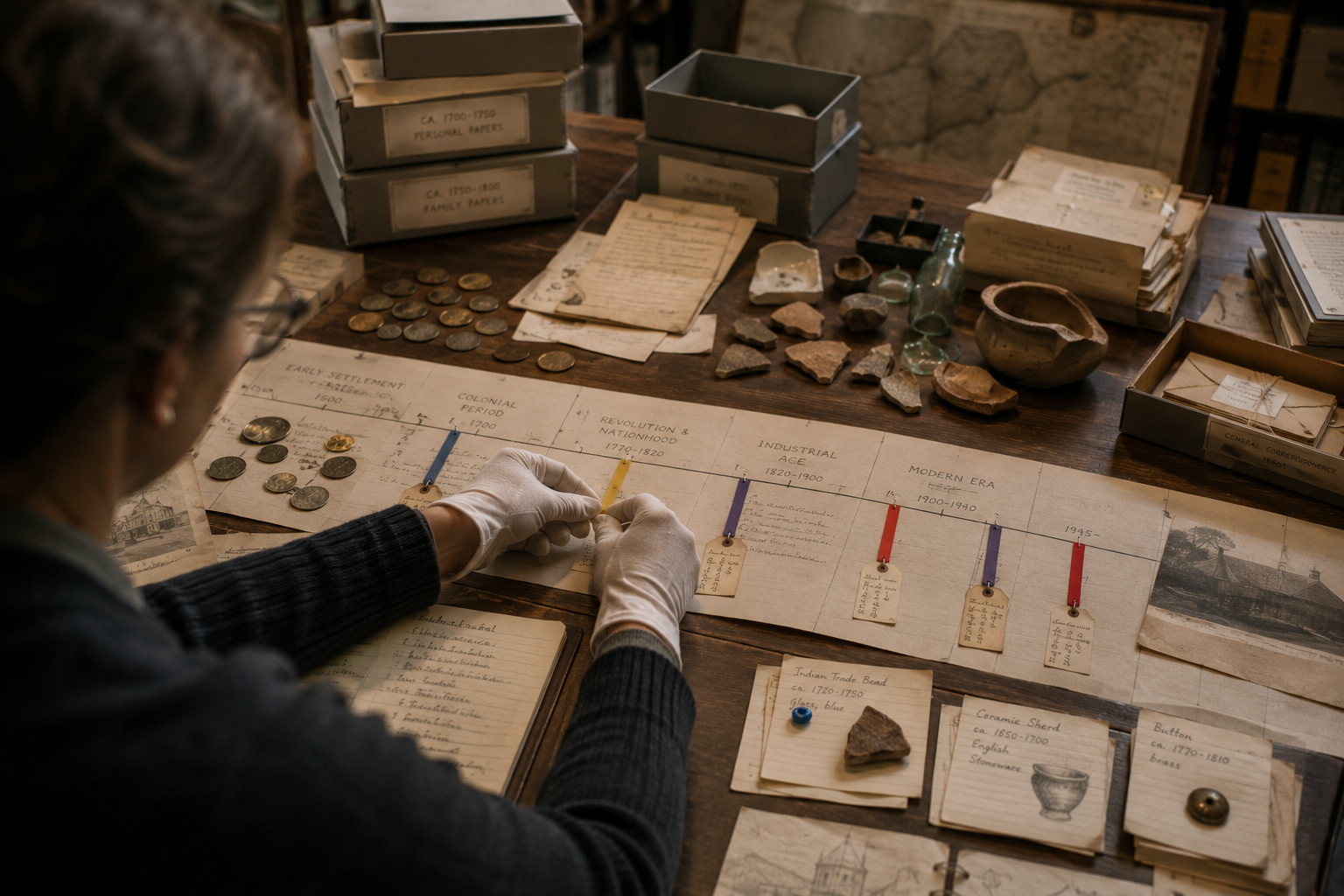
Historians and educators often face the task of dividing continuous pasts into discrete eras to make sense of change. Choosing where to place boundaries affects interpretation, teaching, and public understanding. Good period definitions balance evidence, scale, and the explanatory goals of a study. This article outlines practical steps for drawing useful, defensible lines in time.

Why clear boundaries matter

Boundaries are not neutral: they foreground some developments and downplay others, shaping narratives and research questions. Clear criteria help readers and students grasp why certain events are grouped together and why transitions are emphasized. Without explicit rationale, period labels become shorthand that obscures complexity rather than clarifies it. Being deliberate about boundaries increases transparency and invites informed critique.

Explicit boundary choices also aid comparison across studies and disciplines. When researchers state why a decade, reign, or technological shift marks a break, their work becomes easier to test and build upon.

Criteria for choosing boundaries

Effective boundaries rest on multiple kinds of evidence: institutional changes, major demographic or economic shifts, cultural transformations, and environmental or technological inflection points. Use a mix of quantitative indicators and qualitative turning points to avoid one-dimensional periodization. Consider duration and coherence: an era should capture sustained patterns rather than isolated moments. Evaluate whether the division serves explanation rather than merely convenience.

Prioritize criteria that match your project’s scale and aims, and be explicit about trade-offs when criteria point in different directions. This clarity helps readers understand the limits of your periodization.

Managing overlapping and nested scales

History operates at multiple scales at once: local, regional, and global processes can produce overlapping eras that coexist. Recognize nested periods where short-term episodes sit inside longer structural ones, and make those relationships visible in your account. Use layered language to indicate when an event belongs to multiple frameworks, and avoid forcing a single chronological frame on all phenomena. Doing so preserves nuance and prevents misleading simplifications.

Document which scale is primary for your argument and how other scales interact with it. This practice keeps narratives coherent while acknowledging complexity.

A practical workflow for defining eras

Begin by identifying the question your periodization must answer, then assemble diverse evidence that speaks to change and continuity. Draft candidate boundaries and test them against case studies and counterexamples to see where they break down. Revise criteria until they consistently explain the phenomena of interest, and document the rationale in methods or introductory sections. Engage peers for feedback to catch blind spots and alternative readings.

Adopting an iterative, evidence-driven workflow produces eras that are both useful and defensible. Clear documentation enhances reproducibility and pedagogical value.

Conclusion

Drawing historical lines is an interpretive act that benefits from deliberate criteria and transparent reasoning. Combining multiple kinds of evidence and acknowledging scale produces more informative and defensible eras. Iteration and clear documentation help historians and educators present the past with nuance and purpose.


Previous Post

Narrating Lives: Practical Approaches for Modern Biographers

Next Post

Building Clear Periods: A Practical Guide to Era-Making

Related Posts

Edo: Japan’s Urban Revolution of Lanterns and Printshops
Eras

Edo: Japan’s Urban Revolution of Lanterns and Printshops

September 16, 2026
How the Little Ice Age Changed Everyday Life in Europe
Eras

How the Little Ice Age Changed Everyday Life in Europe

September 16, 2026
Pax Mongolica: How Mongol Rule Rewired the Old World
Eras

Pax Mongolica: How Mongol Rule Rewired the Old World

September 15, 2026
Life Under the Tokugawa: How Edo Japan Rewrote Social Order
Eras

Life Under the Tokugawa: How Edo Japan Rewrote Social Order

September 15, 2026
Next Post
Building Clear Periods: A Practical Guide to Era-Making

Building Clear Periods: A Practical Guide to Era-Making

Search..

No Result
View All Result

Recent Articles

Edo: Japan’s Urban Revolution of Lanterns and Printshops

Edo: Japan’s Urban Revolution of Lanterns and Printshops

September 16, 2026
How the Little Ice Age Changed Everyday Life in Europe

How the Little Ice Age Changed Everyday Life in Europe

September 16, 2026
The Disguise That Broke Chains: Ellen and William Craft

The Disguise That Broke Chains: Ellen and William Craft

September 15, 2026
Bass Reeves: The Marshal Who Hunted Outlaws in Indian Territory

Bass Reeves: The Marshal Who Hunted Outlaws in Indian Territory

September 15, 2026
How the Crystal Palace Turned Glass and Iron into a Modern Stage

How the Crystal Palace Turned Glass and Iron into a Modern Stage

September 15, 2026

Subscribe Us

By clicking submit, I authorize History Ours and its affiliated companies to: (1) use, sell, and share my information for marketing purposes, including cross-context behavioral advertising, as described in our Terms of Service and Privacy Policy, (2) supplement the information that I provide with additional information lawfully obtained from other sources, like demographic data from public sources, interests inferred from web page views, or other data relevant to what might interest me, like past purchase or location data, (3) contact me or enable others to contact me by email with offers for goods and services from any category at the email address provided, and (4) retain my information while I am engaging with marketing messages that I receive and for a reasonable amount of time thereafter. I understand I can opt out at any time through an email that I receive, or by clicking here

Subscribe To Our Newsletter

By clicking submit, I authorize History Ours and its affiliated companies to: (1) use, sell, and share my information for marketing purposes, including cross-context behavioral advertising, as described in our Terms of Service and Privacy Policy, (2) supplement the information that I provide with additional information lawfully obtained from other sources, like demographic data from public sources, interests inferred from web page views, or other data relevant to what might interest me, like past purchase or location data, (3) contact me or enable others to contact me by email with offers for goods and services from any category at the email address provided, and (4) retain my information while I am engaging with marketing messages that I receive and for a reasonable amount of time thereafter. I understand I can opt out at any time through an email that I receive, or by clicking here.

© 2026 History Ours | All Rights Reserved

  • Contact Us
  • Privacy Policy
  • Terms of Service
  • Unsubscribe
  • Privacy Choices
  • Contact Us
  • Privacy Policy
  • Terms of Service
  • Unsubscribe
  • Privacy Choices

© 2026 History Ours | All Rights Reserved

No Result
View All Result
  • Home
  • History
  • Biographies
  • Eras
  • Regions
  • Timeline

© 2026 History Ours | All Rights Reserved

Skip to content
Open toolbar Accessibility Tools

Accessibility Tools

  • Increase TextIncrease Text
  • Decrease TextDecrease Text
  • GrayscaleGrayscale
  • High ContrastHigh Contrast
  • Negative ContrastNegative Contrast
  • Light BackgroundLight Background
  • Links UnderlineLinks Underline
  • Readable FontReadable Font
  • Reset Reset