Uncover History’s Secrets with Daily Updates!
Daily News Entertainment
  • Home
  • History
  • Biographies
  • Eras
  • Regions
  • Timeline
No Result
View All Result
History Ours
  • Home
  • History
  • Biographies
  • Eras
  • Regions
  • Timeline
No Result
View All Result
History Ours
No Result
View All Result
Home Eras

Constructing Practical Eras for Historical Clarity

in Eras
Constructing Practical Eras for Historical Clarity

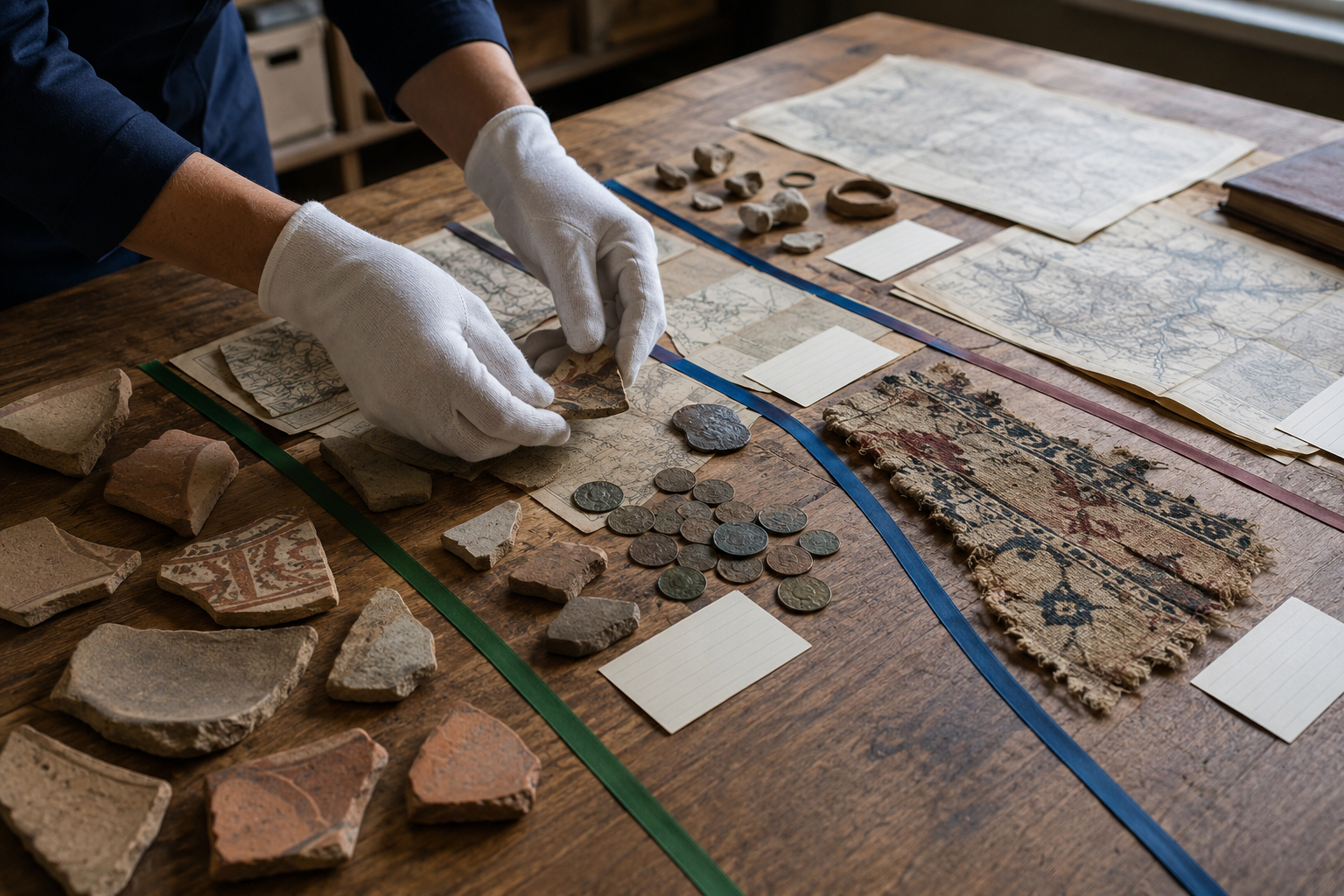
Historians use eras to simplify complex change and communicate patterns across time. Well-designed eras make connections among political, economic, social, and cultural shifts while remaining transparent about their limits. Creating practical periodizations requires clear criteria, awareness of scale, and attention to evidence that crosses conventional boundaries. This article outlines methods and challenges for constructing eras that are useful to researchers, educators, and the public. The following sections present practical criteria, examples of pitfalls, and suggestions for transparent documentation.

By framing the discussion around method rather than assertion, readers can assess how an era was built and whether it suits a given question. Clear expectations reduce confusion when multiple periodizations coexist.

Why Define Eras?

Eras provide analytical frames that highlight continuities and discontinuities in human activity. They help organize narratives, allowing readers to follow long-term trends without losing sight of local variation. Without periodization, accounts can become a flood of undifferentiated events that obscure causation and significance. Clear eras support comparative studies and pedagogical clarity by grouping related processes into intelligible units.

However, eras are interpretive choices rather than natural facts. Scholars should state why boundaries were set and what evidence supports them. Public-facing eras especially benefit from explicit communication about their construction.

Criteria and Methods

Choose criteria that match your research question: economic structures, technological innovations, political regimes, or cultural practices can justify period breaks. Use multiple indicators and cross-validate claims with primary sources, demographic data, and material evidence. Scale matters: local communities may experience shifts at different times than large polities or global systems. Flexible, nested periodizations often convey layered change better than single, rigid boundaries. Case studies and comparative timelines test how well those criteria hold up.

Document your choices and remain open to revision as new evidence emerges. Transparent methods increase the usefulness and credibility of any era. Such transparency aids reuse and critical comparison across studies.

Common Challenges

Major challenges include teleological narratives, presentist bias, and the temptation to overfit eras to neat stories. Political or cultural labels can obscure diversity within periods and marginalize groups with different temporalities. Material and environmental factors sometimes cut across human-defined eras, requiring interdisciplinary approaches. Communicating uncertainty about boundaries helps prevent misleading generalizations.

Engage with alternative periodizations and comparative cases to test your scheme. Peer feedback and pedagogical trials reveal where an era works and where it fails. Iterative revision is part of robust practice.

Conclusion

Constructing practical eras combines evidence, scale awareness, and explicit justification. Good periodization clarifies historical change while acknowledging complexity and contingency. By documenting methods and limits, historians make their eras tools for learning and debate.


Previous Post

Small Sources, Full Lives: Steps for Measured Biography

Next Post

Periodization Practices for Understanding Historical Change

Related Posts

Periodization Practices for Understanding Historical Change
Eras

Periodization Practices for Understanding Historical Change

July 18, 2026
Everyday Life During the Industrial Revolution Era
Eras

Everyday Life During the Industrial Revolution Era

July 13, 2026
Urban and Social Change in a Defining Era
Eras

Urban and Social Change in a Defining Era

July 13, 2026
Choosing Timeframes That Illuminate Historical Change
Eras

Choosing Timeframes That Illuminate Historical Change

July 8, 2026
Next Post
Periodization Practices for Understanding Historical Change

Periodization Practices for Understanding Historical Change

Search..

No Result
View All Result

Recent Articles

Periodization Practices for Understanding Historical Change

Periodization Practices for Understanding Historical Change

July 18, 2026
Constructing Practical Eras for Historical Clarity

Constructing Practical Eras for Historical Clarity

July 18, 2026
Small Sources, Full Lives: Steps for Measured Biography

Small Sources, Full Lives: Steps for Measured Biography

July 17, 2026
Making Lives Speak: Research and Narrative Strategies for Biographers

Making Lives Speak: Research and Narrative Strategies for Biographers

July 17, 2026
How Market Days Shaped Neighborhood Life and Routines

How Market Days Shaped Neighborhood Life and Routines

July 16, 2026

Subscribe Us

By clicking submit, I authorize History Ours and its affiliated companies to: (1) use, sell, and share my information for marketing purposes, including cross-context behavioral advertising, as described in our Terms of Service and Privacy Policy, (2) supplement the information that I provide with additional information lawfully obtained from other sources, like demographic data from public sources, interests inferred from web page views, or other data relevant to what might interest me, like past purchase or location data, (3) contact me or enable others to contact me by email with offers for goods and services from any category at the email address provided, and (4) retain my information while I am engaging with marketing messages that I receive and for a reasonable amount of time thereafter. I understand I can opt out at any time through an email that I receive, or by clicking here

Subscribe To Our Newsletter

By clicking submit, I authorize History Ours and its affiliated companies to: (1) use, sell, and share my information for marketing purposes, including cross-context behavioral advertising, as described in our Terms of Service and Privacy Policy, (2) supplement the information that I provide with additional information lawfully obtained from other sources, like demographic data from public sources, interests inferred from web page views, or other data relevant to what might interest me, like past purchase or location data, (3) contact me or enable others to contact me by email with offers for goods and services from any category at the email address provided, and (4) retain my information while I am engaging with marketing messages that I receive and for a reasonable amount of time thereafter. I understand I can opt out at any time through an email that I receive, or by clicking here.

© 2026 History Ours | All Rights Reserved

  • Contact Us
  • Privacy Policy
  • Terms of Service
  • Unsubscribe
  • Privacy Choices
  • Contact Us
  • Privacy Policy
  • Terms of Service
  • Unsubscribe
  • Privacy Choices

© 2026 History Ours | All Rights Reserved

No Result
View All Result
  • Home
  • History
  • Biographies
  • Eras
  • Regions
  • Timeline

© 2026 History Ours | All Rights Reserved

Skip to content
Open toolbar Accessibility Tools

Accessibility Tools

  • Increase TextIncrease Text
  • Decrease TextDecrease Text
  • GrayscaleGrayscale
  • High ContrastHigh Contrast
  • Negative ContrastNegative Contrast
  • Light BackgroundLight Background
  • Links UnderlineLinks Underline
  • Readable FontReadable Font
  • Reset Reset