Uncover History’s Secrets with Daily Updates!
Daily News Entertainment
  • Home
  • History
  • Biographies
  • Eras
  • Regions
  • Timeline
No Result
View All Result
History Ours
  • Home
  • History
  • Biographies
  • Eras
  • Regions
  • Timeline
No Result
View All Result
History Ours
No Result
View All Result
Home Biographies

Small Sources, Full Lives: Steps for Measured Biography

in Biographies
Small Sources, Full Lives: Steps for Measured Biography

Writing short biographies from limited records requires a clear method and steady judgment.
It asks the writer to balance factual accuracy with responsible interpretation and narrative coherence.
Good practice emphasizes transparent sourcing, contextual framing, and restraint when inferring motivations.
This article outlines practical steps to assemble fuller portraits from sparse materials.

Research and Source Prioritization

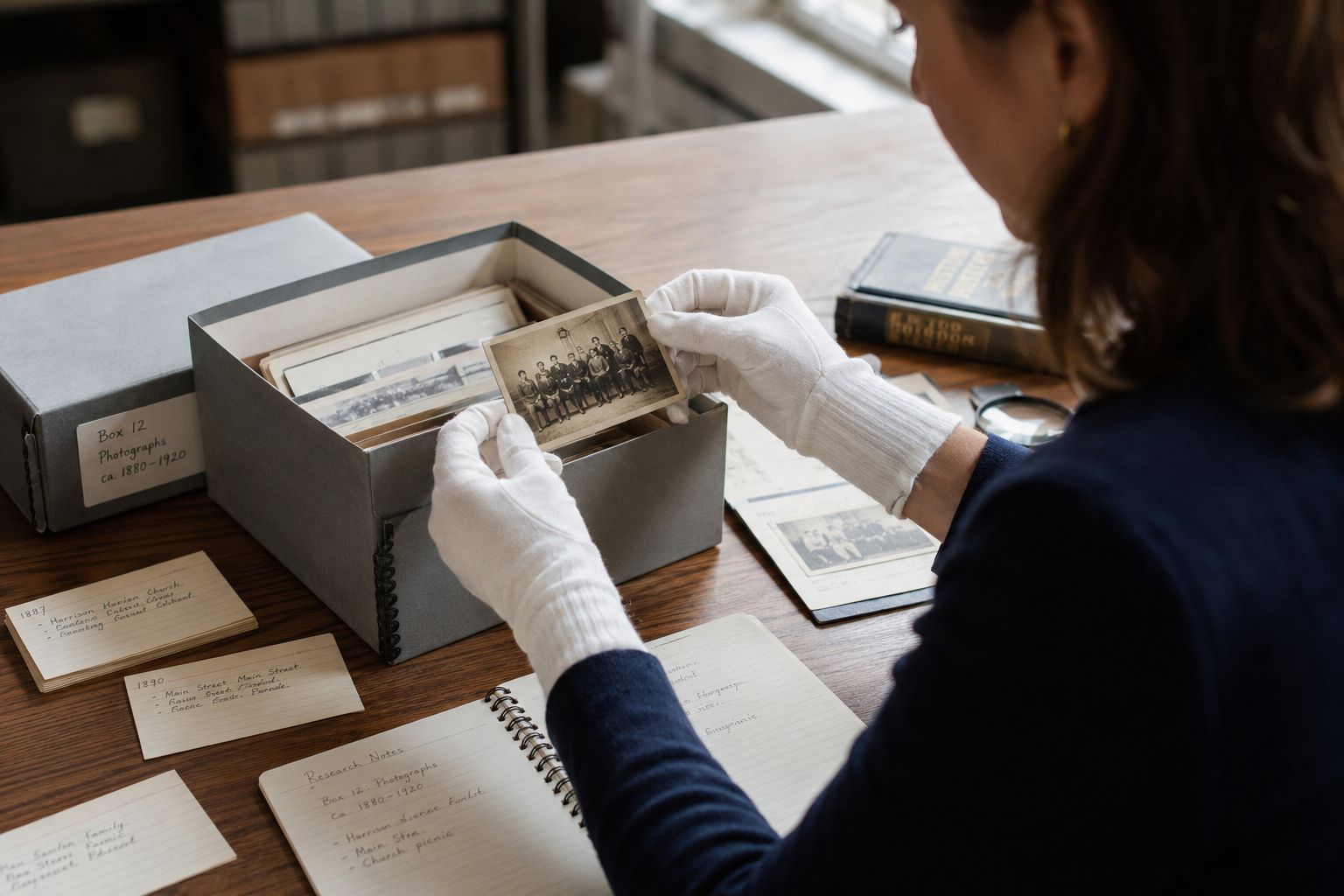
Begin by mapping available material: official records, family papers, newspapers, and material culture each carry different strengths and limits.
Assess provenance and bias for every item and prioritize sources that provide verifiable facts such as dates, places, and relationships.
When multiple sources conflict, document discrepancies rather than erasing them, and seek corroboration through independent traces.
A disciplined inventory of evidence keeps the biography anchored in what can be shown rather than assumed.

Keep notes that record not only what you found but how reliable each item seems.
This habit makes later narrative choices and caveats easier to justify to readers and editors.

Weaving Context Around Sparse Facts

Context turns a list of facts into a life: economic conditions, community networks, and institutional practices illuminate choices and constraints.
Use contextual detail to explain likely routines, opportunities, and pressures without claiming access to inner thought.
Cite comparative cases or local histories that make your interpretations plausible and rooted in evidence.
Contextualizing in this way both enriches the subject and limits overreach in narrative claims.

Explicitly separate documented events from contextual inference in your prose.
Readers should be able to tell which lines are supported by direct records and which are interpretive frames.

Handling Gaps Ethically

Gaps are inevitable; address them openly rather than filling them with speculation dressed as fact.
When you must infer, explain the reasoning and acknowledge alternative possibilities that the evidence does not exclude.
Avoid presentism or imposing modern categories that the subject would not recognize, and be cautious about attributing motives.
Such transparency respects both the subject and the reader while preserving scholarly integrity.

Consider including a brief methodological note that outlines your limits and choices.
That note is a concise way to build trust and highlight the care behind the narrative.

Crafting a Compact Narrative

For short biographies, prioritize scenes and details that reveal change, relationships, or decisions that mattered to the subject’s trajectory.
Keep prose economical: a well-chosen anecdote can illustrate broader themes more effectively than exhaustive chronology.
Use quotations and precise dates sparingly to anchor claims and give the subject a voice when possible.
End with a reflection that ties evidence and context to a clear, modest claim about significance.

Balance readability with scholarly caution to reach both general audiences and informed readers.
Measured biographies can illuminate lives without overstating what the records allow.

Conclusion

Measured biography combines careful sourcing, contextual framing, and transparent inference.
When writers respect limits and explain choices, short portraits gain credibility and empathy.
These practices help small archives yield compelling, trustworthy life histories.

Previous Post

Making Lives Speak: Research and Narrative Strategies for Biographers

Next Post

Constructing Practical Eras for Historical Clarity

Related Posts

Making Lives Speak: Research and Narrative Strategies for Biographers
Biographies

Making Lives Speak: Research and Narrative Strategies for Biographers

July 17, 2026
A Life in Context: The Scholar Who Rewrote History
Biographies

A Life in Context: The Scholar Who Rewrote History

July 12, 2026
The Archivist Who Reframed Everyday Lives in History
Biographies

The Archivist Who Reframed Everyday Lives in History

July 12, 2026
From Documents to Depth: A Practical Guide to Biography
Biographies

From Documents to Depth: A Practical Guide to Biography

July 7, 2026
Next Post
Constructing Practical Eras for Historical Clarity

Constructing Practical Eras for Historical Clarity

Search..

No Result
View All Result

Recent Articles

Periodization Practices for Understanding Historical Change

Periodization Practices for Understanding Historical Change

July 18, 2026
Constructing Practical Eras for Historical Clarity

Constructing Practical Eras for Historical Clarity

July 18, 2026
Small Sources, Full Lives: Steps for Measured Biography

Small Sources, Full Lives: Steps for Measured Biography

July 17, 2026
Making Lives Speak: Research and Narrative Strategies for Biographers

Making Lives Speak: Research and Narrative Strategies for Biographers

July 17, 2026
How Market Days Shaped Neighborhood Life and Routines

How Market Days Shaped Neighborhood Life and Routines

July 16, 2026

Subscribe Us

By clicking submit, I authorize History Ours and its affiliated companies to: (1) use, sell, and share my information for marketing purposes, including cross-context behavioral advertising, as described in our Terms of Service and Privacy Policy, (2) supplement the information that I provide with additional information lawfully obtained from other sources, like demographic data from public sources, interests inferred from web page views, or other data relevant to what might interest me, like past purchase or location data, (3) contact me or enable others to contact me by email with offers for goods and services from any category at the email address provided, and (4) retain my information while I am engaging with marketing messages that I receive and for a reasonable amount of time thereafter. I understand I can opt out at any time through an email that I receive, or by clicking here

Subscribe To Our Newsletter

By clicking submit, I authorize History Ours and its affiliated companies to: (1) use, sell, and share my information for marketing purposes, including cross-context behavioral advertising, as described in our Terms of Service and Privacy Policy, (2) supplement the information that I provide with additional information lawfully obtained from other sources, like demographic data from public sources, interests inferred from web page views, or other data relevant to what might interest me, like past purchase or location data, (3) contact me or enable others to contact me by email with offers for goods and services from any category at the email address provided, and (4) retain my information while I am engaging with marketing messages that I receive and for a reasonable amount of time thereafter. I understand I can opt out at any time through an email that I receive, or by clicking here.

© 2026 History Ours | All Rights Reserved

  • Contact Us
  • Privacy Policy
  • Terms of Service
  • Unsubscribe
  • Privacy Choices
  • Contact Us
  • Privacy Policy
  • Terms of Service
  • Unsubscribe
  • Privacy Choices

© 2026 History Ours | All Rights Reserved

No Result
View All Result
  • Home
  • History
  • Biographies
  • Eras
  • Regions
  • Timeline

© 2026 History Ours | All Rights Reserved

Skip to content
Open toolbar Accessibility Tools

Accessibility Tools

  • Increase TextIncrease Text
  • Decrease TextDecrease Text
  • GrayscaleGrayscale
  • High ContrastHigh Contrast
  • Negative ContrastNegative Contrast
  • Light BackgroundLight Background
  • Links UnderlineLinks Underline
  • Readable FontReadable Font
  • Reset Reset