
Uncover History’s Secrets with Daily Updates!
Daily News Entertainment
  • Home
  • History
  • Biographies
  • Eras
  • Regions
  • Timeline
No Result
View All Result
History Ours
  • Home
  • History
  • Biographies
  • Eras
  • Regions
  • Timeline
No Result
View All Result
History Ours
No Result
View All Result
Home Biographies

Making Lives Speak: Research and Narrative Strategies for Biographers

in Biographies
Making Lives Speak: Research and Narrative Strategies for Biographers

Biographical writing asks historians to turn fragments into intelligible, humane accounts of a life. The challenge is to respect evidence while allowing narrative clarity and reader engagement. Good biography balances archival rigor, contextual interpretation, and a careful narrative voice. This article outlines practical strategies for researching, framing, and telling lives when sources are partial or contested.

Approach and method shape the portrait as much as the documents themselves. Maintaining explicit decisions about scope and uncertainty strengthens credibility. The following sections offer steps you can apply across short and longer biographies. They aim to keep research transparent and stories compelling.

Anchoring the Life in Sources

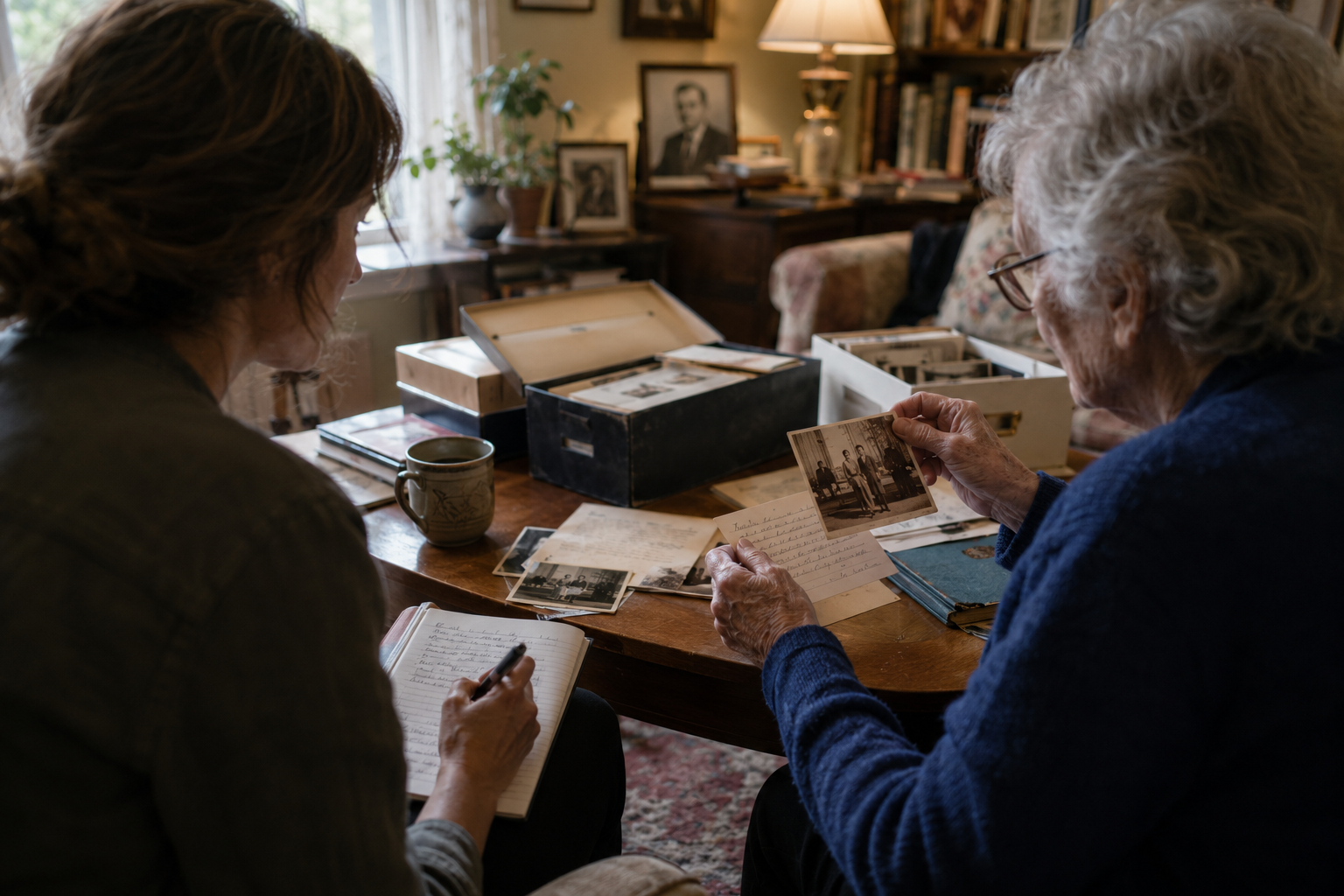
Begin by mapping every available source: official records, letters, newspapers, oral testimony, and material culture. Assess provenance, date, and perspective for each item and note what each source can reliably tell you. Prioritize contemporaneous evidence for factual claims and use later interpretations to illuminate how a person’s life was remembered. Keep a clear inventory that ties specific claims to specific sources as you write.

When you move from notes to prose, cite the strongest evidence for central events and acknowledge weaker points. A transparent record of where certainty ends and inference begins builds trust with readers. This discipline also makes revision easier if new material appears.

Contextualizing Gaps without Speculation

Gaps are inevitable; contextualization is the responsible response, not invention. Situate the subject within institutions, economic conditions, family patterns, and cultural norms relevant to their time. Comparative cases, demographic data, and contemporaneous media can suggest plausible conditions without inventing motives or conversations. Frame conjecture clearly as hypothesis and explain what would confirm or challenge it.

Clear qualifiers protect both the subject and your argument. Readers appreciate when a writer distinguishes between documented fact and interpretive reconstruction. That practice preserves the narrative’s coherence while respecting evidentiary limits.

Balancing Voice, Evidence, and Empathy

A biographer’s voice should mediate evidence and interpretation without overriding the subject’s agency. Use narrative techniques—selective scene-setting, pacing, and detail—to make sources vivid while avoiding dramatization unsupported by records. Where accounts conflict, present competing versions and evaluate their likelihood based on source quality. Empathy matters, but it should be coupled with critical analysis to avoid romanticizing or excusing actions.

Maintaining this balance helps readers connect emotionally and think historically. It also creates space for readers to weigh evidence alongside your interpretation. Thoughtful voice keeps the subject recognizable and the narrative honest.

Conclusion

Careful biography combines meticulous sourcing, contextual sensitivity, and a restrained narrative voice. Present evidence openly, mark uncertainty clearly, and use context to illuminate rather than to fill gaps. These practices produce respectful, persuasive life portraits that serve both readers and the historical record.
Previous Post

How Market Days Shaped Neighborhood Life and Routines

Next Post

Small Sources, Full Lives: Steps for Measured Biography

Related Posts

Small Sources, Full Lives: Steps for Measured Biography
Biographies

Small Sources, Full Lives: Steps for Measured Biography

July 17, 2026
A Life in Context: The Scholar Who Rewrote History
Biographies

A Life in Context: The Scholar Who Rewrote History

July 12, 2026
The Archivist Who Reframed Everyday Lives in History
Biographies

The Archivist Who Reframed Everyday Lives in History

July 12, 2026
From Documents to Depth: A Practical Guide to Biography
Biographies

From Documents to Depth: A Practical Guide to Biography

July 7, 2026
Next Post
Small Sources, Full Lives: Steps for Measured Biography

Small Sources, Full Lives: Steps for Measured Biography

Search..

No Result
View All Result

Recent Articles

Periodization Practices for Understanding Historical Change

Periodization Practices for Understanding Historical Change

July 18, 2026
Constructing Practical Eras for Historical Clarity

Constructing Practical Eras for Historical Clarity

July 18, 2026
Small Sources, Full Lives: Steps for Measured Biography

Small Sources, Full Lives: Steps for Measured Biography

July 17, 2026
Making Lives Speak: Research and Narrative Strategies for Biographers

Making Lives Speak: Research and Narrative Strategies for Biographers

July 17, 2026
How Market Days Shaped Neighborhood Life and Routines

How Market Days Shaped Neighborhood Life and Routines

July 16, 2026

Subscribe Us

By clicking submit, I authorize History Ours and its affiliated companies to: (1) use, sell, and share my information for marketing purposes, including cross-context behavioral advertising, as described in our Terms of Service and Privacy Policy, (2) supplement the information that I provide with additional information lawfully obtained from other sources, like demographic data from public sources, interests inferred from web page views, or other data relevant to what might interest me, like past purchase or location data, (3) contact me or enable others to contact me by email with offers for goods and services from any category at the email address provided, and (4) retain my information while I am engaging with marketing messages that I receive and for a reasonable amount of time thereafter. I understand I can opt out at any time through an email that I receive, or by clicking here

Subscribe To Our Newsletter

By clicking submit, I authorize History Ours and its affiliated companies to: (1) use, sell, and share my information for marketing purposes, including cross-context behavioral advertising, as described in our Terms of Service and Privacy Policy, (2) supplement the information that I provide with additional information lawfully obtained from other sources, like demographic data from public sources, interests inferred from web page views, or other data relevant to what might interest me, like past purchase or location data, (3) contact me or enable others to contact me by email with offers for goods and services from any category at the email address provided, and (4) retain my information while I am engaging with marketing messages that I receive and for a reasonable amount of time thereafter. I understand I can opt out at any time through an email that I receive, or by clicking here.

© 2026 History Ours | All Rights Reserved

  • Contact Us
  • Privacy Policy
  • Terms of Service
  • Unsubscribe
  • Privacy Choices
  • Contact Us
  • Privacy Policy
  • Terms of Service
  • Unsubscribe
  • Privacy Choices

© 2026 History Ours | All Rights Reserved

No Result
View All Result
  • Home
  • History
  • Biographies
  • Eras
  • Regions
  • Timeline

© 2026 History Ours | All Rights Reserved

Skip to content
Open toolbar Accessibility Tools

Accessibility Tools

  • Increase TextIncrease Text
  • Decrease TextDecrease Text
  • GrayscaleGrayscale
  • High ContrastHigh Contrast
  • Negative ContrastNegative Contrast
  • Light BackgroundLight Background
  • Links UnderlineLinks Underline
  • Readable FontReadable Font
  • Reset Reset