

Uncover History’s Secrets with Daily Updates!
Daily News Entertainment
  • Home
  • History
  • Biographies
  • Eras
  • Regions
  • Timeline
No Result
View All Result
History Ours
  • Home
  • History
  • Biographies
  • Eras
  • Regions
  • Timeline
No Result
View All Result
History Ours
No Result
View All Result
Home History

How Market Days Shaped Neighborhood Life and Routines

in History
How Market Days Shaped Neighborhood Life and Routines

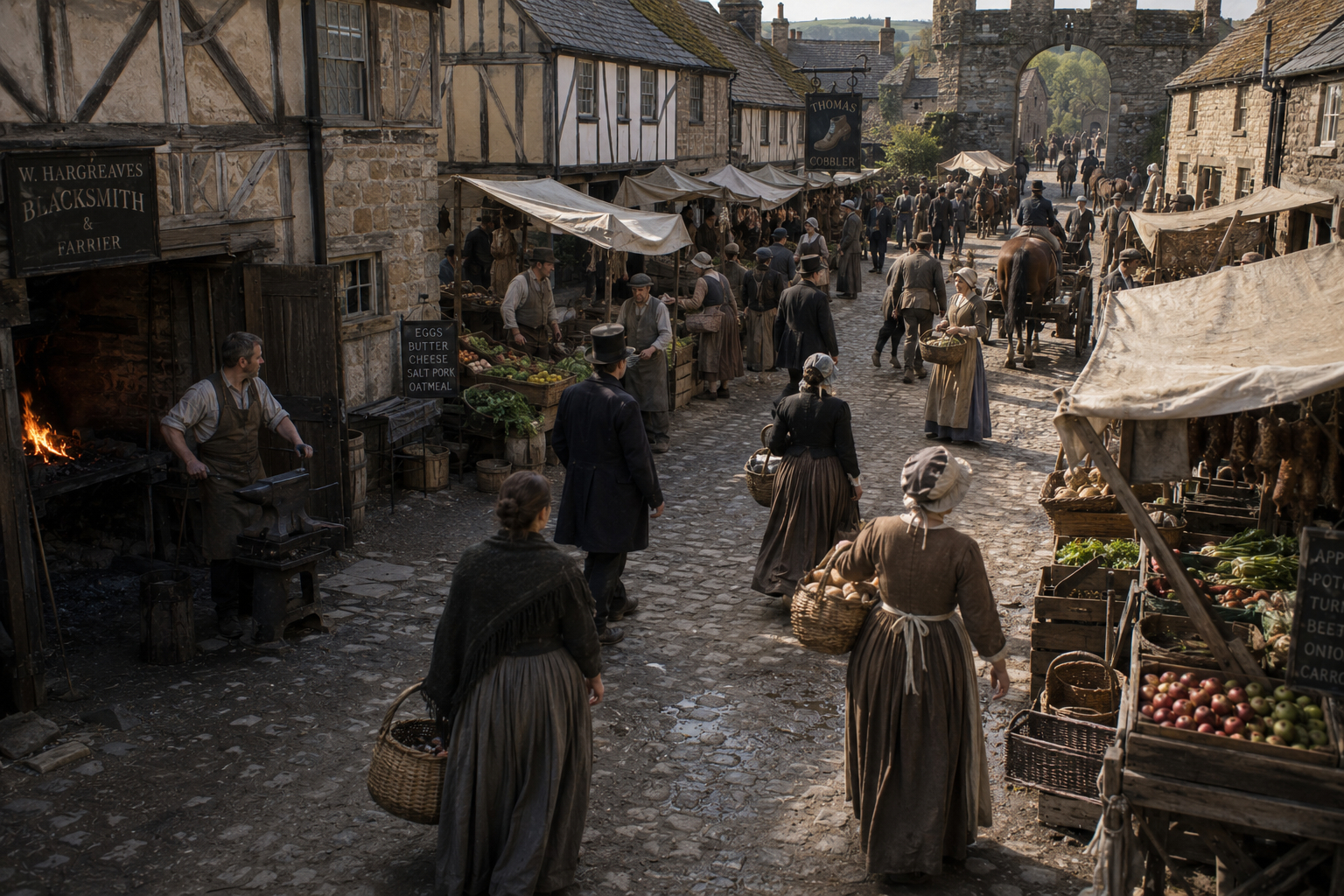
Market days were the organizing pulse of many small towns, structuring work, social exchange, and movement across neighborhoods. Archival records and material evidence show how weekly markets set rhythms of arrival, bargaining, and departure that reached into domestic life. This article examines how timing, spatial layout, and social practices linked market activity to everyday routines. It emphasizes the mutual shaping of commerce and community in ways that still inform our understanding of urban social history.

Spatial Patterns and Timing

Market schedules dictated when streets became busiest and which corners gained prominence. Stall locations, access to wells or inns, and proximity to gates influenced where people congregated and how routes developed. The predictable sequence of set-up, peak, and dispersal also created habitual flows: craftsmen paused work, farmers timed travel, and domestic chores were rearranged around market hours. These patterns produced a temporal map of town life readable across sources.

Understanding this spatial-temporal ordering clarifies why some neighborhoods grew commercial identities while others remained residential. It also highlights how townspeople negotiated everyday constraints to maintain livelihood and sociability.

Social Interactions Around the Market

Markets were sites of conviviality as well as commerce, where gossip, news, and obligations circulated alongside goods. Merchants and neighbors used recurring encounters to reinforce credit, resolve disputes, and arrange marriages or labor. Public performance — from bargaining to display — created reputations that mattered for trust and exchange beyond the marketplace. Importantly, these interactions layered formal regulations with informal expectations that shaped conduct.

This social fabric made markets nodes of mutual surveillance and support. It also meant that economic transactions carried moral and social weight for community cohesion.

Economic Practices and Household Life

Household economies adapted to market rhythms by timing production, storage, and sale to align with demand. Women’s work in food processing, small-scale brewing, or textile finishing often intersected with market opportunities, turning private labor into public income. The market also enabled access to distant goods, changing consumption patterns and material culture at home. These economic links show how market days integrated domestic strategies into broader urban economies.

Studying these connections reveals the contingency of household survival strategies. It exposes how ordinary people managed risk through routine participation in market life.

Conclusion

In sum, market days structured time, space, and social ties in ways that reached inside households and across streets. They were engines of economic exchange and frameworks for daily life, producing predictable patterns that historians can trace. Recognizing this helps recover the lived rhythms that animated past towns.


Previous Post

Cobblestones and Conversations: Social Networks of Town Streets

Related Posts

Cobblestones and Conversations: Social Networks of Town Streets
History

Cobblestones and Conversations: Social Networks of Town Streets

July 16, 2026
Neighborhood Kitchens and Urban Foodways in Historic Towns
History

Neighborhood Kitchens and Urban Foodways in Historic Towns

July 11, 2026
Corners and Crossings: Social Life in Historic Market Streets
History

Corners and Crossings: Social Life in Historic Market Streets

July 11, 2026
Street-Level Sociability in Historic Market Towns
History

Street-Level Sociability in Historic Market Towns

July 6, 2026

Search..

No Result
View All Result

Recent Articles

How Market Days Shaped Neighborhood Life and Routines

How Market Days Shaped Neighborhood Life and Routines

July 16, 2026
Cobblestones and Conversations: Social Networks of Town Streets

Cobblestones and Conversations: Social Networks of Town Streets

July 16, 2026
Mapping the Arc of Civilizations Through Timelines

Mapping the Arc of Civilizations Through Timelines

July 15, 2026
A Practical Timeline Framework for Historical Storytelling

A Practical Timeline Framework for Historical Storytelling

July 15, 2026
How Historical Regions Shape Identity and Landscape

How Historical Regions Shape Identity and Landscape

July 14, 2026

Subscribe Us

By clicking submit, I authorize History Ours and its affiliated companies to: (1) use, sell, and share my information for marketing purposes, including cross-context behavioral advertising, as described in our Terms of Service and Privacy Policy, (2) supplement the information that I provide with additional information lawfully obtained from other sources, like demographic data from public sources, interests inferred from web page views, or other data relevant to what might interest me, like past purchase or location data, (3) contact me or enable others to contact me by email with offers for goods and services from any category at the email address provided, and (4) retain my information while I am engaging with marketing messages that I receive and for a reasonable amount of time thereafter. I understand I can opt out at any time through an email that I receive, or by clicking here

Subscribe To Our Newsletter

By clicking submit, I authorize History Ours and its affiliated companies to: (1) use, sell, and share my information for marketing purposes, including cross-context behavioral advertising, as described in our Terms of Service and Privacy Policy, (2) supplement the information that I provide with additional information lawfully obtained from other sources, like demographic data from public sources, interests inferred from web page views, or other data relevant to what might interest me, like past purchase or location data, (3) contact me or enable others to contact me by email with offers for goods and services from any category at the email address provided, and (4) retain my information while I am engaging with marketing messages that I receive and for a reasonable amount of time thereafter. I understand I can opt out at any time through an email that I receive, or by clicking here.

© 2026 History Ours | All Rights Reserved

  • Contact Us
  • Privacy Policy
  • Terms of Service
  • Unsubscribe
  • Privacy Choices
  • Contact Us
  • Privacy Policy
  • Terms of Service
  • Unsubscribe
  • Privacy Choices

© 2026 History Ours | All Rights Reserved

No Result
View All Result
  • Home
  • History
  • Biographies
  • Eras
  • Regions
  • Timeline

© 2026 History Ours | All Rights Reserved

Skip to content
Open toolbar Accessibility Tools

Accessibility Tools

  • Increase TextIncrease Text
  • Decrease TextDecrease Text
  • GrayscaleGrayscale
  • High ContrastHigh Contrast
  • Negative ContrastNegative Contrast
  • Light BackgroundLight Background
  • Links UnderlineLinks Underline
  • Readable FontReadable Font
  • Reset Reset