Uncover History’s Secrets with Daily Updates!
Daily News Entertainment
  • Home
  • History
  • Biographies
  • Eras
  • Regions
  • Timeline
No Result
View All Result
History Ours
  • Home
  • History
  • Biographies
  • Eras
  • Regions
  • Timeline
No Result
View All Result
History Ours
No Result
View All Result
Home Eras

Defining Eras: Structures for Interpreting Past Change

in Eras
Defining Eras: Structures for Interpreting Past Change

Eras are conceptual tools historians use to organize time, connect events, and highlight patterns across decades or centuries.
By grouping political, economic, social, and cultural transformations, eras make complex sequences easier to study and teach.
Yet defining their start and end points requires evidence, argument, and often interdisciplinary perspectives.
This article examines criteria for period boundaries, the strengths and limits of periodization, and practical ways to apply eras in research and education.

Criteria for Defining Eras

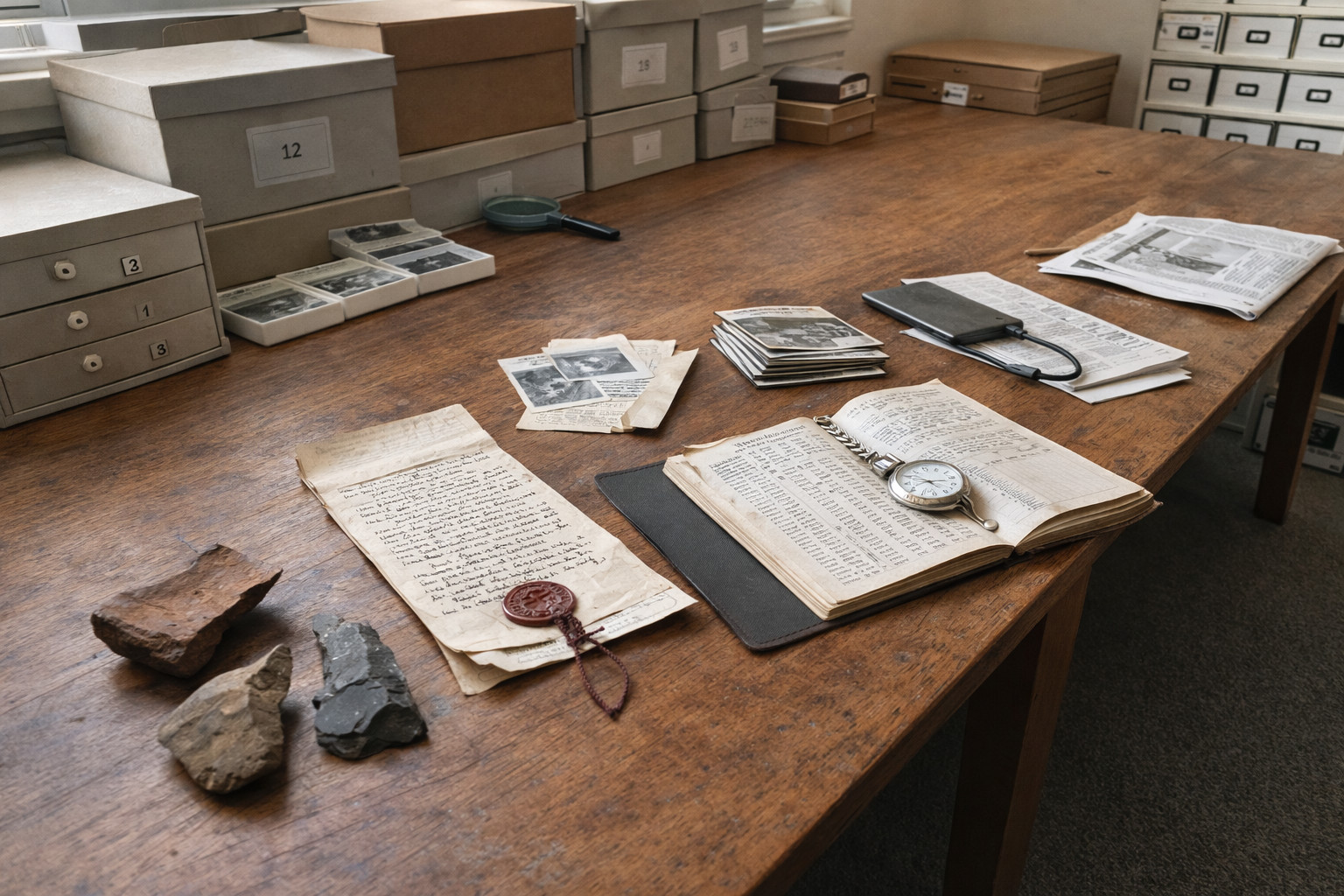
Historians look for sustained, widespread changes—technological shifts, regime transformations, long-term economic reorientations, or deep cultural movements—that justify naming an era. Chronologies grounded in material evidence such as artifact assemblages, demographic trends, or archival concentrations provide empirical weight to proposed divisions. Comparative perspective is also important: an era that applies across regions or social groups gains analytical value in explaining broader processes. At the same time, scholars must be cautious about privileging elite sources or national narratives that can create misleading uniformity.

Robust era definitions therefore combine multiple types of data and explicit methodological choices. Transparent criteria help other researchers assess, critique, or refine period boundaries.

Benefits and Limitations of Periodization

Periodization helps produce coherent narratives, enabling scholars and students to trace causal chains and to compare developments across different times and places. It aids communication by offering shared reference points, like ‘industrial’ or ‘revolutionary’ moments, that condense complex histories into memorable frames. However, simplified timeblocks risk flattening diversity, obscuring concurrent local practices, or imposing artificial breaks where change was gradual. Critical awareness of these limitations encourages more flexible and pluralistic uses of eras that acknowledge overlaps and exceptions.

Good periodization balances explanatory power with attention to contingency and variation. Scholars should treat eras as provisional frameworks that can be revised in light of new evidence.

Applying Eras in Teaching and Research

In teaching, carefully framed eras can guide curriculum design, helping learners see continuity and rupture across syllabus units and encouraging temporal reasoning. Assignments that require comparing different spatial scales or tracing a theme across multiple eras develop critical skills and prevent rote memorization. In research, blending microhistorical studies with longue durée perspectives tests the explanatory reach of an era and uncovers hidden dynamics. Digital tools, databases, and quantitative methods now allow scholars to visualize temporal patterns and to assess the coherence of proposed eras more systematically.

Practical application means stating assumptions, citing evidence, and inviting critical engagement from peers and students. When used transparently, eras remain powerful instruments for organizing knowledge without becoming rigid templates.

Conclusion

Thoughtful definition and application of eras sharpen analytical questions and open paths for comparative insight.
Maintaining methodological transparency and sensitivity to variation prevents distortion of the past.
Eras are heuristic tools that, when used carefully, make historical complexity both approachable and researchable.


Previous Post

Charting Lives: Methods for Balanced Biographical Narrative

Next Post

Balancing Continuity and Change When Defining Eras

Related Posts

Pax Mongolica: How Mongol Rule Rewired the Old World
Eras

Pax Mongolica: How Mongol Rule Rewired the Old World

September 15, 2026
Life Under the Tokugawa: How Edo Japan Rewrote Social Order
Eras

Life Under the Tokugawa: How Edo Japan Rewrote Social Order

September 15, 2026
When Empires Fell: The Late Bronze Age Collapse
Eras

When Empires Fell: The Late Bronze Age Collapse

September 15, 2026
1816: How a Volcano Turned Summer Into Crisis
Eras

1816: How a Volcano Turned Summer Into Crisis

September 15, 2026
Next Post
Balancing Continuity and Change When Defining Eras

Balancing Continuity and Change When Defining Eras

Search..

No Result
View All Result

Recent Articles

The Disguise That Broke Chains: Ellen and William Craft

The Disguise That Broke Chains: Ellen and William Craft

September 15, 2026
Bass Reeves: The Marshal Who Hunted Outlaws in Indian Territory

Bass Reeves: The Marshal Who Hunted Outlaws in Indian Territory

September 15, 2026
How the Crystal Palace Turned Glass and Iron into a Modern Stage

How the Crystal Palace Turned Glass and Iron into a Modern Stage

September 15, 2026
Anne Bonny: The Pirate Who Broke Rules and Expectations

Anne Bonny: The Pirate Who Broke Rules and Expectations

September 15, 2026
How Haiti Broke Its Chains: A 1791–1804 Timeline

How Haiti Broke Its Chains: A 1791–1804 Timeline

September 15, 2026

Subscribe Us

By clicking submit, I authorize History Ours and its affiliated companies to: (1) use, sell, and share my information for marketing purposes, including cross-context behavioral advertising, as described in our Terms of Service and Privacy Policy, (2) supplement the information that I provide with additional information lawfully obtained from other sources, like demographic data from public sources, interests inferred from web page views, or other data relevant to what might interest me, like past purchase or location data, (3) contact me or enable others to contact me by email with offers for goods and services from any category at the email address provided, and (4) retain my information while I am engaging with marketing messages that I receive and for a reasonable amount of time thereafter. I understand I can opt out at any time through an email that I receive, or by clicking here

Subscribe To Our Newsletter

By clicking submit, I authorize History Ours and its affiliated companies to: (1) use, sell, and share my information for marketing purposes, including cross-context behavioral advertising, as described in our Terms of Service and Privacy Policy, (2) supplement the information that I provide with additional information lawfully obtained from other sources, like demographic data from public sources, interests inferred from web page views, or other data relevant to what might interest me, like past purchase or location data, (3) contact me or enable others to contact me by email with offers for goods and services from any category at the email address provided, and (4) retain my information while I am engaging with marketing messages that I receive and for a reasonable amount of time thereafter. I understand I can opt out at any time through an email that I receive, or by clicking here.

© 2026 History Ours | All Rights Reserved

  • Contact Us
  • Privacy Policy
  • Terms of Service
  • Unsubscribe
  • Privacy Choices
  • Contact Us
  • Privacy Policy
  • Terms of Service
  • Unsubscribe
  • Privacy Choices

© 2026 History Ours | All Rights Reserved

No Result
View All Result
  • Home
  • History
  • Biographies
  • Eras
  • Regions
  • Timeline

© 2026 History Ours | All Rights Reserved

Skip to content
Open toolbar Accessibility Tools

Accessibility Tools

  • Increase TextIncrease Text
  • Decrease TextDecrease Text
  • GrayscaleGrayscale
  • High ContrastHigh Contrast
  • Negative ContrastNegative Contrast
  • Light BackgroundLight Background
  • Links UnderlineLinks Underline
  • Readable FontReadable Font
  • Reset Reset