

Uncover History’s Secrets with Daily Updates!
Daily News Entertainment
  • Home
  • History
  • Biographies
  • Eras
  • Regions
  • Timeline
No Result
View All Result
History Ours
  • Home
  • History
  • Biographies
  • Eras
  • Regions
  • Timeline
No Result
View All Result
History Ours
No Result
View All Result
Home Eras

Balancing Continuity and Change When Defining Eras

in Eras
Balancing Continuity and Change When Defining Eras

Periodizing the past requires a balance between continuity and change so that eras illuminate patterns without erasing nuance. Scholars and educators choose boundaries to highlight causal shifts, cultural transformations, or technological inflection points. Well-defined eras help readers navigate long-term developments while acknowledging overlap and regional difference. This piece outlines practical criteria and methods for defining eras that are both useful and defensible.

Criteria for Choosing Boundaries

Effective era boundaries rest on clear, evidence-based criteria rather than arbitrary dates or popular assumptions. Historians often look for sustained shifts in social structures, economic systems, political institutions, or cultural practices that produce qualitatively different lived experiences. The duration of an era should reflect meaningful continuity, while transitions should be tied to identifiable processes such as reform movements, technological diffusion, or crisis. Researchers should also consider scale: a useful era for a local study may differ from one suited to global synthesis.

Applying these criteria means testing proposed boundaries against multiple kinds of data and asking whether they clarify or obscure historical dynamics. Transparency about choices strengthens interpretive claims and helps readers evaluate alternative periodizations. Balanced criteria reduce the risk of retrofitting narratives to preferred outcomes.

Tools and Sources for Periodization

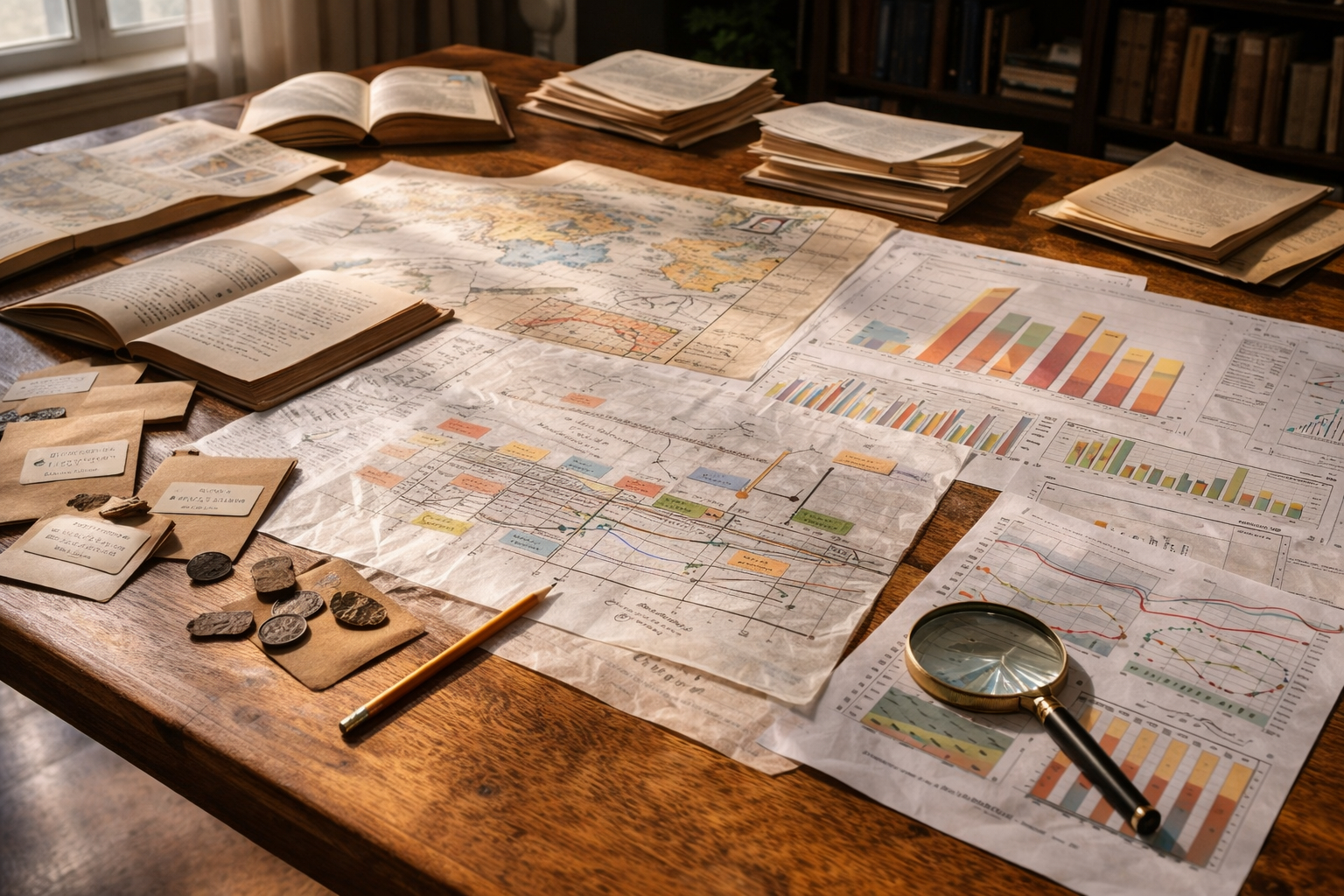
A variety of tools and sources support robust periodization, from quantitative datasets to material culture and literary corpora. Longitudinal statistics on production, demographic trends, and trade can reveal durable structural shifts, while artifacts and architecture often mark changes in technology and consumption. Textual sources show evolving vocabularies and conceptual frameworks that accompany broader transformations. Combining these evidentiary strands produces a richer, more defensible picture of when and why an era begins and ends.

Interdisciplinary collaboration amplifies these tools: archaeologists, economists, and literary scholars bring complementary perspectives that test and refine period boundaries. Digital methods—mapping, network analysis, and text mining—offer new ways to visualize continuity and rupture without replacing critical interpretation.

Communicating Era Choices

Clarity in communicating era choices matters for teaching, publishing, and public history. Authors should state the rationale for chosen boundaries up front and indicate limitations and alternatives. Visual aids such as timelines and thematic overlays help audiences see both overlaps and turning points without assuming abrupt change everywhere. Case studies that reveal local variation alongside broad trends make periodization more accessible and honest.

Labels should be purposeful: a well-chosen era name highlights the defining dynamics rather than imposing a single narrative. Thoughtful communication invites debate and refinement, which are central to historical inquiry.

Conclusion

Defining eras is a methodological act that balances evidence and interpretation to highlight meaningful change. Clear criteria, diverse sources, and transparent communication make periodization both useful and responsible. When done carefully, era choices enhance understanding without oversimplifying the past.


Previous Post

Defining Eras: Structures for Interpreting Past Change

Next Post

Borderlands and Nations: Mapping Regional Identity Over Time

Related Posts

Pax Mongolica: How Mongol Rule Rewired the Old World
Eras

Pax Mongolica: How Mongol Rule Rewired the Old World

September 15, 2026
Life Under the Tokugawa: How Edo Japan Rewrote Social Order
Eras

Life Under the Tokugawa: How Edo Japan Rewrote Social Order

September 15, 2026
When Empires Fell: The Late Bronze Age Collapse
Eras

When Empires Fell: The Late Bronze Age Collapse

September 15, 2026
1816: How a Volcano Turned Summer Into Crisis
Eras

1816: How a Volcano Turned Summer Into Crisis

September 15, 2026
Next Post
Borderlands and Nations: Mapping Regional Identity Over Time

Borderlands and Nations: Mapping Regional Identity Over Time

Search..

No Result
View All Result

Recent Articles

The Disguise That Broke Chains: Ellen and William Craft

The Disguise That Broke Chains: Ellen and William Craft

September 15, 2026
Bass Reeves: The Marshal Who Hunted Outlaws in Indian Territory

Bass Reeves: The Marshal Who Hunted Outlaws in Indian Territory

September 15, 2026
How the Crystal Palace Turned Glass and Iron into a Modern Stage

How the Crystal Palace Turned Glass and Iron into a Modern Stage

September 15, 2026
Anne Bonny: The Pirate Who Broke Rules and Expectations

Anne Bonny: The Pirate Who Broke Rules and Expectations

September 15, 2026
How Haiti Broke Its Chains: A 1791–1804 Timeline

How Haiti Broke Its Chains: A 1791–1804 Timeline

September 15, 2026

Subscribe Us

By clicking submit, I authorize History Ours and its affiliated companies to: (1) use, sell, and share my information for marketing purposes, including cross-context behavioral advertising, as described in our Terms of Service and Privacy Policy, (2) supplement the information that I provide with additional information lawfully obtained from other sources, like demographic data from public sources, interests inferred from web page views, or other data relevant to what might interest me, like past purchase or location data, (3) contact me or enable others to contact me by email with offers for goods and services from any category at the email address provided, and (4) retain my information while I am engaging with marketing messages that I receive and for a reasonable amount of time thereafter. I understand I can opt out at any time through an email that I receive, or by clicking here

Subscribe To Our Newsletter

By clicking submit, I authorize History Ours and its affiliated companies to: (1) use, sell, and share my information for marketing purposes, including cross-context behavioral advertising, as described in our Terms of Service and Privacy Policy, (2) supplement the information that I provide with additional information lawfully obtained from other sources, like demographic data from public sources, interests inferred from web page views, or other data relevant to what might interest me, like past purchase or location data, (3) contact me or enable others to contact me by email with offers for goods and services from any category at the email address provided, and (4) retain my information while I am engaging with marketing messages that I receive and for a reasonable amount of time thereafter. I understand I can opt out at any time through an email that I receive, or by clicking here.

© 2026 History Ours | All Rights Reserved

  • Contact Us
  • Privacy Policy
  • Terms of Service
  • Unsubscribe
  • Privacy Choices
  • Contact Us
  • Privacy Policy
  • Terms of Service
  • Unsubscribe
  • Privacy Choices

© 2026 History Ours | All Rights Reserved

No Result
View All Result
  • Home
  • History
  • Biographies
  • Eras
  • Regions
  • Timeline

© 2026 History Ours | All Rights Reserved

Skip to content
Open toolbar Accessibility Tools

Accessibility Tools

  • Increase TextIncrease Text
  • Decrease TextDecrease Text
  • GrayscaleGrayscale
  • High ContrastHigh Contrast
  • Negative ContrastNegative Contrast
  • Light BackgroundLight Background
  • Links UnderlineLinks Underline
  • Readable FontReadable Font
  • Reset Reset