Uncover History’s Secrets with Daily Updates!
Daily News Entertainment
  • Home
  • History
  • Biographies
  • Eras
  • Regions
  • Timeline
No Result
View All Result
History Ours
  • Home
  • History
  • Biographies
  • Eras
  • Regions
  • Timeline
No Result
View All Result
History Ours
No Result
View All Result
Home Eras

How Historians Build Helpful Chronological Frameworks

in Eras
How Historians Build Helpful Chronological Frameworks

Historians organize the past into eras to make complex change intelligible. Clear timeframes help researchers and the public connect events, developments, and long-term trends. Choosing boundaries involves weighing evidence, scale, and meaningful continuities rather than imposing neat divisions. Thoughtful frameworks improve teaching, interpretation, and ongoing scholarly debate.

Why Define Eras

Defining eras gives structure to large amounts of information and highlights causal relationships across time. Eras can reveal patterns such as technological diffusion, social transformation, or sustained political systems that single events do not show. They also guide research priorities by focusing attention on transitional moments and periods of stability. At the same time, rigid era labels risk simplifying overlapping experiences and marginal voices.

Being explicit about why an era is chosen helps mitigate those risks. Clear rationale supports transparency and invites critique, which strengthens historical interpretation. Using eras as tools rather than answers keeps analysis open to revision.

Criteria for Useful Timeframes

Useful timeframes rest on evidence of change, coherence in causal mechanisms, and relevance to the questions being asked. Scale matters: local, regional, and global rhythms often require different period boundaries. Good eras balance continuity and discontinuity, showing both what persisted and what shifted. They should also be defensible with sources and adaptable as new information emerges.

Prioritizing clarity and explanatory power over catchy labels makes timeframes more robust. Researchers should test proposed boundaries against primary evidence and alternative periodizations. Doing so creates frameworks that support both argumentation and public communication.

Applying Timeframes in Public History

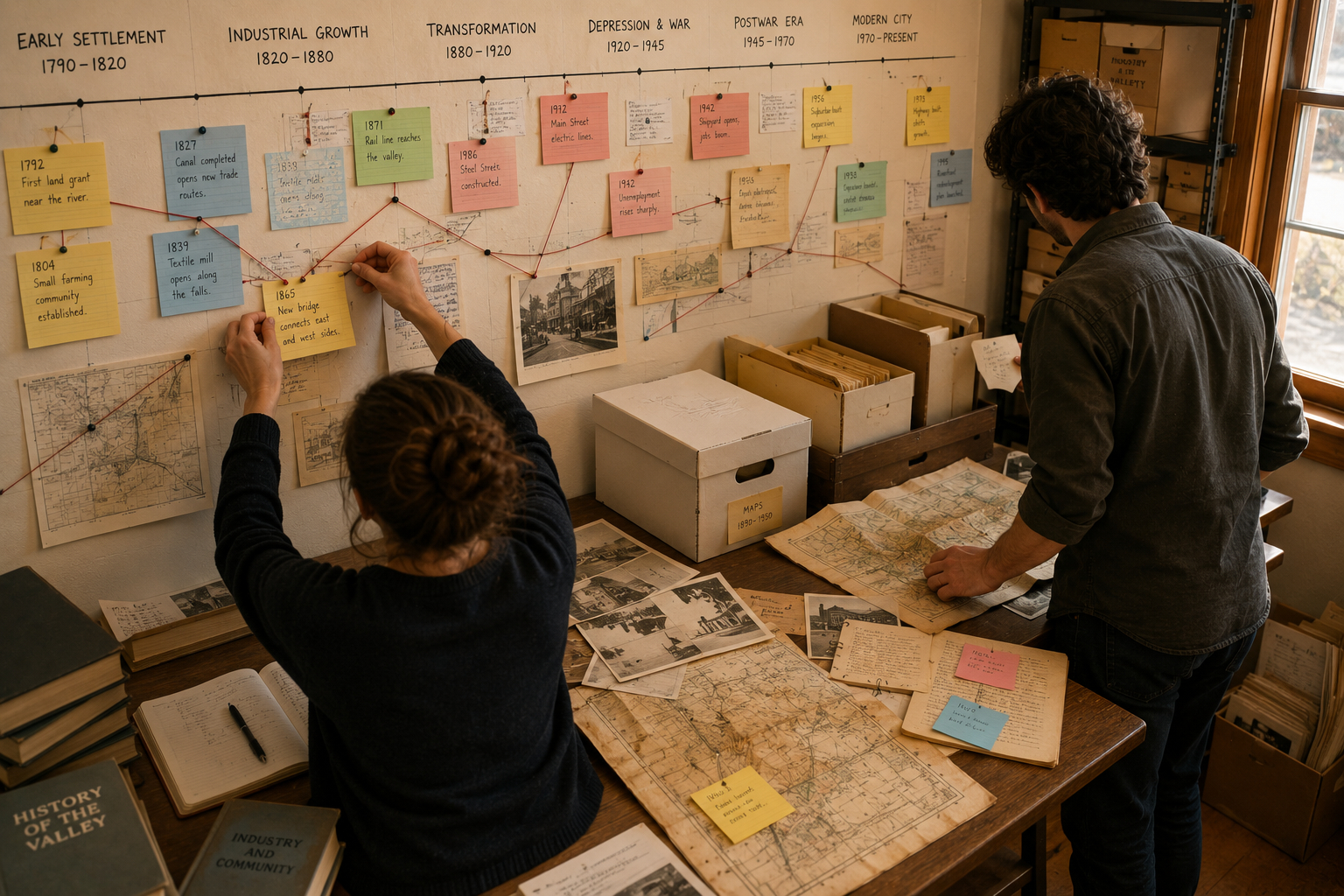
Museums, curricula, and digital projects translate scholarly timeframes for broader audiences and must craft eras that communicate clearly without oversimplifying. Public history benefits when scholars explain their choices and present multiple perspectives within the same period. Interactive timelines, thematic exhibits, and contextual narratives can show overlapping eras and lived experiences. This approach encourages visitors and readers to see history as layered and contested rather than fixed.

Collaboration between scholars, educators, and community stakeholders improves how eras are presented. Iteration and feedback ensure frameworks remain useful and relevant to diverse audiences.

Conclusion

Well-constructed chronological frameworks are analytic tools that clarify change and continuity. They require transparent criteria, attention to scale, and willingness to revise in light of new evidence. Approached thoughtfully, eras enhance both scholarly inquiry and public understanding.


Previous Post

Crafting Concise Life Portraits with Historical Rigor

Next Post

Periodization Principles for Interpreting Historical Change

Related Posts

Pax Mongolica: How Mongol Rule Rewired the Old World
Eras

Pax Mongolica: How Mongol Rule Rewired the Old World

September 15, 2026
Life Under the Tokugawa: How Edo Japan Rewrote Social Order
Eras

Life Under the Tokugawa: How Edo Japan Rewrote Social Order

September 15, 2026
When Empires Fell: The Late Bronze Age Collapse
Eras

When Empires Fell: The Late Bronze Age Collapse

September 15, 2026
1816: How a Volcano Turned Summer Into Crisis
Eras

1816: How a Volcano Turned Summer Into Crisis

September 15, 2026
Next Post
Periodization Principles for Interpreting Historical Change

Periodization Principles for Interpreting Historical Change

Search..

No Result
View All Result

Recent Articles

The Disguise That Broke Chains: Ellen and William Craft

The Disguise That Broke Chains: Ellen and William Craft

September 15, 2026
Bass Reeves: The Marshal Who Hunted Outlaws in Indian Territory

Bass Reeves: The Marshal Who Hunted Outlaws in Indian Territory

September 15, 2026
How the Crystal Palace Turned Glass and Iron into a Modern Stage

How the Crystal Palace Turned Glass and Iron into a Modern Stage

September 15, 2026
Anne Bonny: The Pirate Who Broke Rules and Expectations

Anne Bonny: The Pirate Who Broke Rules and Expectations

September 15, 2026
How Haiti Broke Its Chains: A 1791–1804 Timeline

How Haiti Broke Its Chains: A 1791–1804 Timeline

September 15, 2026

Subscribe Us

By clicking submit, I authorize History Ours and its affiliated companies to: (1) use, sell, and share my information for marketing purposes, including cross-context behavioral advertising, as described in our Terms of Service and Privacy Policy, (2) supplement the information that I provide with additional information lawfully obtained from other sources, like demographic data from public sources, interests inferred from web page views, or other data relevant to what might interest me, like past purchase or location data, (3) contact me or enable others to contact me by email with offers for goods and services from any category at the email address provided, and (4) retain my information while I am engaging with marketing messages that I receive and for a reasonable amount of time thereafter. I understand I can opt out at any time through an email that I receive, or by clicking here

Subscribe To Our Newsletter

By clicking submit, I authorize History Ours and its affiliated companies to: (1) use, sell, and share my information for marketing purposes, including cross-context behavioral advertising, as described in our Terms of Service and Privacy Policy, (2) supplement the information that I provide with additional information lawfully obtained from other sources, like demographic data from public sources, interests inferred from web page views, or other data relevant to what might interest me, like past purchase or location data, (3) contact me or enable others to contact me by email with offers for goods and services from any category at the email address provided, and (4) retain my information while I am engaging with marketing messages that I receive and for a reasonable amount of time thereafter. I understand I can opt out at any time through an email that I receive, or by clicking here.

© 2026 History Ours | All Rights Reserved

  • Contact Us
  • Privacy Policy
  • Terms of Service
  • Unsubscribe
  • Privacy Choices
  • Contact Us
  • Privacy Policy
  • Terms of Service
  • Unsubscribe
  • Privacy Choices

© 2026 History Ours | All Rights Reserved

No Result
View All Result
  • Home
  • History
  • Biographies
  • Eras
  • Regions
  • Timeline

© 2026 History Ours | All Rights Reserved

Skip to content
Open toolbar Accessibility Tools

Accessibility Tools

  • Increase TextIncrease Text
  • Decrease TextDecrease Text
  • GrayscaleGrayscale
  • High ContrastHigh Contrast
  • Negative ContrastNegative Contrast
  • Light BackgroundLight Background
  • Links UnderlineLinks Underline
  • Readable FontReadable Font
  • Reset Reset