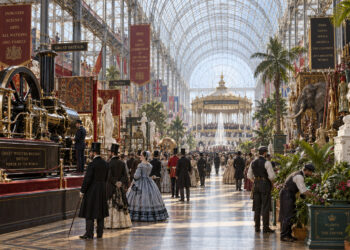
Market towns were porous places where shopfronts, workshops and homes often shared a single address, producing a distinct blend of private and public activity. Everyday life in these settings mixed commerce and domestic care in ways that structured daily rhythms, social obligations and urban layouts. Close attention to architecture, objects and neighborhood practices helps historians recover how families, artisans and traders lived together across work and home. This piece outlines how spatial arrangements and routine practices made market towns lively, interdependent communities.
Framing the subject in spatial and temporal terms highlights both material continuity and social negotiation. It also underscores the value of ordinary places for understanding broader urban change.
Domestic and Commercial Intersections
Householders commonly ran businesses from front rooms, cellars or purpose-built stalls, so production, sale and family life coexisted in overlapping zones of activity. Apprentices, kin and neighbors often participated in work, turning domestic spaces into sites of teaching, exchange and income generation. Architectural features such as shop windows, back alleys and multifunctional courtyards enabled a constant flow of goods and people while also shaping interactions between strangers and acquaintances. These built forms thus mediated privacy, visibility and authority within the everyday economy.
Such arrangements fostered tightly woven social networks grounded in both obligation and opportunity. They made reputations and household fortunes depend on visible competence and neighborly trust.
Rhythms of Work and Neighborhood Life
Daily schedules in market towns followed commercial timetables, religious observances and seasonal fairs, creating predictable patterns that coordinated labor, leisure and social exchange. Streets, thresholds and public benches became extensions of the home where gossip, negotiation and small repairs took place in plain sight. Informal labor—mending, food preparation, tailoring—was often performed openly, advertising skill to passing customers and reinforcing communal standards. Visibility therefore acted as a form of social capital, shaping who gained business and who attracted assistance.
These temporal and social rhythms allowed residents to anticipate one another’s needs and to settle disputes through reputation rather than formal institutions. Over time, routine patterns became part of a town’s identity and memory.
Markets as Social Infrastructure
Beyond commerce, markets functioned as hubs for information flow, civic exchange and ceremonial display, concentrating people and resources in ways that supported collective life. Market crosses, guild booths and open stalls were stages for political news, charitable distributions and ritual enactments that reinforced community bonds. The material environment—pallets, signs, benches—offered cues that structured interactions and indicated social standing within the crowd. In this way, physical arrangements supported both everyday cooperation and occasional conflict resolution.
Examining markets as infrastructure reveals how ordinary places enabled governance, communication and mutual aid. Their study shows the reciprocal ties between built space and social order.
Conclusion
Reconstructing the entanglement of domestic and commercial spaces illuminates the lived realities of market town residents. Attention to architecture, routine and social practice shows how ordinary places produced durable social ties. Understanding these intersections enriches broader narratives of urban history.