
Uncover History’s Secrets with Daily Updates!
Daily News Entertainment
  • Home
  • History
  • Biographies
  • Eras
  • Regions
  • Timeline
No Result
View All Result
History Ours
  • Home
  • History
  • Biographies
  • Eras
  • Regions
  • Timeline
No Result
View All Result
History Ours
No Result
View All Result
Home Regions

Paths and Practices: Building Regional Identity Through Everyday Life

in Regions
Paths and Practices: Building Regional Identity Through Everyday Life

Regional identity is not only recorded in archives and maps but is also lived through everyday routes and routines. Small acts—commuting along a lane, visiting a market, or repairing a roof—accumulate into durable habits that make a place recognizable. These habitual practices link people to specific landscapes and to one another across generations. Examining these gestures reveals how regions form, transform, and persist over time.

Everyday movements and tasks often escape traditional historical narratives, yet they create the texture of local life. By focusing on practice rather than policy, historians can recover patterns that shaped social cohesion and economic exchange. Such attention also highlights how power and belonging are negotiated in daily settings. The following sections explore core ways that routine actions build regional meaning.

Routes and Routines

Paths—literal and figurative—organize how people inhabit a region and how goods, ideas, and practices circulate. Regular routes such as footpaths, river crossings, and market trails structure time and social encounters. When these routes become habitual, they create expectations about where people meet, what trades persist, and how information flows. Over time, a network of routines can anchor a community even when formal borders change.

Understanding these patterns requires attention to scale and cadence. Microhistories of daily travel reveal how larger economic and social processes were experienced on the ground. Oral testimonies and material traces often show continuities that official records miss. With such evidence, historians can map a living geography of practice.

Material Traces and Daily Practice

Objects and built features are evidence of habitual actions that shape regional identity. Repair marks on bridges, wear on thresholds, and reused building materials all testify to repeated practices. These material residues signal preferences, resource access, and shared skills within a locality. Reading them helps reconstruct routines that bound communities together.

Archaeological fragments and vernacular architecture complement written sources by documenting sustained behaviors. Materials carry memory and affordance: they permit certain practices and constrain others. They thus participate actively in the making of regional character.

Shared Spaces and Rituals

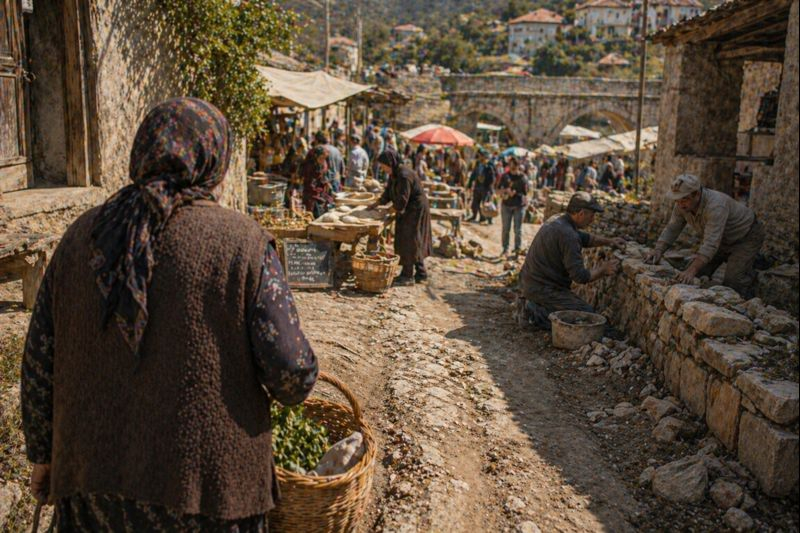
Markets, communal ovens, chapels, and crossroads serve as nodes where ritual and routine intersect. Regular gatherings establish norms and reinforce group identities through repetition. Seasonal festivals, repair days, and market rhythms create a calendar of communal life that differentiates one place from another. These shared spaces make abstract belonging tangible.

Studying these sites reveals how inclusion and exclusion operated locally. Participation in communal rituals fosters a sense of mutual obligation and historical continuity. Such practices are often the glue that holds diverse populations within a region.

Adaptation and Memory

Regions are resilient because routines adapt to disruptions while retaining memory of the past. Migration, environmental change, and political shifts prompt modifications in how people move and work. Yet adaptations often preserve core practices, even as their forms evolve. Memory is transmitted through apprenticeship, storytelling, and embodied repetition.

Historians attentive to adaptation can trace how regions change without losing coherence. This perspective highlights continuity amid transformation and illuminates how communities negotiate identity over time. Everyday practices thus become a lens for long-term regional history.

Conclusion

Everyday routes and practices are foundational to regional identity because they embed people in place through repeated action. Attending to these patterns uncovers forms of belonging and resilience that are otherwise invisible. By combining material, oral, and spatial evidence, historians can recover the living processes that make regions lasting and meaningful.

Previous Post

Connecting Microhistory and Macro Eras for Clearer Narratives

Next Post

From Paths to Practices: How Regions Take Shape Over Time

Related Posts

Trieste: A Port at the Edge of Empires
Regions

Trieste: A Port at the Edge of Empires

September 15, 2026
Svalbard: How a Frozen Archipelago Became an International Outpost
Regions

Svalbard: How a Frozen Archipelago Became an International Outpost

September 15, 2026
Orkney: Where Norse Law and Scottish Life Intertwined
Regions

Orkney: Where Norse Law and Scottish Life Intertwined

September 15, 2026
Inside the Covered Streets: The Grand Bazaar and Istanbul’s Life
Regions

Inside the Covered Streets: The Grand Bazaar and Istanbul’s Life

September 15, 2026
Next Post
From Paths to Practices: How Regions Take Shape Over Time

From Paths to Practices: How Regions Take Shape Over Time

Search..

No Result
View All Result

Recent Articles

The Disguise That Broke Chains: Ellen and William Craft

The Disguise That Broke Chains: Ellen and William Craft

September 15, 2026
Bass Reeves: The Marshal Who Hunted Outlaws in Indian Territory

Bass Reeves: The Marshal Who Hunted Outlaws in Indian Territory

September 15, 2026
How the Crystal Palace Turned Glass and Iron into a Modern Stage

How the Crystal Palace Turned Glass and Iron into a Modern Stage

September 15, 2026
Anne Bonny: The Pirate Who Broke Rules and Expectations

Anne Bonny: The Pirate Who Broke Rules and Expectations

September 15, 2026
How Haiti Broke Its Chains: A 1791–1804 Timeline

How Haiti Broke Its Chains: A 1791–1804 Timeline

September 15, 2026

Subscribe Us

By clicking submit, I authorize History Ours and its affiliated companies to: (1) use, sell, and share my information for marketing purposes, including cross-context behavioral advertising, as described in our Terms of Service and Privacy Policy, (2) supplement the information that I provide with additional information lawfully obtained from other sources, like demographic data from public sources, interests inferred from web page views, or other data relevant to what might interest me, like past purchase or location data, (3) contact me or enable others to contact me by email with offers for goods and services from any category at the email address provided, and (4) retain my information while I am engaging with marketing messages that I receive and for a reasonable amount of time thereafter. I understand I can opt out at any time through an email that I receive, or by clicking here

Subscribe To Our Newsletter

By clicking submit, I authorize History Ours and its affiliated companies to: (1) use, sell, and share my information for marketing purposes, including cross-context behavioral advertising, as described in our Terms of Service and Privacy Policy, (2) supplement the information that I provide with additional information lawfully obtained from other sources, like demographic data from public sources, interests inferred from web page views, or other data relevant to what might interest me, like past purchase or location data, (3) contact me or enable others to contact me by email with offers for goods and services from any category at the email address provided, and (4) retain my information while I am engaging with marketing messages that I receive and for a reasonable amount of time thereafter. I understand I can opt out at any time through an email that I receive, or by clicking here.

© 2026 History Ours | All Rights Reserved

  • Contact Us
  • Privacy Policy
  • Terms of Service
  • Unsubscribe
  • Privacy Choices
  • Contact Us
  • Privacy Policy
  • Terms of Service
  • Unsubscribe
  • Privacy Choices

© 2026 History Ours | All Rights Reserved

No Result
View All Result
  • Home
  • History
  • Biographies
  • Eras
  • Regions
  • Timeline

© 2026 History Ours | All Rights Reserved

Skip to content
Open toolbar Accessibility Tools

Accessibility Tools

  • Increase TextIncrease Text
  • Decrease TextDecrease Text
  • GrayscaleGrayscale
  • High ContrastHigh Contrast
  • Negative ContrastNegative Contrast
  • Light BackgroundLight Background
  • Links UnderlineLinks Underline
  • Readable FontReadable Font
  • Reset Reset