Uncover History’s Secrets with Daily Updates!
Daily News Entertainment
  • Home
  • History
  • Biographies
  • Eras
  • Regions
  • Timeline
No Result
View All Result
History Ours
  • Home
  • History
  • Biographies
  • Eras
  • Regions
  • Timeline
No Result
View All Result
History Ours
No Result
View All Result
Home History

Conserving Forgotten Voices: Everyday Sources for Local History

in History
Conserving Forgotten Voices: Everyday Sources for Local History

Local history often lives outside official archives, embedded in objects, memories, and everyday records. Recovering those traces offers richer perspectives on community life and social change. This article outlines practical approaches to identifying, evaluating, and preserving grassroots sources that historians can use. By focusing on accessible methods, researchers and volunteers can make local pasts visible and resilient.

Identifying Everyday Sources

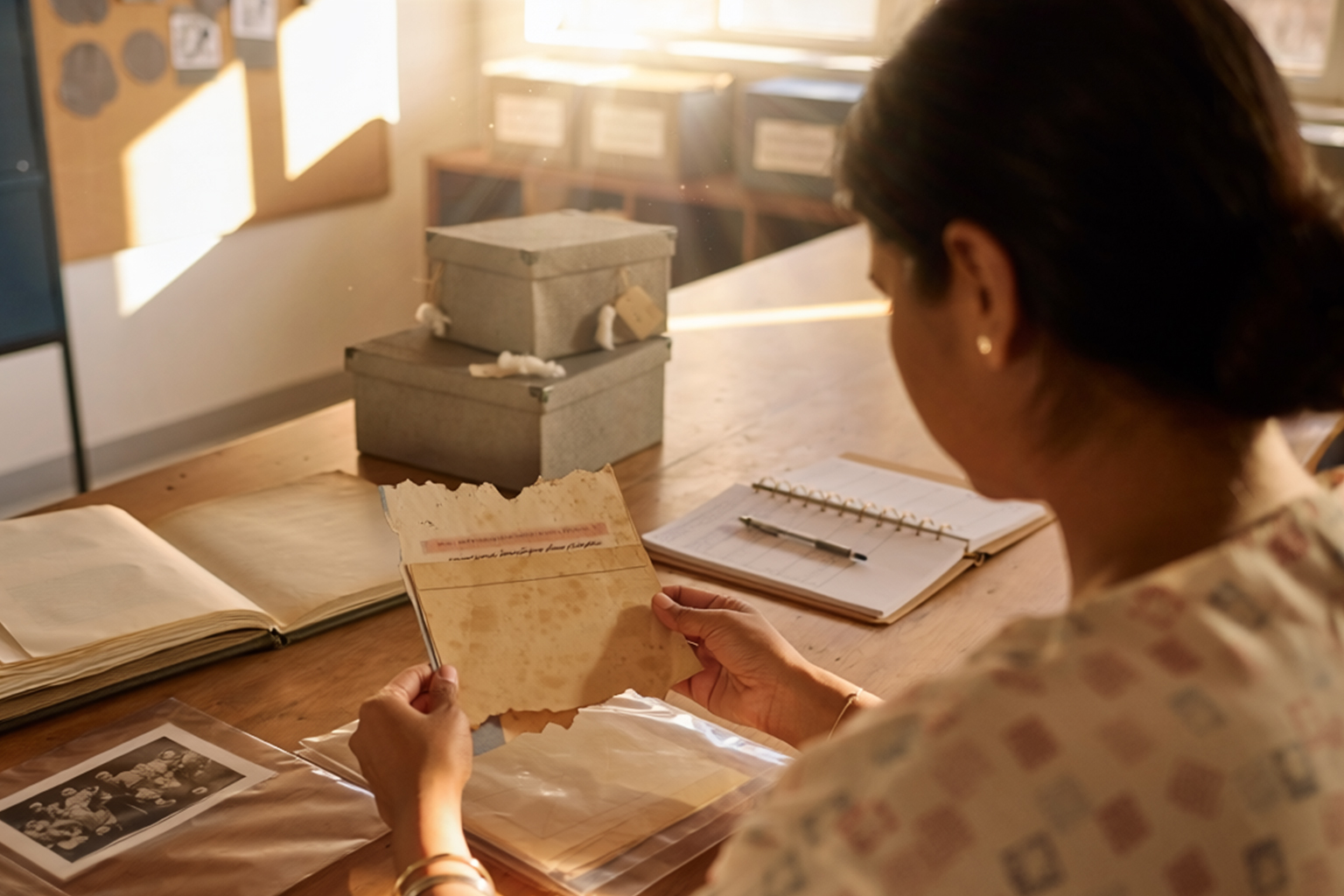
Everyday sources include letters, diaries, family photo albums, business ledgers, ephemera, and oral testimonies collected at community centers. School yearbooks, flyers, receipts, and property records often reveal daily routines, labor patterns, and social networks that official narratives overlook. Fieldwork in attics, flea markets, and neighborhood gatherings can yield unexpected materials that illuminate ordinary life. Systematic note-taking and basic metadata capture will help turn scattered finds into usable research evidence.

Initial searches should prioritize provenance and condition to assess research potential. Even fragmentary items can prompt new questions and research directions.

Evaluating and Contextualizing Material

When working with grassroots sources, corroboration and contextualization are essential to avoid misinterpretation. Cross-reference items with newspapers, census entries, maps, and institutional records to situate them in time and place. Consider how objects relate to wider economic and cultural trends rather than treating them as isolated curiosities. Oral histories demand particular care: compare recollections against documentary evidence while respecting personal perspectives.

Good contextual work transforms private artifacts into public historical tools. This process deepens narratives and connects individual experiences to broader change.

Preserving Physical and Digital Artifacts

Preservation begins with basic stabilization: storing paper in acid-free sleeves, keeping photographs in stable temperatures, and digitizing fragile items to reduce handling. For digital files, use open formats and multiple backups to guard against obsolescence and data loss. Small collections benefit from clear labeling and inventories that describe content, dates, and donor information. Simple measures can drastically extend the lifespan of everyday materials and increase their usability for future researchers.

  • Store papers flat and away from sunlight.
  • Digitize at high resolution and use redundant backups.
  • Create a basic inventory and provenance notes.

Local projects can adopt these routines without specialized facilities. Clear documentation is as important as the physical preservation itself.

Ethics and Community Collaboration

Collaborating with community members ensures that research respects local memory and cultural norms, and it improves access to stories and materials. Establish consent for digitization and sharing, and be transparent about how collections will be used. Co-curation practices empower contributors to shape interpretation and prioritization of materials. Partnerships with local institutions can help sustain projects while returning benefits to source communities.

Ethical collaboration builds trust and enriches scholarly work. It also helps prevent the extraction of heritage from the communities that produced it.

Conclusion

Recovering everyday sources requires patience, respect, and simple technical care. Small preservation efforts and thoughtful contextualization can transform private materials into lasting public history. By working with communities, historians help ensure that forgotten voices remain part of the historical record.

Previous Post

Unearthing Everyday Sources for Local Historical Research

Next Post

The Unsung Strategist Who Shaped Modern Institutions

Related Posts

How the Crystal Palace Turned Glass and Iron into a Modern Stage
History

How the Crystal Palace Turned Glass and Iron into a Modern Stage

September 15, 2026
Anne Bonny: The Pirate Who Broke Rules and Expectations
History

Anne Bonny: The Pirate Who Broke Rules and Expectations

September 15, 2026
Mary Anning and the Coast That Revealed Lost Worlds
History

Mary Anning and the Coast That Revealed Lost Worlds

September 15, 2026
When Mount Pelée Erased Saint-Pierre, 1902
History

When Mount Pelée Erased Saint-Pierre, 1902

September 15, 2026
Next Post
The Unsung Strategist Who Shaped Modern Institutions

The Unsung Strategist Who Shaped Modern Institutions

Search..

No Result
View All Result

Recent Articles

The Disguise That Broke Chains: Ellen and William Craft

The Disguise That Broke Chains: Ellen and William Craft

September 15, 2026
Bass Reeves: The Marshal Who Hunted Outlaws in Indian Territory

Bass Reeves: The Marshal Who Hunted Outlaws in Indian Territory

September 15, 2026
How the Crystal Palace Turned Glass and Iron into a Modern Stage

How the Crystal Palace Turned Glass and Iron into a Modern Stage

September 15, 2026
Anne Bonny: The Pirate Who Broke Rules and Expectations

Anne Bonny: The Pirate Who Broke Rules and Expectations

September 15, 2026
How Haiti Broke Its Chains: A 1791–1804 Timeline

How Haiti Broke Its Chains: A 1791–1804 Timeline

September 15, 2026

Subscribe Us

By clicking submit, I authorize History Ours and its affiliated companies to: (1) use, sell, and share my information for marketing purposes, including cross-context behavioral advertising, as described in our Terms of Service and Privacy Policy, (2) supplement the information that I provide with additional information lawfully obtained from other sources, like demographic data from public sources, interests inferred from web page views, or other data relevant to what might interest me, like past purchase or location data, (3) contact me or enable others to contact me by email with offers for goods and services from any category at the email address provided, and (4) retain my information while I am engaging with marketing messages that I receive and for a reasonable amount of time thereafter. I understand I can opt out at any time through an email that I receive, or by clicking here

Subscribe To Our Newsletter

By clicking submit, I authorize History Ours and its affiliated companies to: (1) use, sell, and share my information for marketing purposes, including cross-context behavioral advertising, as described in our Terms of Service and Privacy Policy, (2) supplement the information that I provide with additional information lawfully obtained from other sources, like demographic data from public sources, interests inferred from web page views, or other data relevant to what might interest me, like past purchase or location data, (3) contact me or enable others to contact me by email with offers for goods and services from any category at the email address provided, and (4) retain my information while I am engaging with marketing messages that I receive and for a reasonable amount of time thereafter. I understand I can opt out at any time through an email that I receive, or by clicking here.

© 2026 History Ours | All Rights Reserved

  • Contact Us
  • Privacy Policy
  • Terms of Service
  • Unsubscribe
  • Privacy Choices
  • Contact Us
  • Privacy Policy
  • Terms of Service
  • Unsubscribe
  • Privacy Choices

© 2026 History Ours | All Rights Reserved

No Result
View All Result
  • Home
  • History
  • Biographies
  • Eras
  • Regions
  • Timeline

© 2026 History Ours | All Rights Reserved

Skip to content
Open toolbar Accessibility Tools

Accessibility Tools

  • Increase TextIncrease Text
  • Decrease TextDecrease Text
  • GrayscaleGrayscale
  • High ContrastHigh Contrast
  • Negative ContrastNegative Contrast
  • Light BackgroundLight Background
  • Links UnderlineLinks Underline
  • Readable FontReadable Font
  • Reset Reset