Uncover History’s Secrets with Daily Updates!
Daily News Entertainment
  • Home
  • History
  • Biographies
  • Eras
  • Regions
  • Timeline
No Result
View All Result
History Ours
  • Home
  • History
  • Biographies
  • Eras
  • Regions
  • Timeline
No Result
View All Result
History Ours
No Result
View All Result
Home History

Everyday Exchange: Social Fabric of Historic Market Streets

in History
Everyday Exchange: Social Fabric of Historic Market Streets

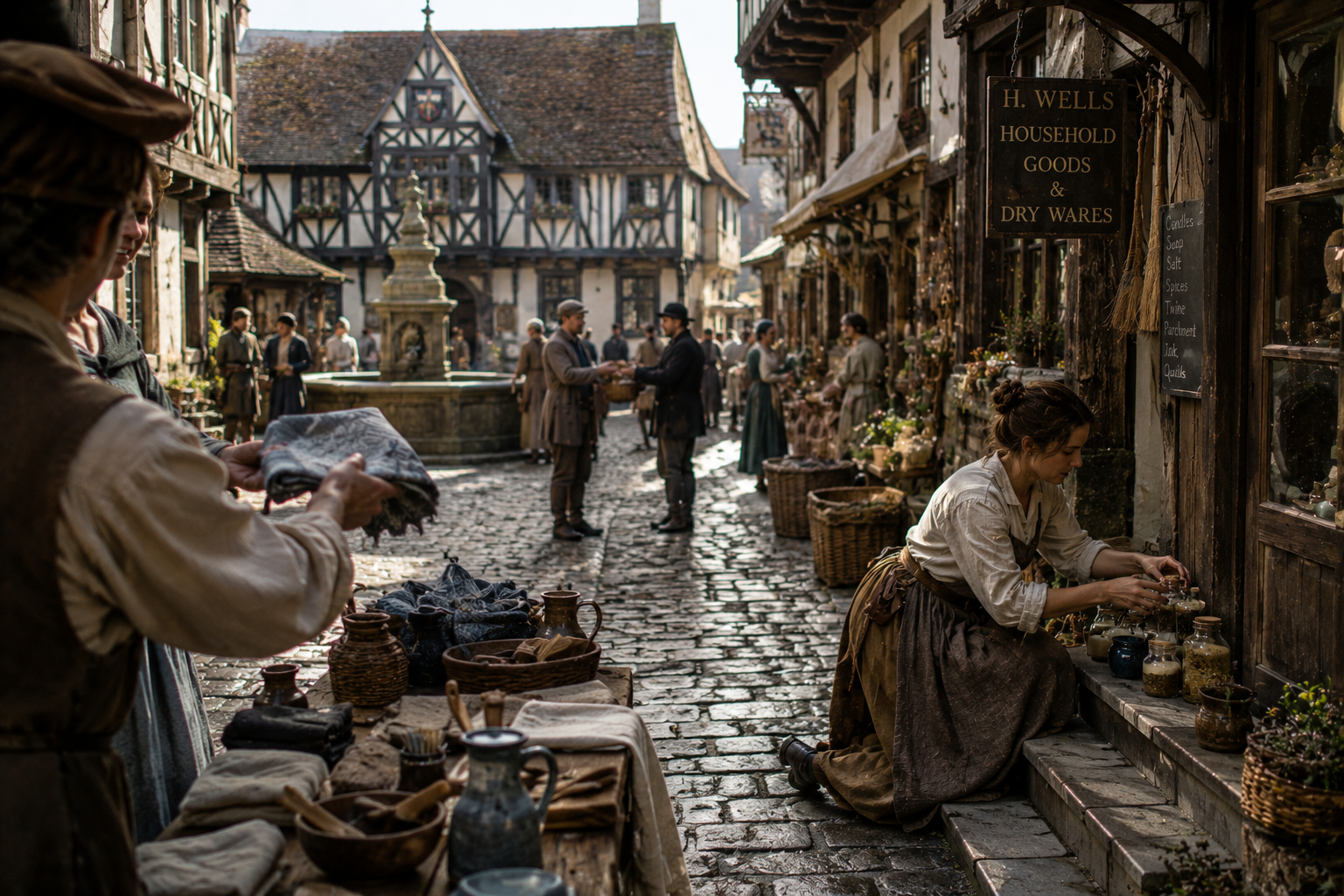
Historic market streets were more than places to buy and sell.
They shaped routines, identities, and daily interactions for residents.
Movement along lanes, the arrangement of stalls, and the visibility of work all influenced social ties.
This piece considers how spatial layout and economic practices produced everyday networks in small towns.

Layout and Movement

The physical design of market streets regulated patterns of movement and chance encounters. Narrow alleys funneled local traffic while wider avenues hosted more diverse crowds, shaping who met and when. Fixed landmarks such as crosses, fountains, or guildhalls created habitual meeting points that structured time and conversation. In many cases, the sightlines between homes and shopfronts reinforced surveillance and mutual obligation among neighbors.

These spatial arrangements mattered to reputation, safety, and access to information. They made gossip and news travel quickly, but also enabled cooperative responses to shortages or disputes. Streets thus worked as circulatory systems for both goods and social bonds.

Commerce and Conversation

Market stalls and shops operated as stages for social exchange as much as commerce. Vendors cultivated regulars through small talk, credit arrangements, and ritualized greetings that reinforced trust. Seasonal fairs and weekly markets created recurring rhythms, bringing distant producers into contact with town residents and expanding social horizons. Transactional interactions often included bargaining, storytelling, and the exchange of local news.

These communicative practices turned trade into a medium of belonging and influence. Understanding everyday conversation helps explain how communities negotiated scarcity, reputation, and social status around the marketplace.

Households and Informal Economies

Domestic spaces spilled into market life: many artisans worked from home, and shopfronts doubled as living rooms or storage. Household production of textiles, foodstuffs, and crafts blurred lines between private labor and public commerce. Informal exchanges — favors, reciprocal childcare, or small loans — depended on proximity and repeated interactions along familiar streets. Such practices sustained households through seasonal uncertainty and linked kinship to commerce.

By viewing market streets as integrated social economies, historians can trace how survival strategies and community care were embedded in everyday spatial practices. Material culture, from signboards to stall wares, offers clues about these embedded relationships.

Conclusion

Market streets organized both trade and social life in durable ways.
They shaped who encountered whom, how information flowed, and how households survived economic shocks.
Studying these patterns reveals the intertwined geography of commerce and community.

Previous Post

Urban Commons and Social Life in Market Towns

Next Post

Remembering a Careful Keeper of Public Memory

Related Posts

How the Crystal Palace Turned Glass and Iron into a Modern Stage
History

How the Crystal Palace Turned Glass and Iron into a Modern Stage

September 15, 2026
Anne Bonny: The Pirate Who Broke Rules and Expectations
History

Anne Bonny: The Pirate Who Broke Rules and Expectations

September 15, 2026
Mary Anning and the Coast That Revealed Lost Worlds
History

Mary Anning and the Coast That Revealed Lost Worlds

September 15, 2026
When Mount Pelée Erased Saint-Pierre, 1902
History

When Mount Pelée Erased Saint-Pierre, 1902

September 15, 2026
Next Post
Remembering a Careful Keeper of Public Memory

Remembering a Careful Keeper of Public Memory

Search..

No Result
View All Result

Recent Articles

The Disguise That Broke Chains: Ellen and William Craft

The Disguise That Broke Chains: Ellen and William Craft

September 15, 2026
Bass Reeves: The Marshal Who Hunted Outlaws in Indian Territory

Bass Reeves: The Marshal Who Hunted Outlaws in Indian Territory

September 15, 2026
How the Crystal Palace Turned Glass and Iron into a Modern Stage

How the Crystal Palace Turned Glass and Iron into a Modern Stage

September 15, 2026
Anne Bonny: The Pirate Who Broke Rules and Expectations

Anne Bonny: The Pirate Who Broke Rules and Expectations

September 15, 2026
How Haiti Broke Its Chains: A 1791–1804 Timeline

How Haiti Broke Its Chains: A 1791–1804 Timeline

September 15, 2026

Subscribe Us

By clicking submit, I authorize History Ours and its affiliated companies to: (1) use, sell, and share my information for marketing purposes, including cross-context behavioral advertising, as described in our Terms of Service and Privacy Policy, (2) supplement the information that I provide with additional information lawfully obtained from other sources, like demographic data from public sources, interests inferred from web page views, or other data relevant to what might interest me, like past purchase or location data, (3) contact me or enable others to contact me by email with offers for goods and services from any category at the email address provided, and (4) retain my information while I am engaging with marketing messages that I receive and for a reasonable amount of time thereafter. I understand I can opt out at any time through an email that I receive, or by clicking here

Subscribe To Our Newsletter

By clicking submit, I authorize History Ours and its affiliated companies to: (1) use, sell, and share my information for marketing purposes, including cross-context behavioral advertising, as described in our Terms of Service and Privacy Policy, (2) supplement the information that I provide with additional information lawfully obtained from other sources, like demographic data from public sources, interests inferred from web page views, or other data relevant to what might interest me, like past purchase or location data, (3) contact me or enable others to contact me by email with offers for goods and services from any category at the email address provided, and (4) retain my information while I am engaging with marketing messages that I receive and for a reasonable amount of time thereafter. I understand I can opt out at any time through an email that I receive, or by clicking here.

© 2026 History Ours | All Rights Reserved

  • Contact Us
  • Privacy Policy
  • Terms of Service
  • Unsubscribe
  • Privacy Choices
  • Contact Us
  • Privacy Policy
  • Terms of Service
  • Unsubscribe
  • Privacy Choices

© 2026 History Ours | All Rights Reserved

No Result
View All Result
  • Home
  • History
  • Biographies
  • Eras
  • Regions
  • Timeline

© 2026 History Ours | All Rights Reserved

Skip to content
Open toolbar Accessibility Tools

Accessibility Tools

  • Increase TextIncrease Text
  • Decrease TextDecrease Text
  • GrayscaleGrayscale
  • High ContrastHigh Contrast
  • Negative ContrastNegative Contrast
  • Light BackgroundLight Background
  • Links UnderlineLinks Underline
  • Readable FontReadable Font
  • Reset Reset