Uncover History’s Secrets with Daily Updates!
Daily News Entertainment
  • Home
  • History
  • Biographies
  • Eras
  • Regions
  • Timeline
No Result
View All Result
History Ours
  • Home
  • History
  • Biographies
  • Eras
  • Regions
  • Timeline
No Result
View All Result
History Ours
No Result
View All Result
Home History

Urban Commons and Social Life in Market Towns

in History
Urban Commons and Social Life in Market Towns

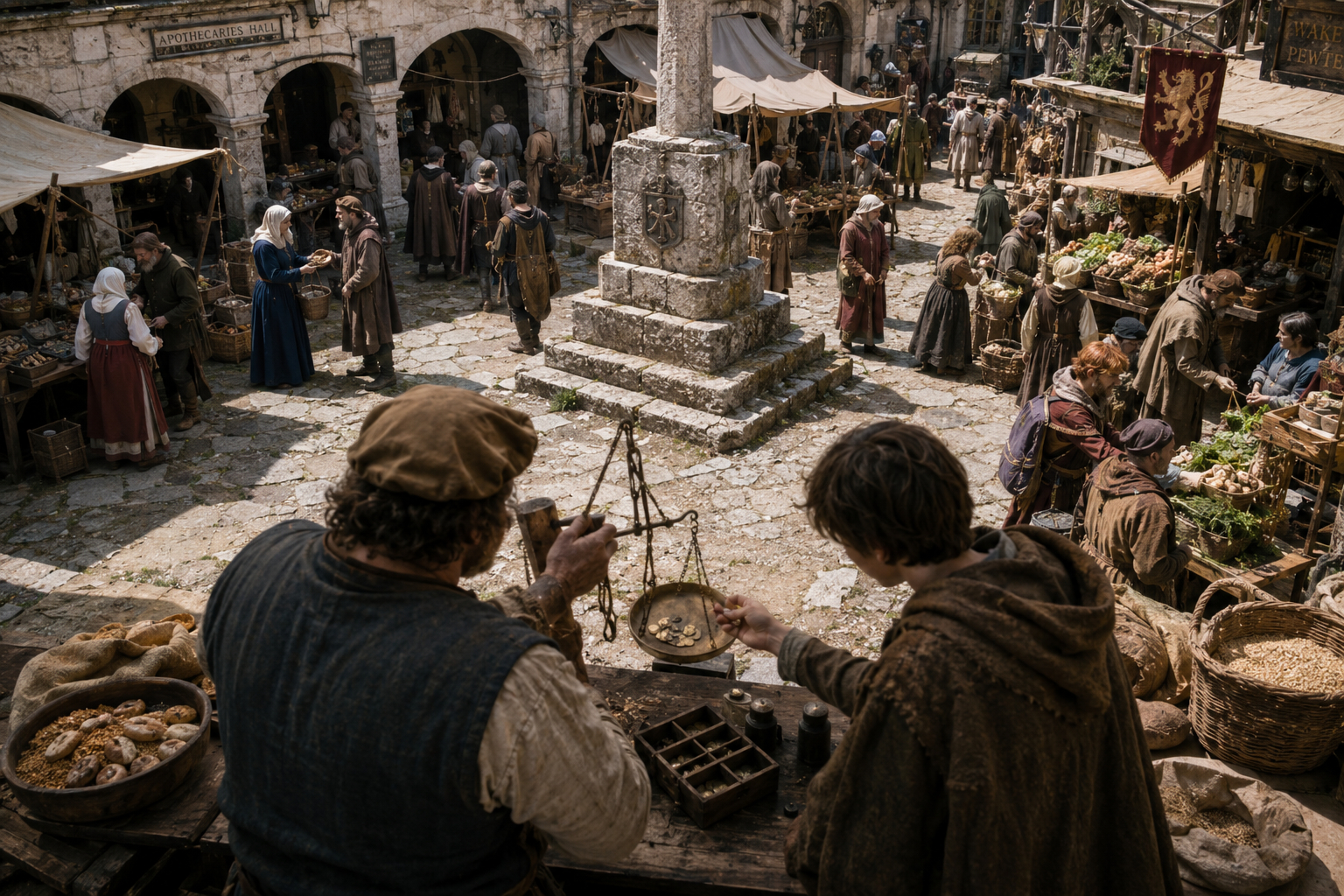
Market towns were more than centers of trade; they were stages for everyday social life that shaped identities and obligations. Their public spaces, routes, and built forms organized encounters between neighbors, strangers, and officials. Understanding how people moved, met, and negotiated in these places reveals patterns of cooperation, conflict, and adaptation. This article explores the material and social networks that made market towns vibrant and resilient.

Landscapes of Exchange

Public squares, lanes, and market crosses physically framed daily commerce and communal life. Stalls and shopfronts encoded social hierarchies but also allowed fluid exchange across status lines, where gossip and credit circulated as readily as goods. Architectural features such as covered arcades, weighing houses, and rakers shaped how people lingered, negotiated, and watched one another. These built cues structured not only economic transactions but rituals of display and reputation.

Over time, adaptations to seasonal demand and regulatory changes altered these spaces, but the basic choreography of trade persisted. Observing movement and arrangement in these areas helps historians trace invisible social ties.

Movements, Modes, and Time

Daily and seasonal rhythms defined how towns functioned: market days, religious festivals, and harvest cycles brought surges of people and goods. Transport technologies—from pack horses to barges—determined which neighborhoods prospered and how news traveled. Time-use practices, such as early morning preparations and evening curfews, regulated access and created expectations about behavior in public. Together these temporal patterns created predictable windows for exchange and for social surveillance.

Mapping these temporal flows reveals overlapping economies and the negotiation of space between residents and itinerants. It also explains why certain places became centers of trust and dispute.

Institutions and Informal Networks

Guilds, parish officials, and local courts formalized many aspects of urban life, from quality control to dispute resolution. Yet informal networks—kinship ties, apprenticeships, and neighborly reciprocal obligations—often carried the weight of daily care and credit. Mutual aid, barter, and patronage smoothed transactions when formal institutions failed or were absent. These layered mechanisms sustained towns through economic shocks and demographic changes.

Studying both institutions and informal practices shows how power and solidarity coexisted in market towns. It highlights the practical skills communities used to manage scarcity and social risk.

Conclusion

Market towns combined material arrangements, temporal rhythms, and layered institutions to produce distinct social ecologies. Looking beyond markets as economic nodes reveals the webs of trust, obligation, and reputation that made everyday life possible. Appreciating these interactions gives a fuller account of how urban communities endured and adapted.

Previous Post

Creating Timeline Pathways That Encourage Meaningful Exploration

Next Post

Everyday Exchange: Social Fabric of Historic Market Streets

Related Posts

How the Crystal Palace Turned Glass and Iron into a Modern Stage
History

How the Crystal Palace Turned Glass and Iron into a Modern Stage

September 15, 2026
Anne Bonny: The Pirate Who Broke Rules and Expectations
History

Anne Bonny: The Pirate Who Broke Rules and Expectations

September 15, 2026
Mary Anning and the Coast That Revealed Lost Worlds
History

Mary Anning and the Coast That Revealed Lost Worlds

September 15, 2026
When Mount Pelée Erased Saint-Pierre, 1902
History

When Mount Pelée Erased Saint-Pierre, 1902

September 15, 2026
Next Post
Everyday Exchange: Social Fabric of Historic Market Streets

Everyday Exchange: Social Fabric of Historic Market Streets

Search..

No Result
View All Result

Recent Articles

Edo: Japan’s Urban Revolution of Lanterns and Printshops

Edo: Japan’s Urban Revolution of Lanterns and Printshops

September 16, 2026
How the Little Ice Age Changed Everyday Life in Europe

How the Little Ice Age Changed Everyday Life in Europe

September 16, 2026
The Disguise That Broke Chains: Ellen and William Craft

The Disguise That Broke Chains: Ellen and William Craft

September 15, 2026
Bass Reeves: The Marshal Who Hunted Outlaws in Indian Territory

Bass Reeves: The Marshal Who Hunted Outlaws in Indian Territory

September 15, 2026
How the Crystal Palace Turned Glass and Iron into a Modern Stage

How the Crystal Palace Turned Glass and Iron into a Modern Stage

September 15, 2026

Subscribe Us

By clicking submit, I authorize History Ours and its affiliated companies to: (1) use, sell, and share my information for marketing purposes, including cross-context behavioral advertising, as described in our Terms of Service and Privacy Policy, (2) supplement the information that I provide with additional information lawfully obtained from other sources, like demographic data from public sources, interests inferred from web page views, or other data relevant to what might interest me, like past purchase or location data, (3) contact me or enable others to contact me by email with offers for goods and services from any category at the email address provided, and (4) retain my information while I am engaging with marketing messages that I receive and for a reasonable amount of time thereafter. I understand I can opt out at any time through an email that I receive, or by clicking here

Subscribe To Our Newsletter

By clicking submit, I authorize History Ours and its affiliated companies to: (1) use, sell, and share my information for marketing purposes, including cross-context behavioral advertising, as described in our Terms of Service and Privacy Policy, (2) supplement the information that I provide with additional information lawfully obtained from other sources, like demographic data from public sources, interests inferred from web page views, or other data relevant to what might interest me, like past purchase or location data, (3) contact me or enable others to contact me by email with offers for goods and services from any category at the email address provided, and (4) retain my information while I am engaging with marketing messages that I receive and for a reasonable amount of time thereafter. I understand I can opt out at any time through an email that I receive, or by clicking here.

© 2026 History Ours | All Rights Reserved

  • Contact Us
  • Privacy Policy
  • Terms of Service
  • Unsubscribe
  • Privacy Choices
  • Contact Us
  • Privacy Policy
  • Terms of Service
  • Unsubscribe
  • Privacy Choices

© 2026 History Ours | All Rights Reserved

No Result
View All Result
  • Home
  • History
  • Biographies
  • Eras
  • Regions
  • Timeline

© 2026 History Ours | All Rights Reserved

Skip to content
Open toolbar Accessibility Tools

Accessibility Tools

  • Increase TextIncrease Text
  • Decrease TextDecrease Text
  • GrayscaleGrayscale
  • High ContrastHigh Contrast
  • Negative ContrastNegative Contrast
  • Light BackgroundLight Background
  • Links UnderlineLinks Underline
  • Readable FontReadable Font
  • Reset Reset