
Uncover History’s Secrets with Daily Updates!
Daily News Entertainment
  • Home
  • History
  • Biographies
  • Eras
  • Regions
  • Timeline
No Result
View All Result
History Ours
  • Home
  • History
  • Biographies
  • Eras
  • Regions
  • Timeline
No Result
View All Result
History Ours
No Result
View All Result
Home History

Everyday Life Unearthed: Urban Archaeology in Ancient Cities

in History
Everyday Life Unearthed: Urban Archaeology in Ancient Cities

Introduction

Urban archaeology brings the lives of past residents into focus.
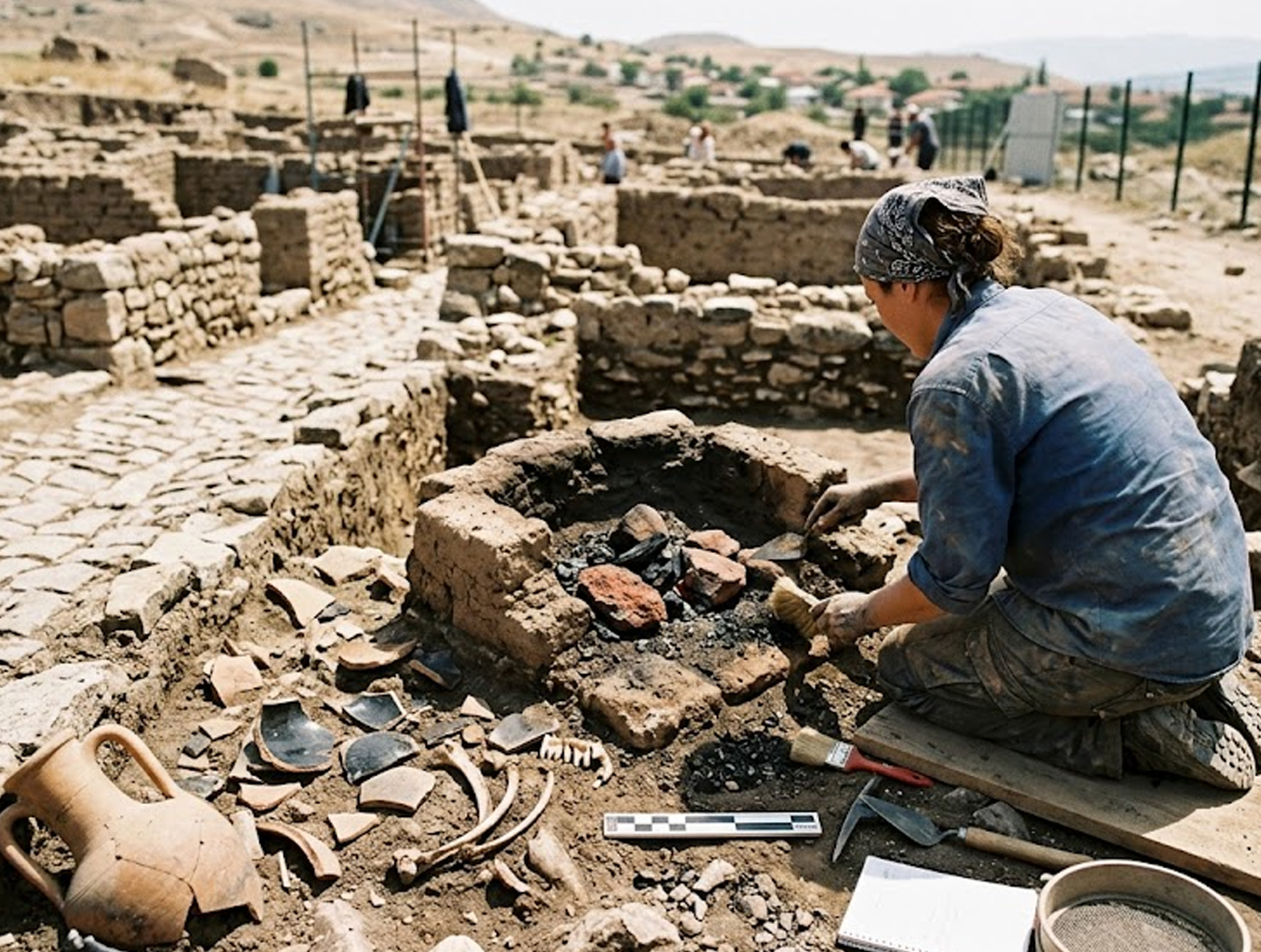
Excavations in ancient neighborhoods often uncover kitchens, workshops, and marketplaces.
These material traces challenge assumptions derived solely from texts and monuments.
Reading artifacts in their domestic and street contexts helps reconstruct everyday rhythms.

What urban archaeology reveals

Excavations of housing compounds and alleys reveal patterns of use that written sources rarely record. Floor surfaces, hearths, and storage pits indicate how space was organized for cooking, craft, and family life. Finds such as pottery sherds, personal items, and animal bones provide direct evidence of diet, gendered activities, and household economy. Together these elements offer a textured portrait of social organization at the neighborhood scale.

By focusing on ordinary places rather than elite monuments, archaeologists recover the practices that sustained daily life. The material record complements literary accounts and fills gaps where documentary evidence is silent or biased.

Daily economies and material culture

Trade networks and local production left durable traces in streets and workshops. Amphorae, weights, and craft debris map flows of goods and the concentration of specialized trades. Small finds such as tools, textiles, and coin hoards reveal economic strategies and household consumption choices. These remains demonstrate how markets, credit, and craft shaped residents’ routines.

Studying assemblages across multiple households allows researchers to distinguish communal patterns from individual preferences. This comparative approach highlights variation in wealth, access, and labor organization within the same urban quarter.

Methodologies and public engagement

Modern field methods combine careful stratigraphic excavation with microarchaeology, environmental sampling, and spatial analysis. GIS mapping and 3D modeling help visualize how neighborhoods evolved over time and how people moved through urban landscapes. Collaborative projects increasingly involve local communities in excavation and interpretation to connect present-day residents with their past. These practices expand the ethical and educational dimensions of urban archaeology.

Public displays, guided tours, and digital platforms translate technical findings into narratives accessible to wider audiences. Engaging stakeholders ensures that research contributes to local heritage and ongoing civic conversations.

Conclusion

Urban archaeology restores the material fabric of everyday life and enriches historical narratives.
By centering ordinary places, it reveals the routines, economies, and choices that sustained past communities.
Such work fosters deeper public appreciation for the layered histories beneath modern streets.

Previous Post

Creating Clear Historical Timelines: A Practical Guide

Next Post

Reading Everyday Lives Through Material Culture and Artifacts

Related Posts

How the Crystal Palace Turned Glass and Iron into a Modern Stage
History

How the Crystal Palace Turned Glass and Iron into a Modern Stage

September 15, 2026
Anne Bonny: The Pirate Who Broke Rules and Expectations
History

Anne Bonny: The Pirate Who Broke Rules and Expectations

September 15, 2026
Mary Anning and the Coast That Revealed Lost Worlds
History

Mary Anning and the Coast That Revealed Lost Worlds

September 15, 2026
When Mount Pelée Erased Saint-Pierre, 1902
History

When Mount Pelée Erased Saint-Pierre, 1902

September 15, 2026
Next Post
Reading Everyday Lives Through Material Culture and Artifacts

Reading Everyday Lives Through Material Culture and Artifacts

Search..

No Result
View All Result

Recent Articles

The Disguise That Broke Chains: Ellen and William Craft

The Disguise That Broke Chains: Ellen and William Craft

September 15, 2026
Bass Reeves: The Marshal Who Hunted Outlaws in Indian Territory

Bass Reeves: The Marshal Who Hunted Outlaws in Indian Territory

September 15, 2026
How the Crystal Palace Turned Glass and Iron into a Modern Stage

How the Crystal Palace Turned Glass and Iron into a Modern Stage

September 15, 2026
Anne Bonny: The Pirate Who Broke Rules and Expectations

Anne Bonny: The Pirate Who Broke Rules and Expectations

September 15, 2026
How Haiti Broke Its Chains: A 1791–1804 Timeline

How Haiti Broke Its Chains: A 1791–1804 Timeline

September 15, 2026

Subscribe Us

By clicking submit, I authorize History Ours and its affiliated companies to: (1) use, sell, and share my information for marketing purposes, including cross-context behavioral advertising, as described in our Terms of Service and Privacy Policy, (2) supplement the information that I provide with additional information lawfully obtained from other sources, like demographic data from public sources, interests inferred from web page views, or other data relevant to what might interest me, like past purchase or location data, (3) contact me or enable others to contact me by email with offers for goods and services from any category at the email address provided, and (4) retain my information while I am engaging with marketing messages that I receive and for a reasonable amount of time thereafter. I understand I can opt out at any time through an email that I receive, or by clicking here

Subscribe To Our Newsletter

By clicking submit, I authorize History Ours and its affiliated companies to: (1) use, sell, and share my information for marketing purposes, including cross-context behavioral advertising, as described in our Terms of Service and Privacy Policy, (2) supplement the information that I provide with additional information lawfully obtained from other sources, like demographic data from public sources, interests inferred from web page views, or other data relevant to what might interest me, like past purchase or location data, (3) contact me or enable others to contact me by email with offers for goods and services from any category at the email address provided, and (4) retain my information while I am engaging with marketing messages that I receive and for a reasonable amount of time thereafter. I understand I can opt out at any time through an email that I receive, or by clicking here.

© 2026 History Ours | All Rights Reserved

  • Contact Us
  • Privacy Policy
  • Terms of Service
  • Unsubscribe
  • Privacy Choices
  • Contact Us
  • Privacy Policy
  • Terms of Service
  • Unsubscribe
  • Privacy Choices

© 2026 History Ours | All Rights Reserved

No Result
View All Result
  • Home
  • History
  • Biographies
  • Eras
  • Regions
  • Timeline

© 2026 History Ours | All Rights Reserved

Skip to content
Open toolbar Accessibility Tools

Accessibility Tools

  • Increase TextIncrease Text
  • Decrease TextDecrease Text
  • GrayscaleGrayscale
  • High ContrastHigh Contrast
  • Negative ContrastNegative Contrast
  • Light BackgroundLight Background
  • Links UnderlineLinks Underline
  • Readable FontReadable Font
  • Reset Reset