

Uncover History’s Secrets with Daily Updates!
Daily News Entertainment
  • Home
  • History
  • Biographies
  • Eras
  • Regions
  • Timeline
No Result
View All Result
History Ours
  • Home
  • History
  • Biographies
  • Eras
  • Regions
  • Timeline
No Result
View All Result
History Ours
No Result
View All Result
Home History

Reading Everyday Lives Through Material Culture and Artifacts

in History
Reading Everyday Lives Through Material Culture and Artifacts

Introduction

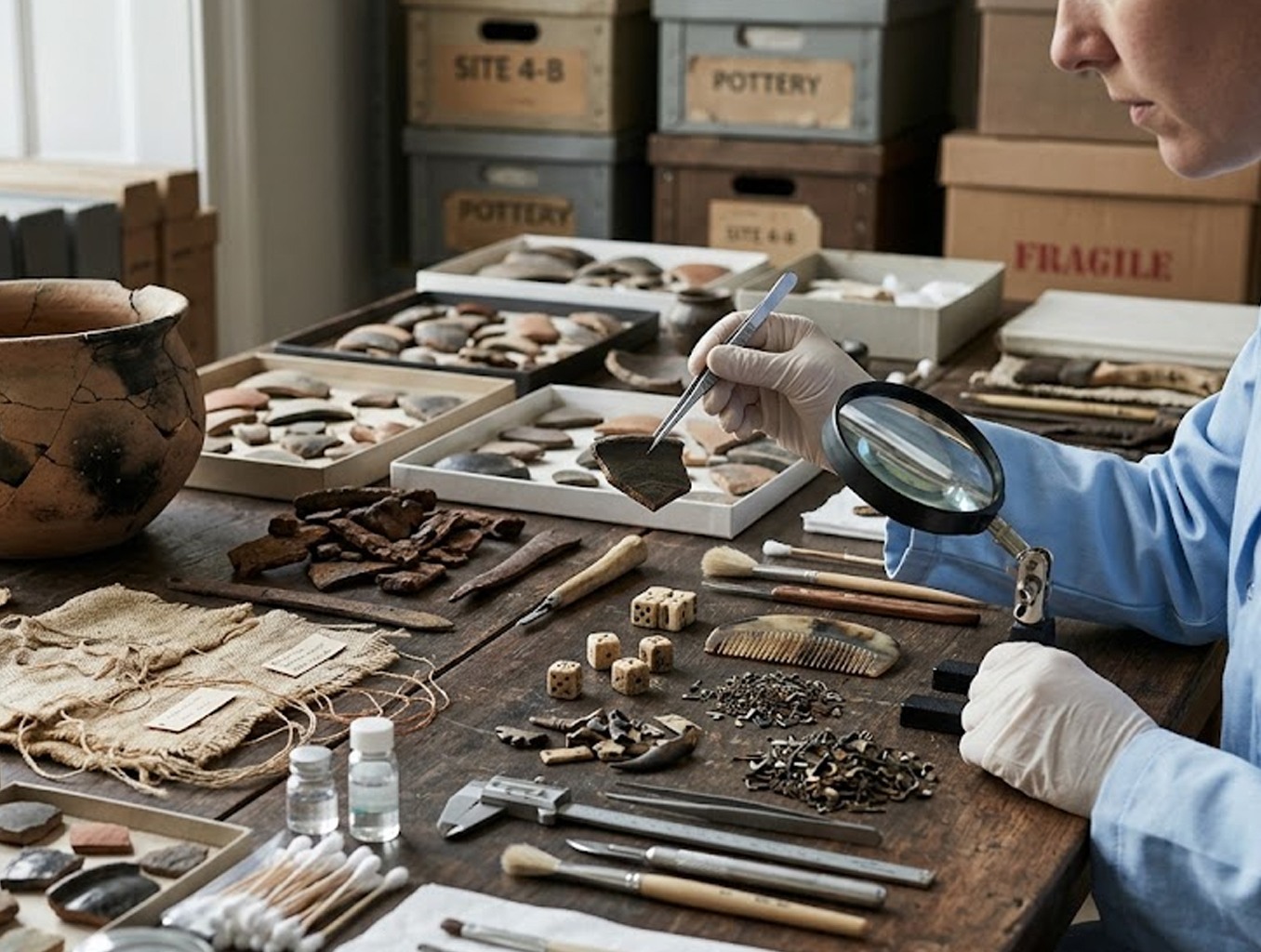
Everyday objects offer a direct route into how people lived, worked, and thought across time. By examining tools, household items, and personal effects, historians reconstruct routines and values that texts alone may not reveal. Material culture bridges gaps in written records and highlights the practical choices made in daily life. This article outlines methods and examples that show why small artifacts matter for big historical insights.

Historians treat objects as evidence: durable, context-dependent traces that survive when words do not. The patterns they reveal can transform our understanding of social relations, labor, and consumption.

Why everyday objects matter

Objects from the past are not neutral: their design, wear, and disposal carry information about users, technology, and economy. A cracked cooking pot, for example, can suggest cooking frequency, family size, or resource scarcity. Clothing fragments reveal access to materials and gendered practices, while tools show levels of skill and specialization. Reading these traces requires careful attention to manufacture, repair, and discard patterns.

Material evidence complements textual sources, especially for groups underrepresented in written records. When combined, artifacts and documents create a fuller, more balanced narrative of ordinary life.

Methods historians use to study daily life

Researchers adopt interdisciplinary techniques drawn from archaeology, conservation science, and social history. Stratigraphic excavation provides context, while residue analysis and microscopy reveal use-wear and contents. Ethnohistorical comparison helps interpret ambiguous items by linking them to known practices in similar environments. Digital cataloging and 3D modeling now enhance access and comparative study across collections.

Careful documentation and provenance tracking are essential to avoid misinterpretation. These methods transform fragments into stories about routine behavior and social organization.

Illustrative examples and micro-histories

Several micro-histories demonstrate how small finds reshape broader narratives. A household assemblage might indicate changing diets, links to trade networks, or status markers within a neighborhood. Finds from workshops can reveal production scales and the integration of households into broader markets. Personal items such as combs or gaming pieces illuminate leisure and identity in ways official records rarely capture.

  • Kitchenware revealing shifts in diet and trade.
  • Workshop debris indicating craft specialization and economy.
  • Personal effects that point to daily routines and social ties.

Together, these cases show that seemingly mundane items can accumulate into compelling evidence about social change. Micro-histories grounded in artifacts allow historians to narrate the lives of ordinary people with nuance.

Conclusion

Material culture anchors historical interpretation in tangible realities, offering perspectives that texts alone cannot provide. Through careful methods and contextual analysis, everyday objects reveal patterns of behavior, economy, and identity. Prioritizing artifacts in research enriches our understanding of the past and the people who inhabited it.


Previous Post

Everyday Life Unearthed: Urban Archaeology in Ancient Cities

Next Post

Finding the Narrative Thread in Short Biographical Sketches

Related Posts

Everyday Life Unearthed: Urban Archaeology in Ancient Cities
History

Everyday Life Unearthed: Urban Archaeology in Ancient Cities

July 21, 2026
How Market Days Shaped Neighborhood Life and Routines
History

How Market Days Shaped Neighborhood Life and Routines

July 16, 2026
Cobblestones and Conversations: Social Networks of Town Streets
History

Cobblestones and Conversations: Social Networks of Town Streets

July 16, 2026
Neighborhood Kitchens and Urban Foodways in Historic Towns
History

Neighborhood Kitchens and Urban Foodways in Historic Towns

July 11, 2026
Next Post
Finding the Narrative Thread in Short Biographical Sketches

Finding the Narrative Thread in Short Biographical Sketches

Search..

No Result
View All Result

Recent Articles

Telling Fuller Lives When Sources Are Thin

Telling Fuller Lives When Sources Are Thin

July 22, 2026
Finding the Narrative Thread in Short Biographical Sketches

Finding the Narrative Thread in Short Biographical Sketches

July 22, 2026
Reading Everyday Lives Through Material Culture and Artifacts

Reading Everyday Lives Through Material Culture and Artifacts

July 21, 2026
Everyday Life Unearthed: Urban Archaeology in Ancient Cities

Everyday Life Unearthed: Urban Archaeology in Ancient Cities

July 21, 2026
Creating Clear Historical Timelines: A Practical Guide

Creating Clear Historical Timelines: A Practical Guide

July 20, 2026

Subscribe Us

By clicking submit, I authorize History Ours and its affiliated companies to: (1) use, sell, and share my information for marketing purposes, including cross-context behavioral advertising, as described in our Terms of Service and Privacy Policy, (2) supplement the information that I provide with additional information lawfully obtained from other sources, like demographic data from public sources, interests inferred from web page views, or other data relevant to what might interest me, like past purchase or location data, (3) contact me or enable others to contact me by email with offers for goods and services from any category at the email address provided, and (4) retain my information while I am engaging with marketing messages that I receive and for a reasonable amount of time thereafter. I understand I can opt out at any time through an email that I receive, or by clicking here

Subscribe To Our Newsletter

By clicking submit, I authorize History Ours and its affiliated companies to: (1) use, sell, and share my information for marketing purposes, including cross-context behavioral advertising, as described in our Terms of Service and Privacy Policy, (2) supplement the information that I provide with additional information lawfully obtained from other sources, like demographic data from public sources, interests inferred from web page views, or other data relevant to what might interest me, like past purchase or location data, (3) contact me or enable others to contact me by email with offers for goods and services from any category at the email address provided, and (4) retain my information while I am engaging with marketing messages that I receive and for a reasonable amount of time thereafter. I understand I can opt out at any time through an email that I receive, or by clicking here.

© 2026 History Ours | All Rights Reserved

  • Contact Us
  • Privacy Policy
  • Terms of Service
  • Unsubscribe
  • Privacy Choices
  • Contact Us
  • Privacy Policy
  • Terms of Service
  • Unsubscribe
  • Privacy Choices

© 2026 History Ours | All Rights Reserved

No Result
View All Result
  • Home
  • History
  • Biographies
  • Eras
  • Regions
  • Timeline

© 2026 History Ours | All Rights Reserved

Skip to content
Open toolbar Accessibility Tools

Accessibility Tools

  • Increase TextIncrease Text
  • Decrease TextDecrease Text
  • GrayscaleGrayscale
  • High ContrastHigh Contrast
  • Negative ContrastNegative Contrast
  • Light BackgroundLight Background
  • Links UnderlineLinks Underline
  • Readable FontReadable Font
  • Reset Reset