Uncover History’s Secrets with Daily Updates!
Daily News Entertainment
  • Home
  • History
  • Biographies
  • Eras
  • Regions
  • Timeline
No Result
View All Result
History Ours
  • Home
  • History
  • Biographies
  • Eras
  • Regions
  • Timeline
No Result
View All Result
History Ours
No Result
View All Result
Home History

Households, Streets, and Time in Historic Town Life

in History
Households, Streets, and Time in Historic Town Life

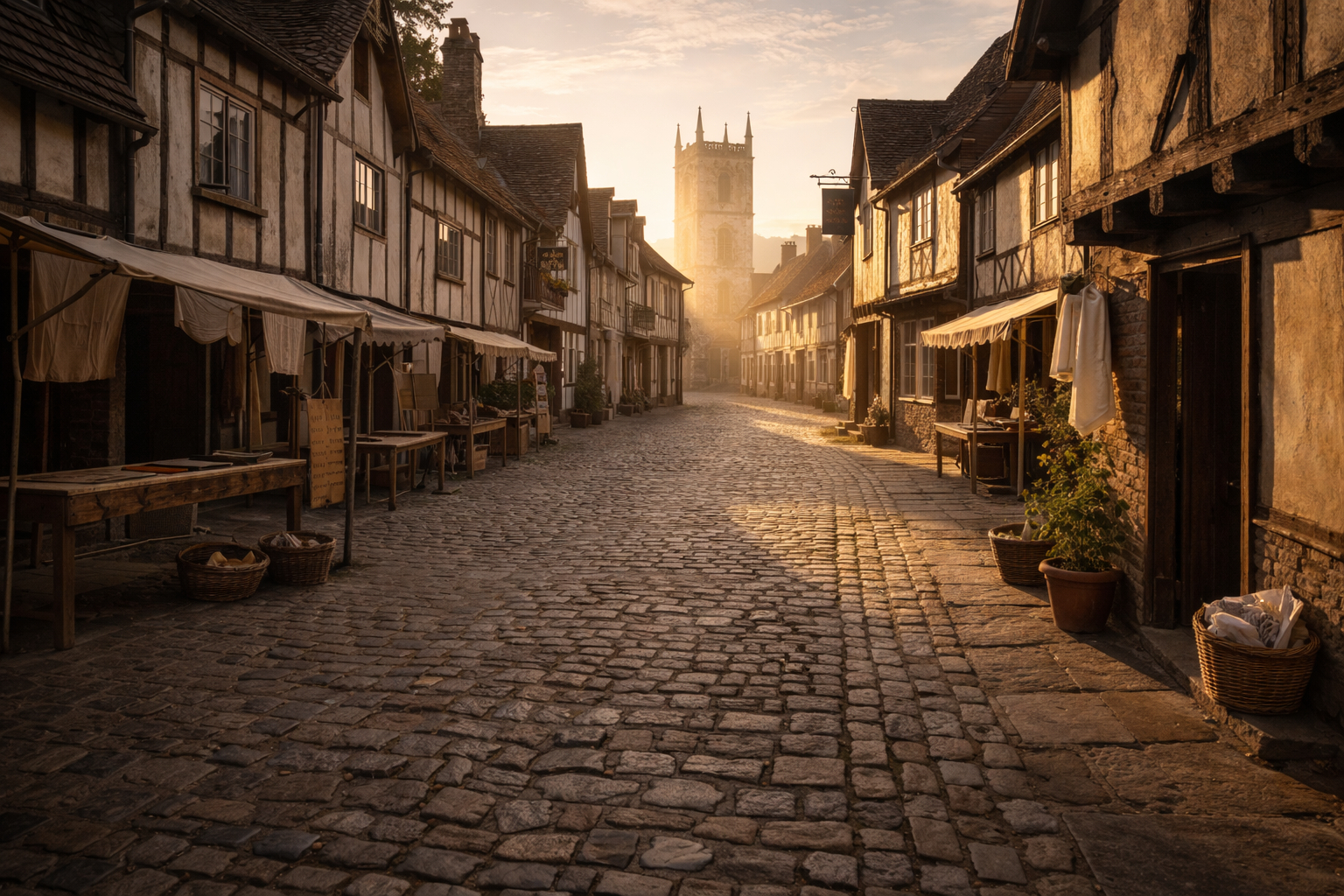
Historic market towns were places where domestic rhythms and public space met in everyday routines. Understanding how households used time and streets helps reveal the social shape of earlier urban life and the practical constraints that guided choices. Residents balanced work, worship, trade, and leisure within compact settings that encouraged frequent encounters and shared responsibilities. Material constraints, seasonal cycles, and institutional schedules shaped how people planned their days and coordinated activities across households.

Spatial Order and Daily Routine

Street layout and household arrangements determined movement and visibility, influencing where and when people worked and socialized. Narrow lanes, open market squares, and doorways facing thoroughfares meant that much of domestic life happened in view of neighbors and passersby. Kitchens, workshops, and stalls often shared the same building, so work and family tasks overlapped throughout the day and blurred private and public boundaries. That proximity made time management communal: bells, market hours, and social expectations set common rhythms. Archaeological remains and property records confirm how buildings were arranged around shared courtyards and alleys.

Consequently, daily routines were negotiated as much with neighbors as within families. These negotiations appear in leases, court records, and personal writings as people adapted schedules to one another. Physical space therefore functioned as a regulator of social behavior, shaping when people ate, worked, and rested.

Economic Interactions and Social Ties

Markets were the economic heartbeat, but credit, barter, and informal labor connected households beyond transactions and sustained everyday needs. Craftspeople and shopkeepers cultivated reputations through repeated exchanges, creating long-term obligations that structured time and attention. Labor patterns followed both clock and calendar: seasonal fairs, harvests, and religious festivals created peaks of activity and demanded flexible household organization. Household members often split tasks across the day, combining paid work with domestic duties to meet shifting demands. Such cycles made social networks predictable and resilient.

Inhabitants relied on these embedded ties for security and opportunity, drawing on trust built through repetition. Time was a resource exchanged through favors as much as wages, forming a web of mutual dependence. Economic life and personal relations were therefore deeply intertwined and mutually reinforcing.

Public Rituals and Domestic Life

Communal rituals—parades, church services, market days—punctuated the week and year, giving collective meaning to time and organizing attention across households. Domestic milestones such as births, marriages, and deaths were often celebrated or managed in public view, reinforcing community norms and obligations. These rituals also offered opportunities for exchange of news, goods, and favors, blending private concerns with civic identity and signaling rank and affiliation. Such public acts also set expectations about conduct and signaled status within the town, tying personal behavior to communal order.

Rituals thus anchored social memory and habitual conduct, creating familiar patterns for successive generations. By repeating ceremonies and observances, communities reinforced boundaries and welcomed newcomers into local networks. They turned recurrent events into predictable moments of communal cohesion and mutual recognition.

Conclusion

Studying everyday schedules and spatial arrangements uncovers how ordinary people shaped urban life through choices both constrained and creative. Household practices, market rhythms, and public rituals created overlapping temporal zones that structured behavior and created predictable patterns of obligation and leisure. Recognizing these patterns enriches our sense of historic towns as dynamic environments of social negotiation and helps historians connect structures to lived experience.


Previous Post

How Urban Markets Shaped Social Life in the Nineteenth Century

Next Post

Unearthing Ordinary Lives: Crafting Meaningful Biographies

Related Posts

Anne Bonny: The Pirate Who Broke Rules and Expectations
History

Anne Bonny: The Pirate Who Broke Rules and Expectations

September 15, 2026
How the Crystal Palace Turned Glass and Iron into a Modern Stage
History

How the Crystal Palace Turned Glass and Iron into a Modern Stage

September 15, 2026
Mary Anning and the Coast That Revealed Lost Worlds
History

Mary Anning and the Coast That Revealed Lost Worlds

September 15, 2026
When Mount Pelée Erased Saint-Pierre, 1902
History

When Mount Pelée Erased Saint-Pierre, 1902

September 15, 2026
Next Post
Shaping Memory: Methods for Responsible Biographical Research

Unearthing Ordinary Lives: Crafting Meaningful Biographies

Search..

No Result
View All Result

Recent Articles

Edo: Japan’s Urban Revolution of Lanterns and Printshops

Edo: Japan’s Urban Revolution of Lanterns and Printshops

September 16, 2026
How the Little Ice Age Changed Everyday Life in Europe

How the Little Ice Age Changed Everyday Life in Europe

September 16, 2026
The Disguise That Broke Chains: Ellen and William Craft

The Disguise That Broke Chains: Ellen and William Craft

September 15, 2026
Bass Reeves: The Marshal Who Hunted Outlaws in Indian Territory

Bass Reeves: The Marshal Who Hunted Outlaws in Indian Territory

September 15, 2026
How the Crystal Palace Turned Glass and Iron into a Modern Stage

How the Crystal Palace Turned Glass and Iron into a Modern Stage

September 15, 2026

Subscribe Us

By clicking submit, I authorize History Ours and its affiliated companies to: (1) use, sell, and share my information for marketing purposes, including cross-context behavioral advertising, as described in our Terms of Service and Privacy Policy, (2) supplement the information that I provide with additional information lawfully obtained from other sources, like demographic data from public sources, interests inferred from web page views, or other data relevant to what might interest me, like past purchase or location data, (3) contact me or enable others to contact me by email with offers for goods and services from any category at the email address provided, and (4) retain my information while I am engaging with marketing messages that I receive and for a reasonable amount of time thereafter. I understand I can opt out at any time through an email that I receive, or by clicking here

Subscribe To Our Newsletter

By clicking submit, I authorize History Ours and its affiliated companies to: (1) use, sell, and share my information for marketing purposes, including cross-context behavioral advertising, as described in our Terms of Service and Privacy Policy, (2) supplement the information that I provide with additional information lawfully obtained from other sources, like demographic data from public sources, interests inferred from web page views, or other data relevant to what might interest me, like past purchase or location data, (3) contact me or enable others to contact me by email with offers for goods and services from any category at the email address provided, and (4) retain my information while I am engaging with marketing messages that I receive and for a reasonable amount of time thereafter. I understand I can opt out at any time through an email that I receive, or by clicking here.

© 2026 History Ours | All Rights Reserved

  • Contact Us
  • Privacy Policy
  • Terms of Service
  • Unsubscribe
  • Privacy Choices
  • Contact Us
  • Privacy Policy
  • Terms of Service
  • Unsubscribe
  • Privacy Choices

© 2026 History Ours | All Rights Reserved

No Result
View All Result
  • Home
  • History
  • Biographies
  • Eras
  • Regions
  • Timeline

© 2026 History Ours | All Rights Reserved

Skip to content
Open toolbar Accessibility Tools

Accessibility Tools

  • Increase TextIncrease Text
  • Decrease TextDecrease Text
  • GrayscaleGrayscale
  • High ContrastHigh Contrast
  • Negative ContrastNegative Contrast
  • Light BackgroundLight Background
  • Links UnderlineLinks Underline
  • Readable FontReadable Font
  • Reset Reset