

Uncover History’s Secrets with Daily Updates!
Daily News Entertainment
  • Home
  • History
  • Biographies
  • Eras
  • Regions
  • Timeline
No Result
View All Result
History Ours
  • Home
  • History
  • Biographies
  • Eras
  • Regions
  • Timeline
No Result
View All Result
History Ours
No Result
View All Result
Home History

How Urban Markets Shaped Social Life in the Nineteenth Century

in History
Households, Streets, and Time in Historic Town Life

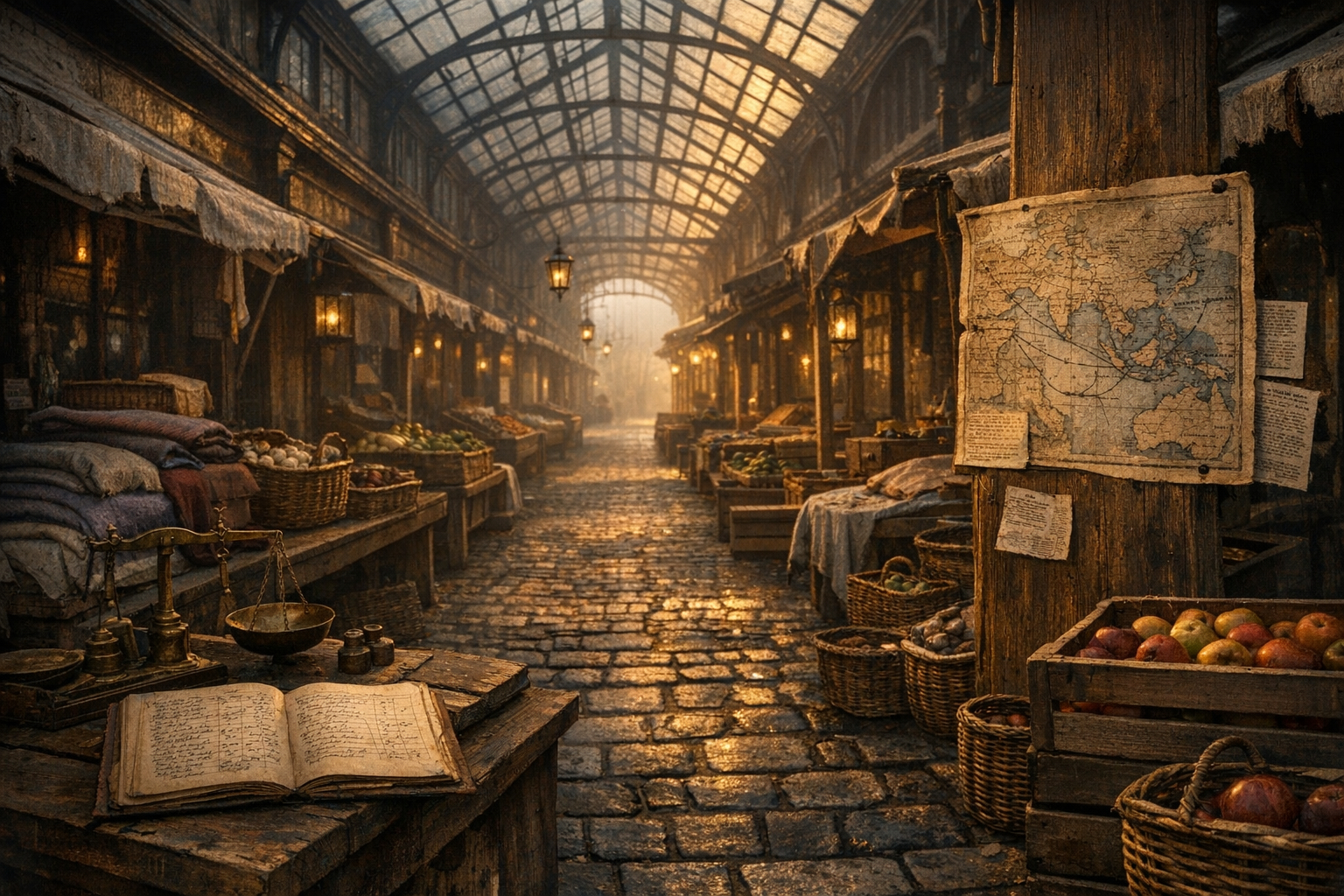
Urban markets were more than places to buy and sell goods; they were the daily stage for civic life. They shaped routines, created rhythms for work and leisure, and connected neighborhoods across rapidly growing towns. Market activity influenced diets, tastes, and the flow of information long before modern media. Understanding markets helps explain how ordinary people experienced economic and social change.

Marketplaces and Daily Routines

Marketplaces organized the day for a wide range of residents, from artisans to domestic servants. Morning markets often set the schedule for households as food purchases, errands, and informal exchanges occurred in a compact area. Stalls and arcades provided shelter for commerce and a backdrop for social encounters that reinforced local bonds. The physical layout of markets also dictated movement patterns and visibility among participants.

Markets thus served practical needs while structuring social time and spatial relationships. Regular market days created predictable opportunities for interaction and exchange that extended beyond purely economic motives.

Traders, Networks, and Information Flow

Traders and middlemen formed networks that connected producers, consumers, and distant suppliers. These intermediaries transmitted prices, news, and innovations across urban neighborhoods and between towns. Markets functioned as nodes in wider commercial systems, amplifying trends in supply and demand. Trust and reputation were crucial for maintaining these linkages and for resolving disputes without formal institutions.

  • Local shopkeepers who doubled as credit providers.
  • Seasonal merchants who brought new goods and fashions.
  • Informal newsbrokers who shared word of distant events.

These relationships made markets a central mechanism for integrating economic and social life in cities. The roles people played within market networks often reflected their social standing and ambitions.

Consumption, Social Mixing, and Cultural Exchange

Markets were sites of visible consumption where new tastes and practices became public. Food stalls, textile vendors, and craftsmen showcased materials that influenced household choices and social presentation. People from varied backgrounds encountered each other in these spaces, allowing cultural exchange and occasional tensions to surface. Public negotiation over price and quality also made markets arenas of performance and persuasion.

Through shopping and observation, residents learned norms and adapted to changing fashions. Markets therefore played a formative role in shaping both identity and community cohesion.

Conclusion

Markets knitted together the economic and social fabric of nineteenth‑century towns. They organized daily life, transmitted information, and fostered cultural exchange. Appreciating their role clarifies how ordinary people lived through profound urban transformation.

Previous Post

Mapping a Century of Change: Constructing Useful Historical Timelines

Next Post

Households, Streets, and Time in Historic Town Life

Related Posts

Anne Bonny: The Pirate Who Broke Rules and Expectations
History

Anne Bonny: The Pirate Who Broke Rules and Expectations

September 15, 2026
How the Crystal Palace Turned Glass and Iron into a Modern Stage
History

How the Crystal Palace Turned Glass and Iron into a Modern Stage

September 15, 2026
Mary Anning and the Coast That Revealed Lost Worlds
History

Mary Anning and the Coast That Revealed Lost Worlds

September 15, 2026
When Mount Pelée Erased Saint-Pierre, 1902
History

When Mount Pelée Erased Saint-Pierre, 1902

September 15, 2026
Next Post
Households, Streets, and Time in Historic Town Life

Households, Streets, and Time in Historic Town Life

Search..

No Result
View All Result

Recent Articles

Edo: Japan’s Urban Revolution of Lanterns and Printshops

Edo: Japan’s Urban Revolution of Lanterns and Printshops

September 16, 2026
How the Little Ice Age Changed Everyday Life in Europe

How the Little Ice Age Changed Everyday Life in Europe

September 16, 2026
The Disguise That Broke Chains: Ellen and William Craft

The Disguise That Broke Chains: Ellen and William Craft

September 15, 2026
Bass Reeves: The Marshal Who Hunted Outlaws in Indian Territory

Bass Reeves: The Marshal Who Hunted Outlaws in Indian Territory

September 15, 2026
How the Crystal Palace Turned Glass and Iron into a Modern Stage

How the Crystal Palace Turned Glass and Iron into a Modern Stage

September 15, 2026

Subscribe Us

By clicking submit, I authorize History Ours and its affiliated companies to: (1) use, sell, and share my information for marketing purposes, including cross-context behavioral advertising, as described in our Terms of Service and Privacy Policy, (2) supplement the information that I provide with additional information lawfully obtained from other sources, like demographic data from public sources, interests inferred from web page views, or other data relevant to what might interest me, like past purchase or location data, (3) contact me or enable others to contact me by email with offers for goods and services from any category at the email address provided, and (4) retain my information while I am engaging with marketing messages that I receive and for a reasonable amount of time thereafter. I understand I can opt out at any time through an email that I receive, or by clicking here

Subscribe To Our Newsletter

By clicking submit, I authorize History Ours and its affiliated companies to: (1) use, sell, and share my information for marketing purposes, including cross-context behavioral advertising, as described in our Terms of Service and Privacy Policy, (2) supplement the information that I provide with additional information lawfully obtained from other sources, like demographic data from public sources, interests inferred from web page views, or other data relevant to what might interest me, like past purchase or location data, (3) contact me or enable others to contact me by email with offers for goods and services from any category at the email address provided, and (4) retain my information while I am engaging with marketing messages that I receive and for a reasonable amount of time thereafter. I understand I can opt out at any time through an email that I receive, or by clicking here.

© 2026 History Ours | All Rights Reserved

  • Contact Us
  • Privacy Policy
  • Terms of Service
  • Unsubscribe
  • Privacy Choices
  • Contact Us
  • Privacy Policy
  • Terms of Service
  • Unsubscribe
  • Privacy Choices

© 2026 History Ours | All Rights Reserved

No Result
View All Result
  • Home
  • History
  • Biographies
  • Eras
  • Regions
  • Timeline

© 2026 History Ours | All Rights Reserved

Skip to content
Open toolbar Accessibility Tools

Accessibility Tools

  • Increase TextIncrease Text
  • Decrease TextDecrease Text
  • GrayscaleGrayscale
  • High ContrastHigh Contrast
  • Negative ContrastNegative Contrast
  • Light BackgroundLight Background
  • Links UnderlineLinks Underline
  • Readable FontReadable Font
  • Reset Reset