Uncover History’s Secrets with Daily Updates!
Daily News Entertainment
  • Home
  • History
  • Biographies
  • Eras
  • Regions
  • Timeline
No Result
View All Result
History Ours
  • Home
  • History
  • Biographies
  • Eras
  • Regions
  • Timeline
No Result
View All Result
History Ours
No Result
View All Result
Home History

Material Lives: Objects and Everyday Practice in Market Towns

in History
Material Lives: Objects and Everyday Practice in Market Towns

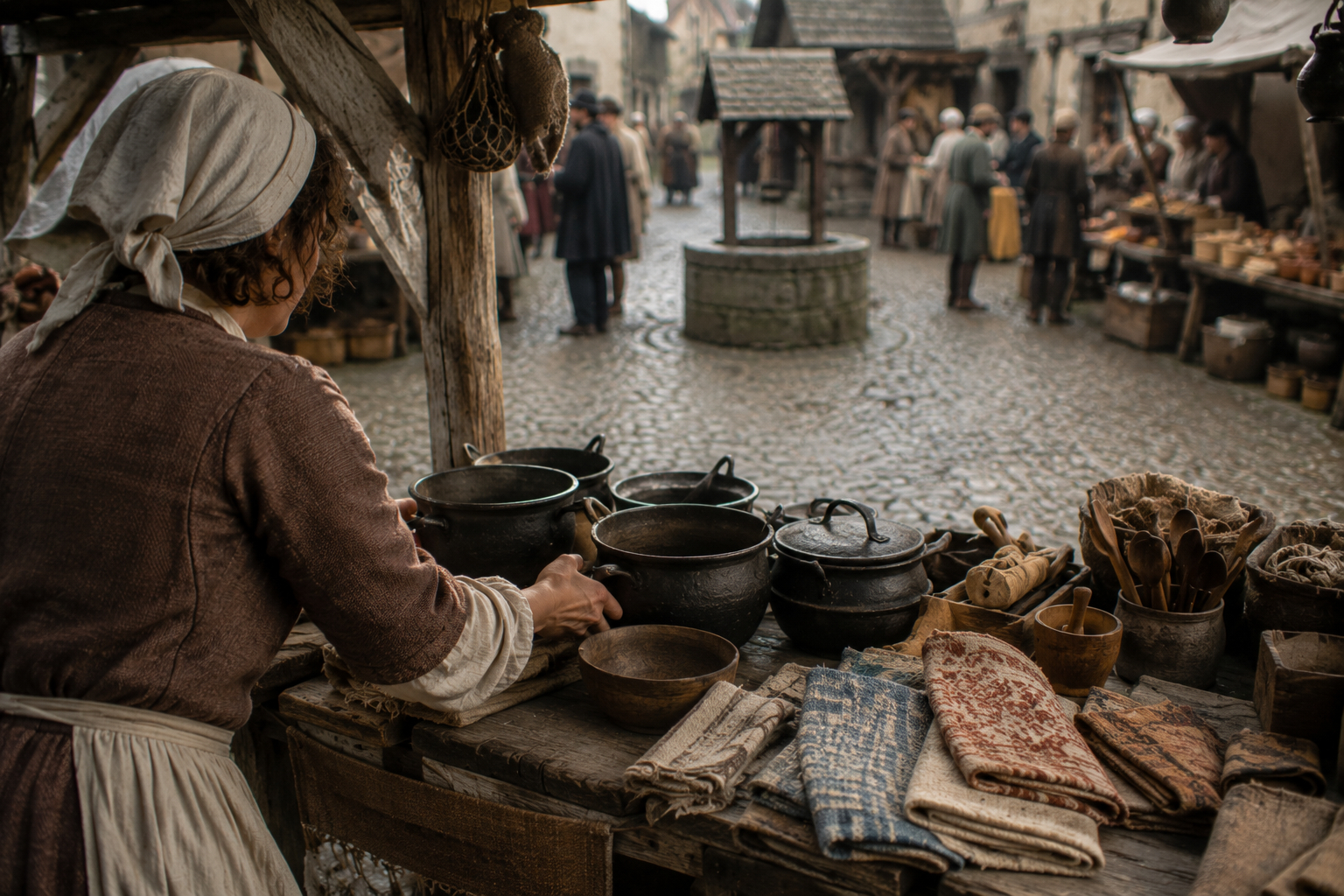
Market towns were not only centers of commerce but also stages where objects shaped daily routines and relationships. Everyday goods, from cooking pots to textile fragments, structured how people worked, ate, and socialized. Examining material traces reveals patterns of exchange, repair, and reuse that written records often overlook. These tangible items helped communities adapt to seasonal change and economic pressure.

The Market as Material Exchange

Markets concentrated a wide range of objects whose circulation created predictable rhythms in town life. Stalls, carts, and shopfronts negotiated space through the movement of goods, and certain wares became markers of status or occupation. Traders adapted containers and packaging to local infrastructures, while repeat purchases shaped trust networks between buyers and sellers. The physicality of trade—weight, smell, and texture—mattered in ways that shaped choices and social ties.

Because everyday exchange left material traces, archaeologists and historians can trace supply chains and consumption habits. This evidence reveals how households balanced convenience, cost, and cultural preference. It also highlights informal economies that supported family survival.

Household Objects and Everyday Practice

Domestic objects mediated work and leisure within tightly knit urban neighborhoods. Tools for spinning, cooking, and repair circulated between households, blurring boundaries between private and public labor. The material constraints of small homes shaped furniture, hearth arrangements, and storage solutions, which in turn determined daily schedules and gendered tasks. The lifecycle of objects—mending, repurposing, discarding—shows how households negotiated scarcity and abundance.

Patterns of reuse reveal moral and practical frameworks that governed consumption. Items passed through kin networks and neighbors, carrying meanings as they moved. Every object thus functioned as both utility and social signal.

Signs, Routes, and Social Memory

Urban signs, shop displays, and worn pathways are material markers of how towns were read and navigated. Signage and shopfront arrangements conveyed reputation and craft specialization, while the repeated passage along certain streets engraved routes into communal memory. Public objects such as benches, wells, or crosses organized meeting points for exchange and gossip. These small infrastructures shaped choices about movement and where social interactions happened.

Over time, material features became mnemonic anchors for local identity. They guided newcomers and reinforced long-term relationships among residents, helping sustain a sense of belonging despite change.

Conclusion

Objects in market towns were active participants in daily life, shaping labor, leisure, and social relations. Their circulation and reuse reveal strategies of survival and community-making that texts alone cannot fully capture. Paying attention to material lives enriches our understanding of how historic towns functioned and endured.

Previous Post

Framing Time: Choosing Threads for Public History Timelines

Next Post

Street-Level Sociability in Historic Market Towns

Related Posts

When Boston Flooded with Molasses: The 1919 North End Disaster
History

When Boston Flooded with Molasses: The 1919 North End Disaster

November 3, 2026
The 1518 Dancing Plague: When Strasbourg Danced to Exhaustion
History

The 1518 Dancing Plague: When Strasbourg Danced to Exhaustion

November 3, 2026
John Snow, the Broad Street Pump, and Cholera’s Fall
History

John Snow, the Broad Street Pump, and Cholera’s Fall

October 29, 2026
The Vasa: Sweden’s Giant Ship That Couldn’t Sail
History

The Vasa: Sweden’s Giant Ship That Couldn’t Sail

October 29, 2026
Next Post
Street-Level Sociability in Historic Market Towns

Street-Level Sociability in Historic Market Towns

Search..

No Result
View All Result

Recent Articles

When Boston Flooded with Molasses: The 1919 North End Disaster

When Boston Flooded with Molasses: The 1919 North End Disaster

November 3, 2026
The 1518 Dancing Plague: When Strasbourg Danced to Exhaustion

The 1518 Dancing Plague: When Strasbourg Danced to Exhaustion

November 3, 2026
1453: The Fall of Constantinople — A Brief Timeline

1453: The Fall of Constantinople — A Brief Timeline

November 2, 2026
How Penicillin Went from Petri Dish to Battlefield Medicine

How Penicillin Went from Petri Dish to Battlefield Medicine

November 2, 2026
How Carrara’s Marble Carved a Peculiar Mountain Region

How Carrara’s Marble Carved a Peculiar Mountain Region

November 1, 2026

Subscribe Us

By clicking submit, I authorize History Ours and its affiliated companies to: (1) use, sell, and share my information for marketing purposes, including cross-context behavioral advertising, as described in our Terms of Service and Privacy Policy, (2) supplement the information that I provide with additional information lawfully obtained from other sources, like demographic data from public sources, interests inferred from web page views, or other data relevant to what might interest me, like past purchase or location data, (3) contact me or enable others to contact me by email with offers for goods and services from any category at the email address provided, and (4) retain my information while I am engaging with marketing messages that I receive and for a reasonable amount of time thereafter. I understand I can opt out at any time through an email that I receive, or by clicking here

Subscribe To Our Newsletter

By clicking submit, I authorize History Ours and its affiliated companies to: (1) use, sell, and share my information for marketing purposes, including cross-context behavioral advertising, as described in our Terms of Service and Privacy Policy, (2) supplement the information that I provide with additional information lawfully obtained from other sources, like demographic data from public sources, interests inferred from web page views, or other data relevant to what might interest me, like past purchase or location data, (3) contact me or enable others to contact me by email with offers for goods and services from any category at the email address provided, and (4) retain my information while I am engaging with marketing messages that I receive and for a reasonable amount of time thereafter. I understand I can opt out at any time through an email that I receive, or by clicking here.

© 2026 History Ours | All Rights Reserved

  • Contact Us
  • Privacy Policy
  • Terms of Service
  • Unsubscribe
  • Privacy Choices
  • Contact Us
  • Privacy Policy
  • Terms of Service
  • Unsubscribe
  • Privacy Choices

© 2026 History Ours | All Rights Reserved

No Result
View All Result
  • Home
  • History
  • Biographies
  • Eras
  • Regions
  • Timeline

© 2026 History Ours | All Rights Reserved

Skip to content
Open toolbar Accessibility Tools

Accessibility Tools

  • Increase TextIncrease Text
  • Decrease TextDecrease Text
  • GrayscaleGrayscale
  • High ContrastHigh Contrast
  • Negative ContrastNegative Contrast
  • Light BackgroundLight Background
  • Links UnderlineLinks Underline
  • Readable FontReadable Font
  • Reset Reset