Uncover History’s Secrets with Daily Updates!
Daily News Entertainment
  • Home
  • History
  • Biographies
  • Eras
  • Regions
  • Timeline
No Result
View All Result
History Ours
  • Home
  • History
  • Biographies
  • Eras
  • Regions
  • Timeline
No Result
View All Result
History Ours
No Result
View All Result
Home Timeline

Framing Time: Choosing Threads for Public History Timelines

in Timeline
Framing Time: Choosing Threads for Public History Timelines

Well-crafted public history timelines do more than list dates; they guide visitors toward meaningful patterns and relationships. A useful timeline balances scope and detail while keeping clear narrative threads that visitors can follow. Curating those threads requires decisions about scale, sources, and what the audience should learn or question. This introduction outlines practical steps for selecting and sustaining narrative threads across a timeline.

Define scope and temporal scale

Start by defining the span your timeline will cover and why that span matters to the story you want to tell. Shorter ranges let you show granular change; longer spans highlight continuity and transformation across generations. Be explicit about endpoints and thresholds so visitors understand why a particular start or finish was chosen. Making those choices early prevents scope creep and clarifies which events are central versus supporting.

Document your rationale in project notes so future editors can preserve intent. Clear scope also helps when allocating space and attention for each event.

Select coherent thematic threads

Identify two to four thematic threads that will run through the timeline, such as governance, daily life, technology, or cultural exchange. Each thread should have a clear question or throughline—what does it reveal about change over time? Limiting themes prevents overwhelm and allows connections to emerge across decades or centuries. Themes can overlap; that overlap is often where interpretive insight appears.

Use themes to prioritize which events receive emphasis and which serve as context. Labeling threads visibly on the timeline helps visitors follow parallel narratives.

Anchor entries with reliable sources

Every event or claim on a public timeline should be anchored to at least one verifiable source, whether primary documents, archival records, or reputable scholarship. Sources allow visitors to trust the sequence and to dig deeper if they wish. When space allows, include brief citations or links and save fuller references for a companion page. Clear sourcing also protects the timeline from accidental misinformation.

Create a consistent citation style that matches your audience and platform. That consistency improves transparency and encourages further inquiry.

Plan presentation and interaction

Decide how users will encounter and interact with the timeline: static panels, an interactive web view, or an app with layered content. Presentation affects how many events you can include and how threads are visualized. Use visual hierarchy—spacing, color, and typography—to guide attention to primary threads and to suggest connections. Consider accessibility and mobile layout from the start to ensure broad usability.

Prototype early and test with representative users to refine pacing and clarity. Iteration ensures the timeline communicates as intended.

Conclusion

Choosing narrative threads is a deliberate act of framing that shapes visitor understanding. Keep scope focused, anchor claims to sources, and present threads clearly to invite exploration. Thoughtful curation makes timelines both informative and engaging.


Previous Post

Designing Timelines to Reveal Patterns and Perspectives

Next Post

Material Lives: Objects and Everyday Practice in Market Towns

Related Posts

How Haiti Broke Its Chains: A 1791–1804 Timeline
Timeline

How Haiti Broke Its Chains: A 1791–1804 Timeline

September 15, 2026
From Horses to Wires: How the Pony Express Met the Telegraph
Timeline

From Horses to Wires: How the Pony Express Met the Telegraph

September 15, 2026
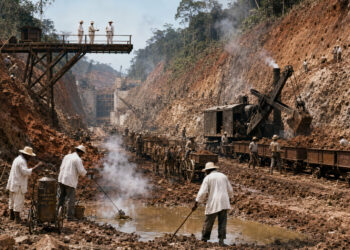
From Swamps to Shortcut: A Timeline of the Panama Canal
Timeline

From Swamps to Shortcut: A Timeline of the Panama Canal

September 15, 2026
1815–1818: The Tambora Eruption and the Year Without a Summer
Timeline

1815–1818: The Tambora Eruption and the Year Without a Summer

September 15, 2026
Next Post
Material Lives: Objects and Everyday Practice in Market Towns

Material Lives: Objects and Everyday Practice in Market Towns

Search..

No Result
View All Result

Recent Articles

The Disguise That Broke Chains: Ellen and William Craft

The Disguise That Broke Chains: Ellen and William Craft

September 15, 2026
Bass Reeves: The Marshal Who Hunted Outlaws in Indian Territory

Bass Reeves: The Marshal Who Hunted Outlaws in Indian Territory

September 15, 2026
How the Crystal Palace Turned Glass and Iron into a Modern Stage

How the Crystal Palace Turned Glass and Iron into a Modern Stage

September 15, 2026
Anne Bonny: The Pirate Who Broke Rules and Expectations

Anne Bonny: The Pirate Who Broke Rules and Expectations

September 15, 2026
How Haiti Broke Its Chains: A 1791–1804 Timeline

How Haiti Broke Its Chains: A 1791–1804 Timeline

September 15, 2026

Subscribe Us

By clicking submit, I authorize History Ours and its affiliated companies to: (1) use, sell, and share my information for marketing purposes, including cross-context behavioral advertising, as described in our Terms of Service and Privacy Policy, (2) supplement the information that I provide with additional information lawfully obtained from other sources, like demographic data from public sources, interests inferred from web page views, or other data relevant to what might interest me, like past purchase or location data, (3) contact me or enable others to contact me by email with offers for goods and services from any category at the email address provided, and (4) retain my information while I am engaging with marketing messages that I receive and for a reasonable amount of time thereafter. I understand I can opt out at any time through an email that I receive, or by clicking here

Subscribe To Our Newsletter

By clicking submit, I authorize History Ours and its affiliated companies to: (1) use, sell, and share my information for marketing purposes, including cross-context behavioral advertising, as described in our Terms of Service and Privacy Policy, (2) supplement the information that I provide with additional information lawfully obtained from other sources, like demographic data from public sources, interests inferred from web page views, or other data relevant to what might interest me, like past purchase or location data, (3) contact me or enable others to contact me by email with offers for goods and services from any category at the email address provided, and (4) retain my information while I am engaging with marketing messages that I receive and for a reasonable amount of time thereafter. I understand I can opt out at any time through an email that I receive, or by clicking here.

© 2026 History Ours | All Rights Reserved

  • Contact Us
  • Privacy Policy
  • Terms of Service
  • Unsubscribe
  • Privacy Choices
  • Contact Us
  • Privacy Policy
  • Terms of Service
  • Unsubscribe
  • Privacy Choices

© 2026 History Ours | All Rights Reserved

No Result
View All Result
  • Home
  • History
  • Biographies
  • Eras
  • Regions
  • Timeline

© 2026 History Ours | All Rights Reserved

Skip to content
Open toolbar Accessibility Tools

Accessibility Tools

  • Increase TextIncrease Text
  • Decrease TextDecrease Text
  • GrayscaleGrayscale
  • High ContrastHigh Contrast
  • Negative ContrastNegative Contrast
  • Light BackgroundLight Background
  • Links UnderlineLinks Underline
  • Readable FontReadable Font
  • Reset Reset