Uncover History’s Secrets with Daily Updates!
Daily News Entertainment
  • Home
  • History
  • Biographies
  • Eras
  • Regions
  • Timeline
No Result
View All Result
History Ours
  • Home
  • History
  • Biographies
  • Eras
  • Regions
  • Timeline
No Result
View All Result
History Ours
No Result
View All Result
Home History

The Role of Agriculture in the Birth of Civilization

in History
The Role of Agriculture in the Birth of Civilization

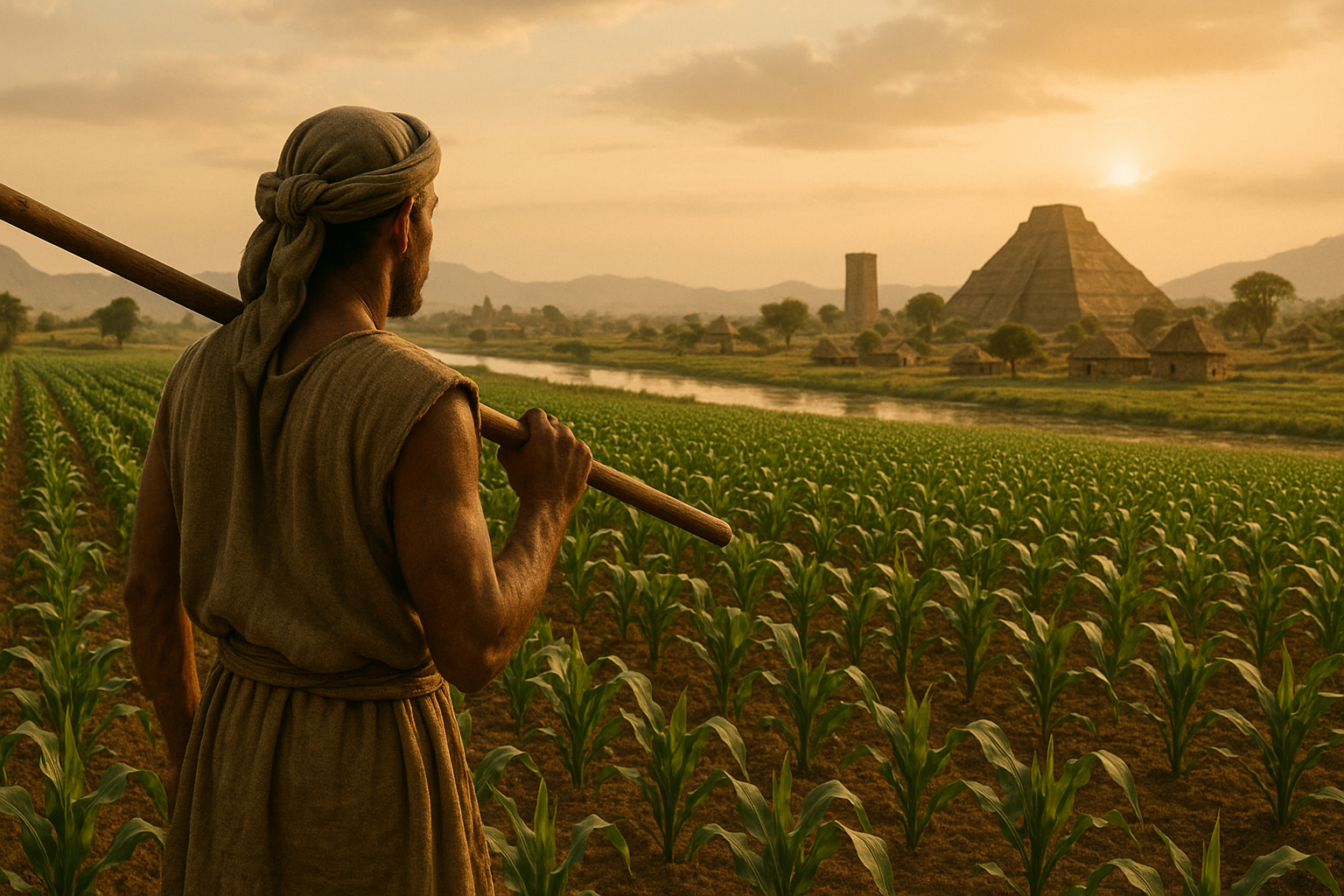
The shift from wandering hunter-gatherer groups to settled agricultural communities stands as one of the most defining transitions in human history. Agriculture provided a stable and predictable food supply, allowing early humans to move beyond survival and invest in building long-lasting settlements. This shift didn’t happen overnight; it emerged slowly as people learned to cultivate plants, domesticate animals, and adapt landscapes to meet their growing needs. Over time, agriculture became the foundation upon which the first civilizations were built.

How Farming Led to Permanent Settlements

Before agriculture, humans followed food sources across vast regions, living a nomadic lifestyle. The introduction of farming changed this dynamic entirely. With crops to tend and herds to manage, communities began staying in one place. These settlements soon developed into villages and, eventually, into complex cities. Permanent homes, shared storage spaces, and community structures became essential parts of daily life, creating the first hints of organized societies.

Surplus Food and the Rise of Social Order

Agriculture created something humans had never experienced before: surplus food. This excess allowed some individuals to focus on tasks beyond food gathering. Craftsmen, traders, spiritual leaders, and administrators emerged, giving rise to specialized roles within society. With specialization came hierarchy, governance, and structured systems that helped manage growing populations. These new social layers formed the backbone of early civilizations, enabling innovation, cultural development, and economic exchange.

Agriculture as a Catalyst for Technology and Innovation

The early need to improve farming efficiency sparked a wave of technological advancements. Irrigation systems, plows, storage vessels, and early tools were all developed to support agricultural productivity. As these innovations spread, communities connected through trade, exchanging goods and knowledge across regions. This interconnectedness further accelerated growth and laid the groundwork for more sophisticated technologies and cultural achievements.

Shaping Culture, Rituals, and Belief Systems

Agriculture influenced much more than the economy—it shaped early human culture. Seasonal cycles became important markers of time, inspiring rituals, festivals, and belief systems centered around harvests and natural rhythms. Art, architecture, and storytelling also reflected agricultural themes, highlighting its deep impact on daily life and spiritual understanding.

Conclusion

Agriculture transformed humanity by enabling stable settlements, structured societies, and rapid technological and cultural growth. Its development marked the beginning of civilization itself, giving rise to the complex communities and advancements we benefit from today. By understanding agriculture’s foundational role, we gain insight into how human societies evolved and flourished through cooperation, innovation, and connection to the land.


Previous Post

How Empires Fell: The Patterns of Decline

Next Post

Revolution and Reform: The Cycles of History

Related Posts

John Snow, the Broad Street Pump, and Cholera’s Fall
History

John Snow, the Broad Street Pump, and Cholera’s Fall

October 29, 2026
The Vasa: Sweden’s Giant Ship That Couldn’t Sail
History

The Vasa: Sweden’s Giant Ship That Couldn’t Sail

October 29, 2026
The Ghost Army: How Artists Fooled Hitler’s Front
History

The Ghost Army: How Artists Fooled Hitler’s Front

October 24, 2026
How Iceland’s 1783 Laki Fissure Eruption Chilled an Age
History

How Iceland’s 1783 Laki Fissure Eruption Chilled an Age

October 24, 2026
Next Post
Revolution and Reform: The Cycles of History

Revolution and Reform: The Cycles of History

Search..

No Result
View All Result

Recent Articles

1453: The Fall of Constantinople — A Brief Timeline

1453: The Fall of Constantinople — A Brief Timeline

November 2, 2026
How Penicillin Went from Petri Dish to Battlefield Medicine

How Penicillin Went from Petri Dish to Battlefield Medicine

November 2, 2026
How Carrara’s Marble Carved a Peculiar Mountain Region

How Carrara’s Marble Carved a Peculiar Mountain Region

November 1, 2026
The Great Dismal Swamp: Refuge, Labor, and a Hidden Region

The Great Dismal Swamp: Refuge, Labor, and a Hidden Region

November 1, 2026
The Salon Era: How Conversation Shaped the Enlightenment

The Salon Era: How Conversation Shaped the Enlightenment

October 31, 2026

Subscribe Us

By clicking submit, I authorize History Ours and its affiliated companies to: (1) use, sell, and share my information for marketing purposes, including cross-context behavioral advertising, as described in our Terms of Service and Privacy Policy, (2) supplement the information that I provide with additional information lawfully obtained from other sources, like demographic data from public sources, interests inferred from web page views, or other data relevant to what might interest me, like past purchase or location data, (3) contact me or enable others to contact me by email with offers for goods and services from any category at the email address provided, and (4) retain my information while I am engaging with marketing messages that I receive and for a reasonable amount of time thereafter. I understand I can opt out at any time through an email that I receive, or by clicking here

Subscribe To Our Newsletter

By clicking submit, I authorize History Ours and its affiliated companies to: (1) use, sell, and share my information for marketing purposes, including cross-context behavioral advertising, as described in our Terms of Service and Privacy Policy, (2) supplement the information that I provide with additional information lawfully obtained from other sources, like demographic data from public sources, interests inferred from web page views, or other data relevant to what might interest me, like past purchase or location data, (3) contact me or enable others to contact me by email with offers for goods and services from any category at the email address provided, and (4) retain my information while I am engaging with marketing messages that I receive and for a reasonable amount of time thereafter. I understand I can opt out at any time through an email that I receive, or by clicking here.

© 2026 History Ours | All Rights Reserved

  • Contact Us
  • Privacy Policy
  • Terms of Service
  • Unsubscribe
  • Privacy Choices
  • Contact Us
  • Privacy Policy
  • Terms of Service
  • Unsubscribe
  • Privacy Choices

© 2026 History Ours | All Rights Reserved

No Result
View All Result
  • Home
  • History
  • Biographies
  • Eras
  • Regions
  • Timeline

© 2026 History Ours | All Rights Reserved

Skip to content
Open toolbar Accessibility Tools

Accessibility Tools

  • Increase TextIncrease Text
  • Decrease TextDecrease Text
  • GrayscaleGrayscale
  • High ContrastHigh Contrast
  • Negative ContrastNegative Contrast
  • Light BackgroundLight Background
  • Links UnderlineLinks Underline
  • Readable FontReadable Font
  • Reset Reset