
Uncover History’s Secrets with Daily Updates!
Daily News Entertainment
  • Home
  • History
  • Biographies
  • Eras
  • Regions
  • Timeline
No Result
View All Result
History Ours
  • Home
  • History
  • Biographies
  • Eras
  • Regions
  • Timeline
No Result
View All Result
History Ours
No Result
View All Result
Home History

Tracing Community Narratives Through Public Remembrance

in History
Tracing Community Narratives Through Public Remembrance

Public remembrance shapes how communities understand their past and how that past informs present identity. Monuments, ceremonies, and everyday storytelling create frameworks that highlight some events while obscuring others. These practices evolve over time as new research, voices, and technologies enter the conversation. Engaging with public remembrance helps groups reconcile difficult histories and imagine more inclusive futures.

Origins and Forms of Public Remembrance

Remembrance takes many forms: physical markers such as monuments and plaques, formal ceremonies, curated museum exhibitions, and informal oral histories passed between generations. Institutional archives and school curricula also play a major role in determining which narratives become widely accepted. The materials and locations chosen for commemoration influence how accessible a story is to different audiences. Over time, the combination of tangible and intangible forms creates a layered public memory landscape.

Understanding these origins reveals why some stories are prominent while others remain marginal. Attention to form helps historians and communities design interventions that broaden the public record.

Who Controls the Narrative

Power dynamics shape public remembrance: elected officials, cultural institutions, religious groups, and private donors often make decisions about what to commemorate. These actors bring priorities that can emphasize nation-building, local pride, or specific political meanings. Marginalized communities frequently find their histories underrepresented or simplified within dominant commemorative practices. Recognizing these dynamics is the first step toward more equitable public memory.

  • Government bodies may fund large-scale monuments and ceremonies.
  • Museums and schools influence the descriptions and context of historical events.
  • Community groups mobilize to preserve or change local commemorations.

Shifting control requires transparency about decision-making and intentional inclusion of diverse stakeholders. Collaborative governance models can redistribute authority and foster broader ownership of shared histories.

Practices That Make Memory Inclusive

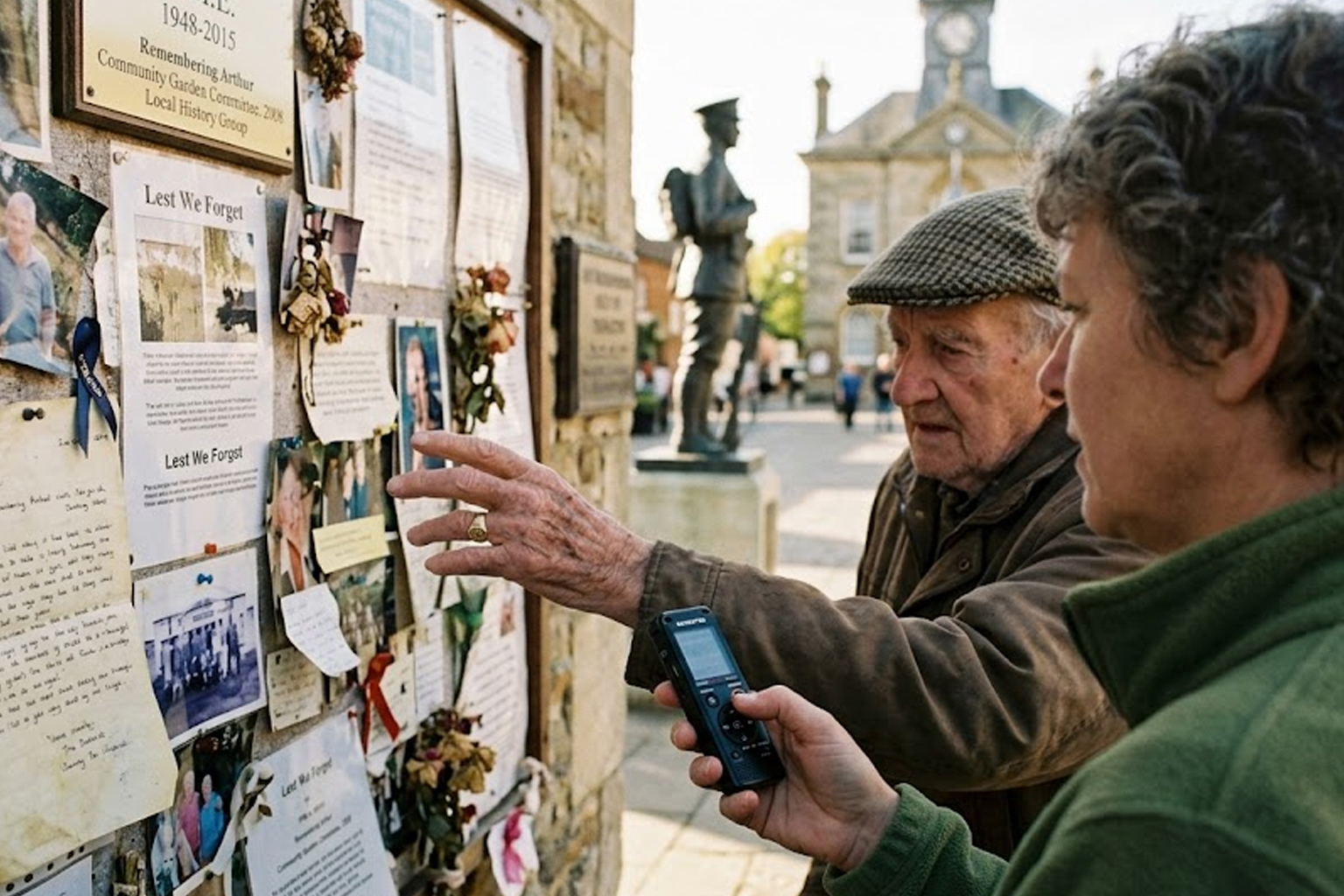
Inclusive remembrance emphasizes multiple perspectives, acknowledges past harms, and creates spaces for dialogue and repair. Community-driven exhibits, oral history projects, and participatory mapping engage residents directly in shaping how their histories are told. Digital platforms also enable wider access and new forms of interpretation, allowing hidden narratives to surface alongside established accounts. Education that integrates contested histories encourages critical thinking rather than simple celebration.

  • Use oral histories to complement archival records and highlight lived experience.
  • Design exhibitions with community input to ensure respectful representation.

Such practices help transform static memorials into living sites of conversation. They invite ongoing reflection and adaptation as communities change.

Conclusion

Public remembrance is an active process that reflects choices about whose stories matter and why. When communities engage collaboratively, memory initiatives can repair exclusions and deepen civic understanding. Thoughtful, inclusive practices make remembrance a tool for both truth and connection.

Previous Post

Planning Timelines to Surface Everyday Historical Patterns

Next Post

Monuments, Museums, and the Making of Local Memory

Related Posts

How the Crystal Palace Turned Glass and Iron into a Modern Stage
History

How the Crystal Palace Turned Glass and Iron into a Modern Stage

September 15, 2026
Anne Bonny: The Pirate Who Broke Rules and Expectations
History

Anne Bonny: The Pirate Who Broke Rules and Expectations

September 15, 2026
Mary Anning and the Coast That Revealed Lost Worlds
History

Mary Anning and the Coast That Revealed Lost Worlds

September 15, 2026
When Mount Pelée Erased Saint-Pierre, 1902
History

When Mount Pelée Erased Saint-Pierre, 1902

September 15, 2026
Next Post
Monuments, Museums, and the Making of Local Memory

Monuments, Museums, and the Making of Local Memory

Search..

No Result
View All Result

Recent Articles

How the Ruhr Became Germany’s Engine and Then Its Archive

How the Ruhr Became Germany’s Engine and Then Its Archive

September 17, 2026
Salt, Walls, and Ships: How Dalmatia Became a Maritime Frontier

Salt, Walls, and Ships: How Dalmatia Became a Maritime Frontier

September 17, 2026
Edo: Japan’s Urban Revolution of Lanterns and Printshops

Edo: Japan’s Urban Revolution of Lanterns and Printshops

September 16, 2026
How the Little Ice Age Changed Everyday Life in Europe

How the Little Ice Age Changed Everyday Life in Europe

September 16, 2026
The Disguise That Broke Chains: Ellen and William Craft

The Disguise That Broke Chains: Ellen and William Craft

September 15, 2026

Subscribe Us

By clicking submit, I authorize History Ours and its affiliated companies to: (1) use, sell, and share my information for marketing purposes, including cross-context behavioral advertising, as described in our Terms of Service and Privacy Policy, (2) supplement the information that I provide with additional information lawfully obtained from other sources, like demographic data from public sources, interests inferred from web page views, or other data relevant to what might interest me, like past purchase or location data, (3) contact me or enable others to contact me by email with offers for goods and services from any category at the email address provided, and (4) retain my information while I am engaging with marketing messages that I receive and for a reasonable amount of time thereafter. I understand I can opt out at any time through an email that I receive, or by clicking here

Subscribe To Our Newsletter

By clicking submit, I authorize History Ours and its affiliated companies to: (1) use, sell, and share my information for marketing purposes, including cross-context behavioral advertising, as described in our Terms of Service and Privacy Policy, (2) supplement the information that I provide with additional information lawfully obtained from other sources, like demographic data from public sources, interests inferred from web page views, or other data relevant to what might interest me, like past purchase or location data, (3) contact me or enable others to contact me by email with offers for goods and services from any category at the email address provided, and (4) retain my information while I am engaging with marketing messages that I receive and for a reasonable amount of time thereafter. I understand I can opt out at any time through an email that I receive, or by clicking here.

© 2026 History Ours | All Rights Reserved

  • Contact Us
  • Privacy Policy
  • Terms of Service
  • Unsubscribe
  • Privacy Choices
  • Contact Us
  • Privacy Policy
  • Terms of Service
  • Unsubscribe
  • Privacy Choices

© 2026 History Ours | All Rights Reserved

No Result
View All Result
  • Home
  • History
  • Biographies
  • Eras
  • Regions
  • Timeline

© 2026 History Ours | All Rights Reserved

Skip to content
Open toolbar Accessibility Tools

Accessibility Tools

  • Increase TextIncrease Text
  • Decrease TextDecrease Text
  • GrayscaleGrayscale
  • High ContrastHigh Contrast
  • Negative ContrastNegative Contrast
  • Light BackgroundLight Background
  • Links UnderlineLinks Underline
  • Readable FontReadable Font
  • Reset Reset