
Uncover History’s Secrets with Daily Updates!
Daily News Entertainment
  • Home
  • History
  • Biographies
  • Eras
  • Regions
  • Timeline
No Result
View All Result
History Ours
  • Home
  • History
  • Biographies
  • Eras
  • Regions
  • Timeline
No Result
View All Result
History Ours
No Result
View All Result
Home History

Trade, War, and Culture: The Forces That Built Human History

in History
Trade, War, and Culture: The Forces That Built Human History

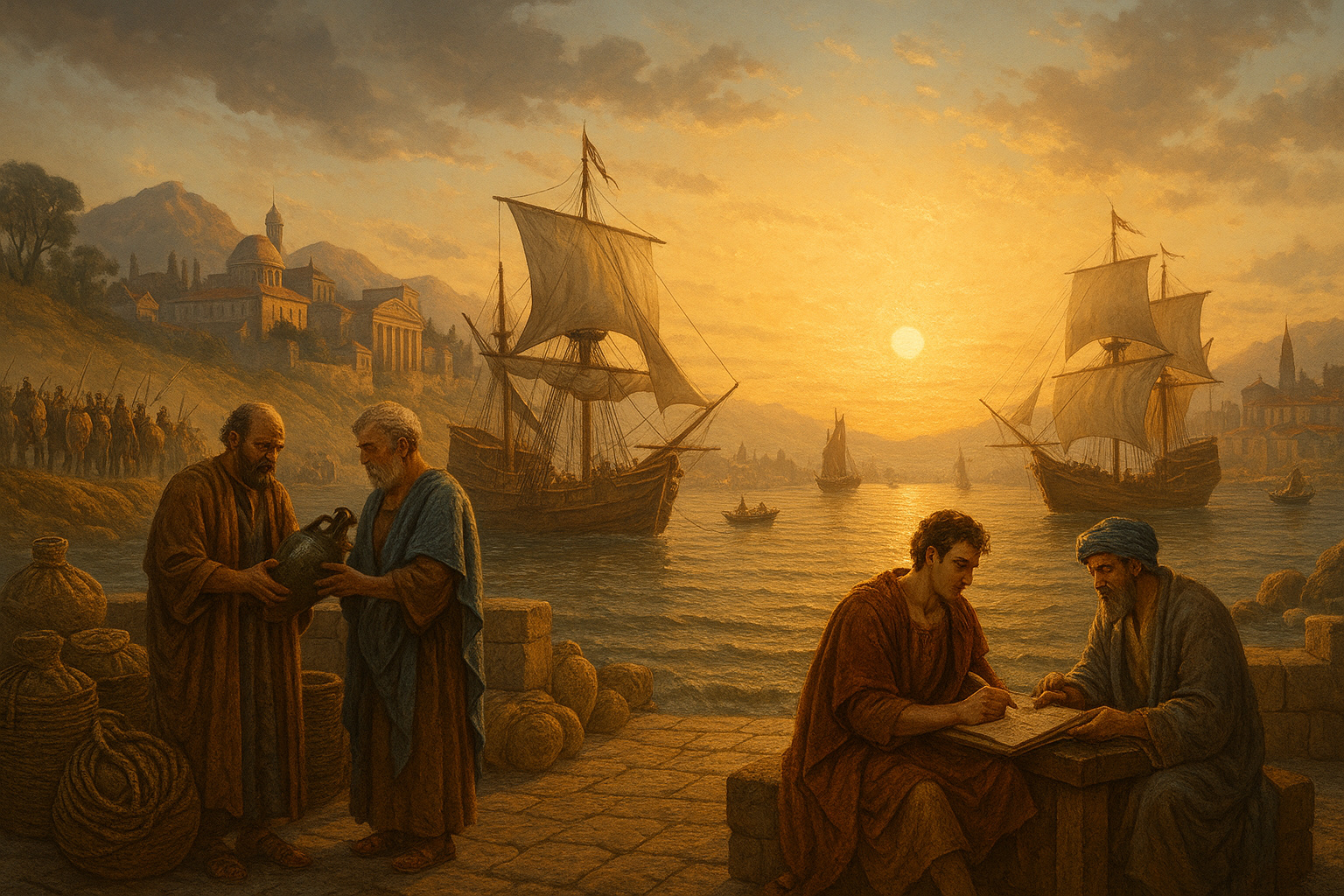
Human civilization has been shaped by three powerful forces — trade, war, and culture. From the earliest barter systems to global commerce, from tribal conflicts to world wars, and from cave art to digital media, these forces have continuously interacted to define how societies grow and connect. Together, they tell the story of human ambition, adaptation, and innovation — revealing that progress often arises from both collaboration and conflict.

Trade: The Engine of Connection

Trade has always been at the heart of civilization’s growth. Ancient trade routes like the Silk Road and the Trans-Saharan networks connected continents long before globalization. Through commerce, goods, ideas, and technologies flowed between cultures — silk and spices traveled east to west, while mathematics, astronomy, and philosophy moved in the opposite direction. Trade not only created wealth but also built bridges between distant peoples, fostering diplomacy and mutual understanding. The rise of ports, cities, and empires often followed the prosperity brought by trade.

War: The Catalyst of Change

While trade builds, war transforms. Throughout history, conflict has been both destructive and transformative, reshaping borders, technologies, and power structures. From the Roman conquests to the World Wars, nations have fought for territory, resources, and ideology. Yet, war also drove innovation — metallurgy, navigation, medicine, and engineering advanced in response to military needs. Empires rose and fell, but each war left lessons that pushed humanity toward new political systems and peace-building efforts. Paradoxically, the devastation of war often paved the way for reconstruction and progress.

Culture: The Soul of Civilization

Culture — expressed through art, language, religion, and traditions — binds societies together and defines their identity. It is culture that gives meaning to human existence beyond survival and conquest. The exchange of cultural ideas through trade and conquest has produced some of humanity’s greatest achievements — from the fusion of Greek and Eastern art under Alexander the Great to the global spread of music, cuisine, and literature in modern times. Culture evolves with every encounter, proving that diversity and creativity are the true markers of civilization’s resilience.

The Interplay of Forces

Trade, war, and culture rarely exist in isolation. The Age of Exploration, for instance, blended all three — driven by the pursuit of trade routes, fueled by imperial conquest, and resulting in vast cultural exchange. The Renaissance and the Industrial Revolution, too, were born from this intersection. Together, these forces continue to shape the modern world, influencing globalization, diplomacy, and social change.

Conclusion

Human history is a story of movement, conflict, and creation. Trade connected us, war tested us, and culture defined us. As we look toward the future, understanding how these forces have shaped our past can help us build a more connected, peaceful, and culturally rich world. The same forces that built history continue to shape the destiny of humankind.

Previous Post

The Rise and Fall of Mesopotamia: Cradle of Civilization

Next Post

Forgotten Inventions That Changed the Course of Civilization

Related Posts

How the Crystal Palace Turned Glass and Iron into a Modern Stage
History

How the Crystal Palace Turned Glass and Iron into a Modern Stage

September 15, 2026
Anne Bonny: The Pirate Who Broke Rules and Expectations
History

Anne Bonny: The Pirate Who Broke Rules and Expectations

September 15, 2026
Mary Anning and the Coast That Revealed Lost Worlds
History

Mary Anning and the Coast That Revealed Lost Worlds

September 15, 2026
When Mount Pelée Erased Saint-Pierre, 1902
History

When Mount Pelée Erased Saint-Pierre, 1902

September 15, 2026
Next Post
Forgotten Inventions That Changed the Course of Civilization

Forgotten Inventions That Changed the Course of Civilization

Search..

No Result
View All Result

Recent Articles

Edo: Japan’s Urban Revolution of Lanterns and Printshops

Edo: Japan’s Urban Revolution of Lanterns and Printshops

September 16, 2026
How the Little Ice Age Changed Everyday Life in Europe

How the Little Ice Age Changed Everyday Life in Europe

September 16, 2026
The Disguise That Broke Chains: Ellen and William Craft

The Disguise That Broke Chains: Ellen and William Craft

September 15, 2026
Bass Reeves: The Marshal Who Hunted Outlaws in Indian Territory

Bass Reeves: The Marshal Who Hunted Outlaws in Indian Territory

September 15, 2026
How the Crystal Palace Turned Glass and Iron into a Modern Stage

How the Crystal Palace Turned Glass and Iron into a Modern Stage

September 15, 2026

Subscribe Us

By clicking submit, I authorize History Ours and its affiliated companies to: (1) use, sell, and share my information for marketing purposes, including cross-context behavioral advertising, as described in our Terms of Service and Privacy Policy, (2) supplement the information that I provide with additional information lawfully obtained from other sources, like demographic data from public sources, interests inferred from web page views, or other data relevant to what might interest me, like past purchase or location data, (3) contact me or enable others to contact me by email with offers for goods and services from any category at the email address provided, and (4) retain my information while I am engaging with marketing messages that I receive and for a reasonable amount of time thereafter. I understand I can opt out at any time through an email that I receive, or by clicking here

Subscribe To Our Newsletter

By clicking submit, I authorize History Ours and its affiliated companies to: (1) use, sell, and share my information for marketing purposes, including cross-context behavioral advertising, as described in our Terms of Service and Privacy Policy, (2) supplement the information that I provide with additional information lawfully obtained from other sources, like demographic data from public sources, interests inferred from web page views, or other data relevant to what might interest me, like past purchase or location data, (3) contact me or enable others to contact me by email with offers for goods and services from any category at the email address provided, and (4) retain my information while I am engaging with marketing messages that I receive and for a reasonable amount of time thereafter. I understand I can opt out at any time through an email that I receive, or by clicking here.

© 2026 History Ours | All Rights Reserved

  • Contact Us
  • Privacy Policy
  • Terms of Service
  • Unsubscribe
  • Privacy Choices
  • Contact Us
  • Privacy Policy
  • Terms of Service
  • Unsubscribe
  • Privacy Choices

© 2026 History Ours | All Rights Reserved

No Result
View All Result
  • Home
  • History
  • Biographies
  • Eras
  • Regions
  • Timeline

© 2026 History Ours | All Rights Reserved

Skip to content
Open toolbar Accessibility Tools

Accessibility Tools

  • Increase TextIncrease Text
  • Decrease TextDecrease Text
  • GrayscaleGrayscale
  • High ContrastHigh Contrast
  • Negative ContrastNegative Contrast
  • Light BackgroundLight Background
  • Links UnderlineLinks Underline
  • Readable FontReadable Font
  • Reset Reset