
Uncover History’s Secrets with Daily Updates!
Daily News Entertainment
  • Home
  • History
  • Biographies
  • Eras
  • Regions
  • Timeline
No Result
View All Result
History Ours
  • Home
  • History
  • Biographies
  • Eras
  • Regions
  • Timeline
No Result
View All Result
History Ours
No Result
View All Result
Home Regions

The Rise and Fall of Mesopotamia: Cradle of Civilization

in Regions
The Rise and Fall of Mesopotamia: Cradle of Civilization

Long before the pyramids of Egypt or the temples of Greece, the first great civilization thrived between the Tigris and Euphrates rivers — Mesopotamia. Known as the “Cradle of Civilization,” this ancient land, located in modern-day Iraq and parts of Syria and Turkey, was the birthplace of writing, law, and urban society. Its rise marked humanity’s transition from scattered tribes to structured kingdoms — and its fall reminds us how power, innovation, and nature intertwine in shaping history.

The Birth of Civilization

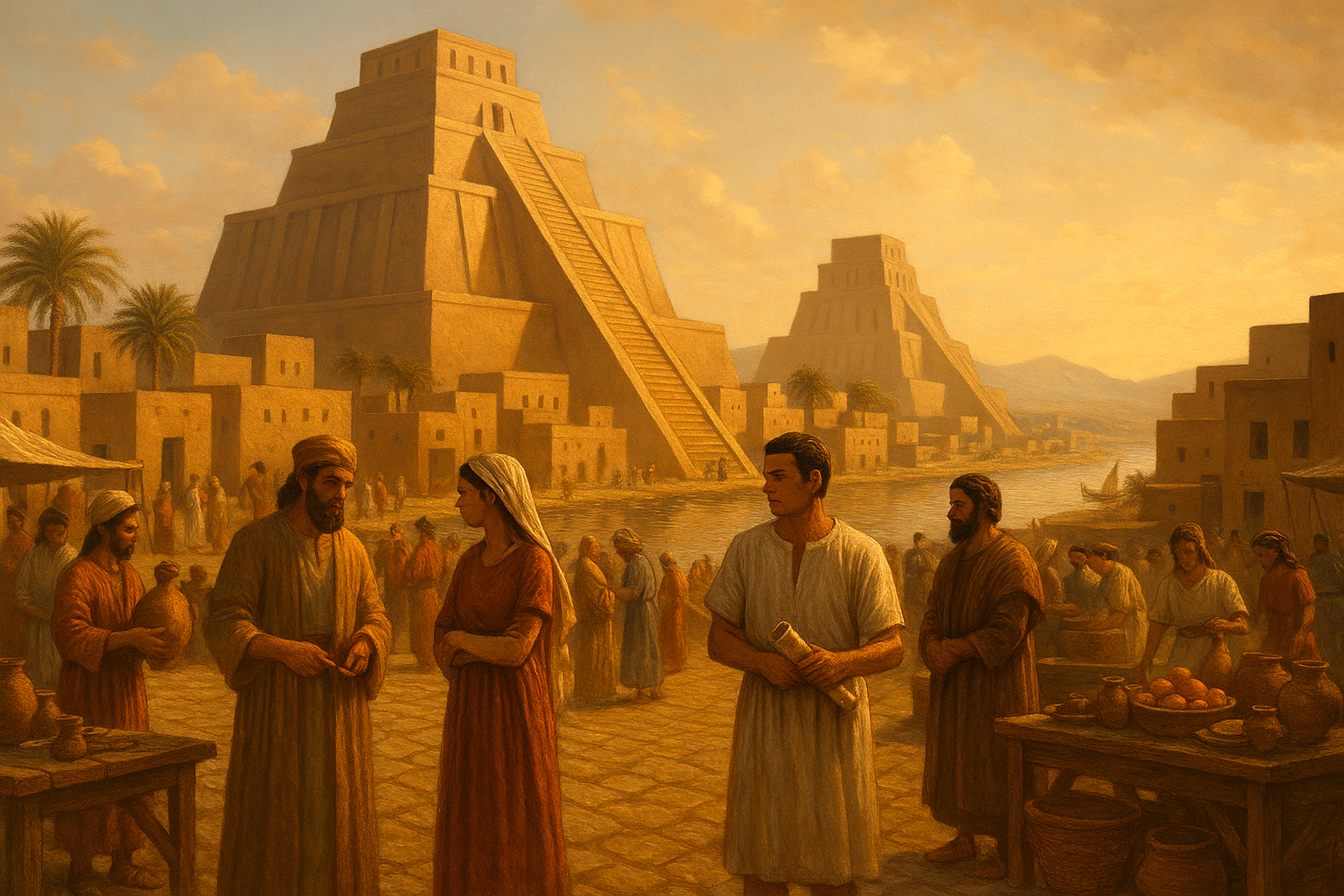
Around 3500 BCE, fertile lands and abundant water drew settlers to the region between the rivers. Early city-states like Uruk, Ur, and Lagash emerged, built on agriculture, trade, and technological innovation. Mesopotamians developed irrigation systems that transformed arid land into farmland, producing surplus crops that fueled urban growth. With this prosperity came specialization — farmers, builders, traders, and scribes — laying the foundation for organized society.

Innovations That Changed the World

Mesopotamia’s contributions shaped the course of human progress. The Sumerians invented cuneiform, the world’s first written language, allowing the recording of transactions, literature, and laws. They also built ziggurats, massive step-temples dedicated to their gods, symbolizing both spiritual devotion and architectural brilliance. Later, the Babylonians introduced Hammurabi’s Code, one of the earliest written legal systems, establishing principles of justice that influence societies even today. Mathematics, astronomy, and timekeeping — the 60-minute hour and 360-degree circle — all trace their roots back to Mesopotamian genius.

The Age of Empires

As city-states grew in power, they began competing for dominance. The Akkadian Empire, founded by Sargon the Great, united Mesopotamia under one rule for the first time around 2334 BCE. Later came the Babylonians and Assyrians, who built vast empires known for military might and cultural sophistication. Babylon, under King Nebuchadnezzar II, became a symbol of grandeur — famed for the Hanging Gardens, one of the Seven Wonders of the Ancient World.

Decline and Legacy

Despite its greatness, Mesopotamia’s power faded over time. Constant warfare, shifting rivers, and invasions by Persians and Greeks weakened its cities. Environmental changes, such as soil salinization from over-irrigation, further crippled agriculture. By the first millennium BCE, the region’s dominance had ended — yet its legacy endured. The innovations born in Mesopotamia spread across the world, influencing science, law, architecture, and governance for millennia to come.

Conclusion

The story of Mesopotamia is the story of civilization itself — from invention and empire to decline and memory. Its achievements remind us of that progress often begins with curiosity and collaboration. Though its cities lie in ruins today, the spirit of Mesopotamia lives on in every written word, law, and technological idea that defines human advancement.

Previous Post

Europe’s Age of Enlightenment: Ideas That Changed the World

Next Post

Trade, War, and Culture: The Forces That Built Human History

Related Posts

Trieste: A Port at the Edge of Empires
Regions

Trieste: A Port at the Edge of Empires

September 15, 2026
Svalbard: How a Frozen Archipelago Became an International Outpost
Regions

Svalbard: How a Frozen Archipelago Became an International Outpost

September 15, 2026
Orkney: Where Norse Law and Scottish Life Intertwined
Regions

Orkney: Where Norse Law and Scottish Life Intertwined

September 15, 2026
Inside the Covered Streets: The Grand Bazaar and Istanbul’s Life
Regions

Inside the Covered Streets: The Grand Bazaar and Istanbul’s Life

September 15, 2026
Next Post
Trade, War, and Culture: The Forces That Built Human History

Trade, War, and Culture: The Forces That Built Human History

Search..

No Result
View All Result

Recent Articles

Edo: Japan’s Urban Revolution of Lanterns and Printshops

Edo: Japan’s Urban Revolution of Lanterns and Printshops

September 16, 2026
How the Little Ice Age Changed Everyday Life in Europe

How the Little Ice Age Changed Everyday Life in Europe

September 16, 2026
The Disguise That Broke Chains: Ellen and William Craft

The Disguise That Broke Chains: Ellen and William Craft

September 15, 2026
Bass Reeves: The Marshal Who Hunted Outlaws in Indian Territory

Bass Reeves: The Marshal Who Hunted Outlaws in Indian Territory

September 15, 2026
How the Crystal Palace Turned Glass and Iron into a Modern Stage

How the Crystal Palace Turned Glass and Iron into a Modern Stage

September 15, 2026

Subscribe Us

By clicking submit, I authorize History Ours and its affiliated companies to: (1) use, sell, and share my information for marketing purposes, including cross-context behavioral advertising, as described in our Terms of Service and Privacy Policy, (2) supplement the information that I provide with additional information lawfully obtained from other sources, like demographic data from public sources, interests inferred from web page views, or other data relevant to what might interest me, like past purchase or location data, (3) contact me or enable others to contact me by email with offers for goods and services from any category at the email address provided, and (4) retain my information while I am engaging with marketing messages that I receive and for a reasonable amount of time thereafter. I understand I can opt out at any time through an email that I receive, or by clicking here

Subscribe To Our Newsletter

By clicking submit, I authorize History Ours and its affiliated companies to: (1) use, sell, and share my information for marketing purposes, including cross-context behavioral advertising, as described in our Terms of Service and Privacy Policy, (2) supplement the information that I provide with additional information lawfully obtained from other sources, like demographic data from public sources, interests inferred from web page views, or other data relevant to what might interest me, like past purchase or location data, (3) contact me or enable others to contact me by email with offers for goods and services from any category at the email address provided, and (4) retain my information while I am engaging with marketing messages that I receive and for a reasonable amount of time thereafter. I understand I can opt out at any time through an email that I receive, or by clicking here.

© 2026 History Ours | All Rights Reserved

  • Contact Us
  • Privacy Policy
  • Terms of Service
  • Unsubscribe
  • Privacy Choices
  • Contact Us
  • Privacy Policy
  • Terms of Service
  • Unsubscribe
  • Privacy Choices

© 2026 History Ours | All Rights Reserved

No Result
View All Result
  • Home
  • History
  • Biographies
  • Eras
  • Regions
  • Timeline

© 2026 History Ours | All Rights Reserved

Skip to content
Open toolbar Accessibility Tools

Accessibility Tools

  • Increase TextIncrease Text
  • Decrease TextDecrease Text
  • GrayscaleGrayscale
  • High ContrastHigh Contrast
  • Negative ContrastNegative Contrast
  • Light BackgroundLight Background
  • Links UnderlineLinks Underline
  • Readable FontReadable Font
  • Reset Reset