

Uncover History’s Secrets with Daily Updates!
Daily News Entertainment
  • Home
  • History
  • Biographies
  • Eras
  • Regions
  • Timeline
No Result
View All Result
History Ours
  • Home
  • History
  • Biographies
  • Eras
  • Regions
  • Timeline
No Result
View All Result
History Ours
No Result
View All Result
Home History

Walls, Doorways, and the Rhythm of Town Life

in History
Walls, Doorways, and the Rhythm of Town Life

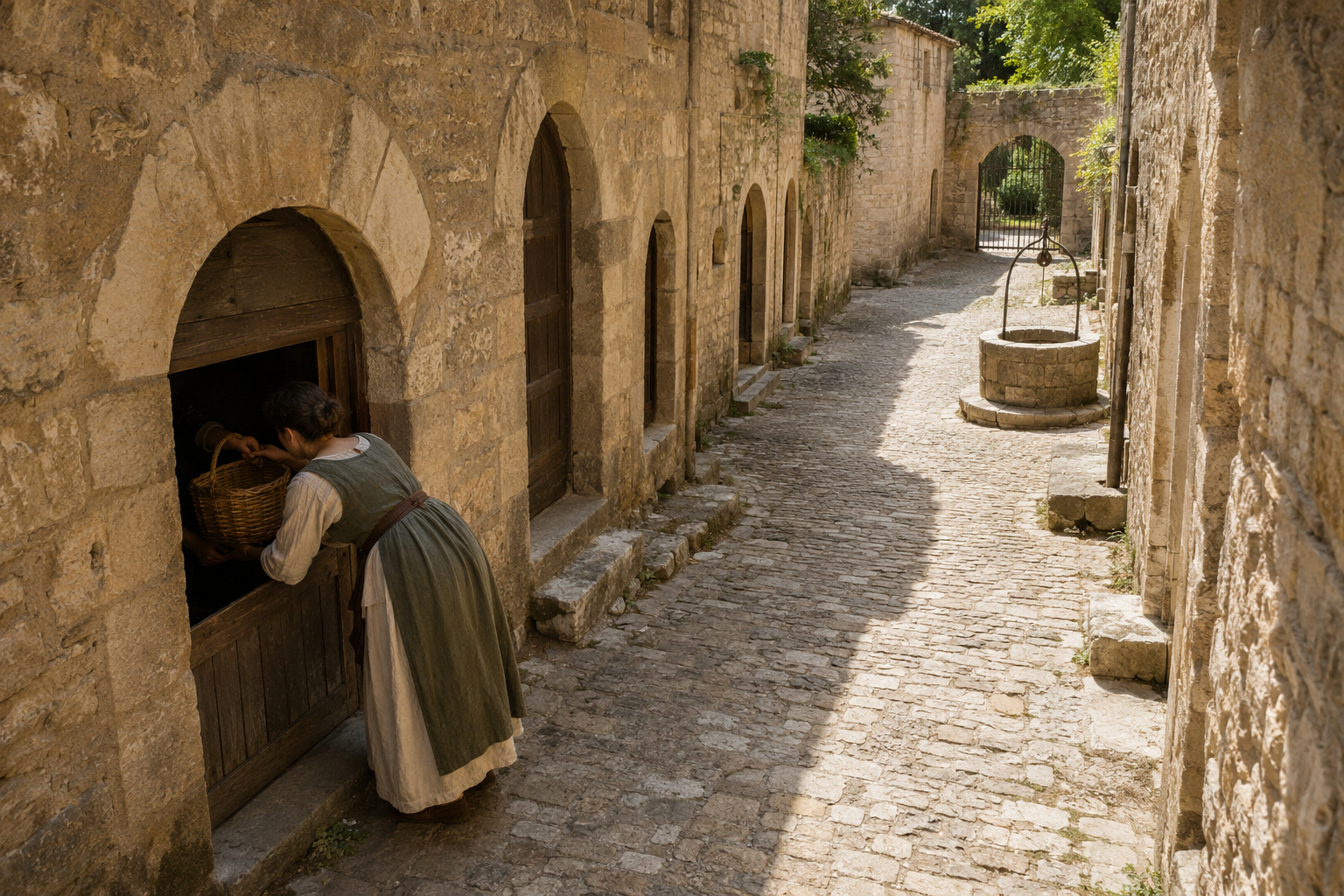
Historic towns are often defined by their architecture: walls, doorways and narrow lanes shaped how people moved and met. Material thresholds — gates, thresholds, shopfronts — regulated trade, privacy and social visibility in everyday life. These features created routines that blended domestic tasks, commercial exchange and public ritual into a single urban rhythm. Understanding those thresholds reveals connections between built form and the social networks that sustained small town communities.

This article examines how architectural boundaries structured daily life. It highlights examples from market streets, alleys and household thresholds.

Material Thresholds and Daily Movement

Gateways and narrow passages controlled flows of people, animals and goods, directing where markets gathered and where neighbors crossed paths. The placement of wells, public posts and crosses at intersections created predictable stopping points for conversation and exchange. Physical thresholds could also mark social distinctions, as houses with prominent doorways signaled status while back alleys hosted quieter economies. Over time these patterns produced habitual routes that structured workdays, religious attendance and leisure.

These patterns formed a tacit map that residents learned and relied upon. They shaped who met whom, when shops opened, and how public order was maintained.

Domestic Commerce and Shared Doorways

Many town households combined domestic space with small-scale manufacture or retail, blurring lines between private and public. Shopfronts and front rooms served as stages where families negotiated credit, gossip and reputation alongside sales. Shared entryways — common stairwells and courtyards — fostered cooperative labor, mutual aid and information flow among neighbors. These arrangements meant that economic exchanges were also social transactions embedded in everyday intimacy.

Households thus operated as micro-centers of production and sociability. Regulation, gossip and reciprocal obligations kept that blend functioning across generations.

Public Rituals and Private Spaces

Public rituals — market days, processions and civic announcements — depended on thresholds for their choreography and visibility. Town gates opened to welcome produce and visitors, while domestic windows afforded selective participation from within. The interplay between exterior spectacle and interior observation shaped community memory and local authority. Regulations about lighting, signage and use of streets further mediated how public and private realms met.

These negotiated boundaries produced a shared sense of order and expectations. They also left traces in records, maps and material remains that historians can read.

Conclusion

Thresholds in historic towns were more than architectural features; they were active participants in social life. By attending to walls, doorways and lanes historians can recover the routines that connected households, markets and civic culture. Such attention helps explain how built environments shaped belonging and daily practice in small urban communities.


Previous Post

Practical Guide to Structuring Multi-Threaded Community History Timelines

Next Post

Everyday Architecture: How Houses Shaped Market Town Life

Related Posts

How the Crystal Palace Turned Glass and Iron into a Modern Stage
History

How the Crystal Palace Turned Glass and Iron into a Modern Stage

September 15, 2026
Anne Bonny: The Pirate Who Broke Rules and Expectations
History

Anne Bonny: The Pirate Who Broke Rules and Expectations

September 15, 2026
Mary Anning and the Coast That Revealed Lost Worlds
History

Mary Anning and the Coast That Revealed Lost Worlds

September 15, 2026
When Mount Pelée Erased Saint-Pierre, 1902
History

When Mount Pelée Erased Saint-Pierre, 1902

September 15, 2026
Next Post
Everyday Architecture: How Houses Shaped Market Town Life

Everyday Architecture: How Houses Shaped Market Town Life

Search..

No Result
View All Result

Recent Articles

The Disguise That Broke Chains: Ellen and William Craft

The Disguise That Broke Chains: Ellen and William Craft

September 15, 2026
Bass Reeves: The Marshal Who Hunted Outlaws in Indian Territory

Bass Reeves: The Marshal Who Hunted Outlaws in Indian Territory

September 15, 2026
How the Crystal Palace Turned Glass and Iron into a Modern Stage

How the Crystal Palace Turned Glass and Iron into a Modern Stage

September 15, 2026
Anne Bonny: The Pirate Who Broke Rules and Expectations

Anne Bonny: The Pirate Who Broke Rules and Expectations

September 15, 2026
How Haiti Broke Its Chains: A 1791–1804 Timeline

How Haiti Broke Its Chains: A 1791–1804 Timeline

September 15, 2026

Subscribe Us

By clicking submit, I authorize History Ours and its affiliated companies to: (1) use, sell, and share my information for marketing purposes, including cross-context behavioral advertising, as described in our Terms of Service and Privacy Policy, (2) supplement the information that I provide with additional information lawfully obtained from other sources, like demographic data from public sources, interests inferred from web page views, or other data relevant to what might interest me, like past purchase or location data, (3) contact me or enable others to contact me by email with offers for goods and services from any category at the email address provided, and (4) retain my information while I am engaging with marketing messages that I receive and for a reasonable amount of time thereafter. I understand I can opt out at any time through an email that I receive, or by clicking here

Subscribe To Our Newsletter

By clicking submit, I authorize History Ours and its affiliated companies to: (1) use, sell, and share my information for marketing purposes, including cross-context behavioral advertising, as described in our Terms of Service and Privacy Policy, (2) supplement the information that I provide with additional information lawfully obtained from other sources, like demographic data from public sources, interests inferred from web page views, or other data relevant to what might interest me, like past purchase or location data, (3) contact me or enable others to contact me by email with offers for goods and services from any category at the email address provided, and (4) retain my information while I am engaging with marketing messages that I receive and for a reasonable amount of time thereafter. I understand I can opt out at any time through an email that I receive, or by clicking here.

© 2026 History Ours | All Rights Reserved

  • Contact Us
  • Privacy Policy
  • Terms of Service
  • Unsubscribe
  • Privacy Choices
  • Contact Us
  • Privacy Policy
  • Terms of Service
  • Unsubscribe
  • Privacy Choices

© 2026 History Ours | All Rights Reserved

No Result
View All Result
  • Home
  • History
  • Biographies
  • Eras
  • Regions
  • Timeline

© 2026 History Ours | All Rights Reserved

Skip to content
Open toolbar Accessibility Tools

Accessibility Tools

  • Increase TextIncrease Text
  • Decrease TextDecrease Text
  • GrayscaleGrayscale
  • High ContrastHigh Contrast
  • Negative ContrastNegative Contrast
  • Light BackgroundLight Background
  • Links UnderlineLinks Underline
  • Readable FontReadable Font
  • Reset Reset