

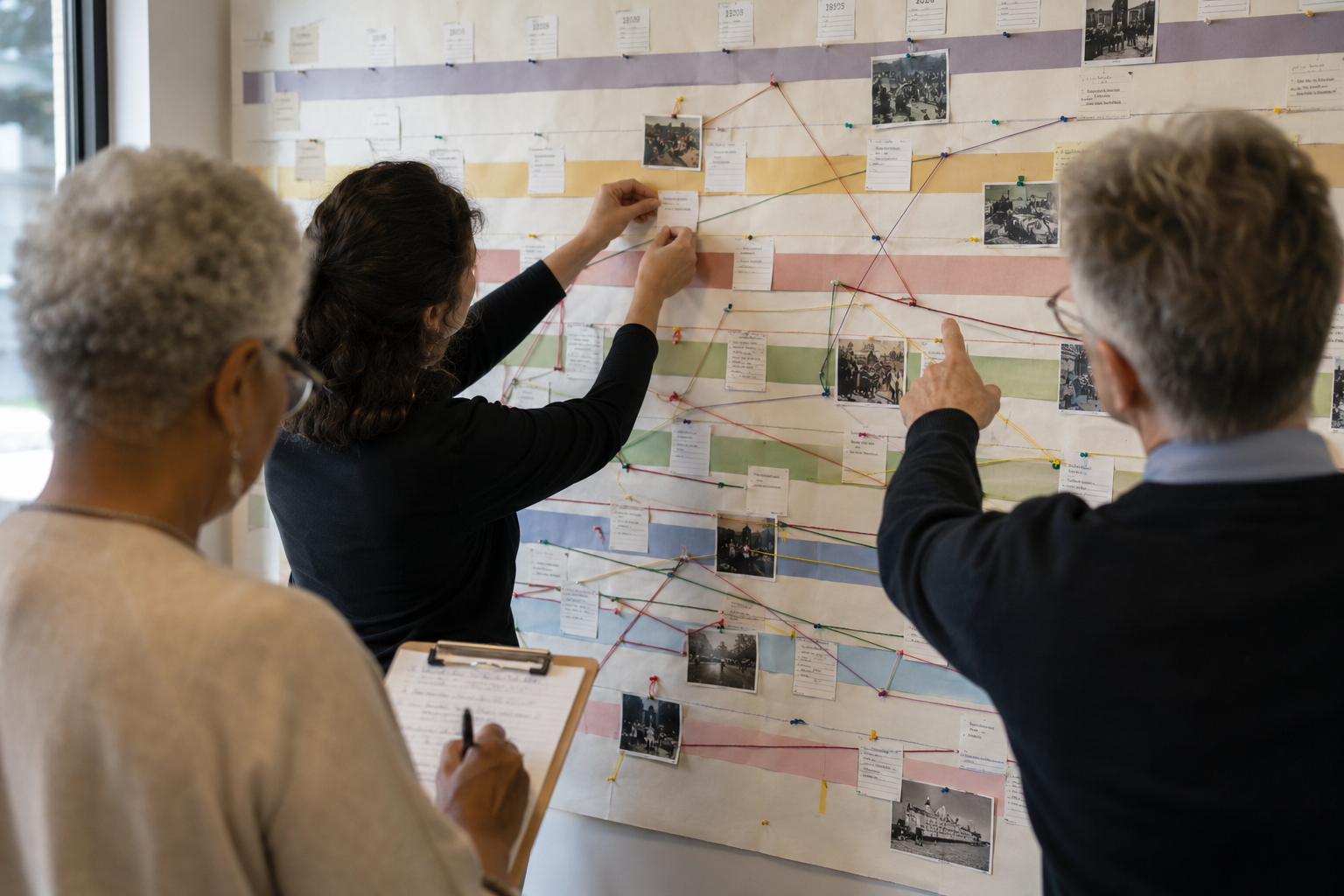
Timelines are more than lists of dates; they are frameworks for stories that connect people, places and change over time.
A multi-threaded approach lets multiple narratives run in parallel so readers can compare developments side by side.
This guide outlines practical steps for planning such timelines, from defining scope to testing display formats.
It is aimed at community historians, museum staff and volunteers seeking clarity and coherence in public timeline projects.
Define threads and set clear scope
Start by identifying the distinct threads your timeline will carry: political events, social movements, cultural milestones, economic shifts or local everyday life. Choose a temporal range that balances depth and readability so each thread can be meaningfully represented. Limit the number of threads to three to six to avoid visual overload for general audiences. Clarify the primary audience and the questions you want the timeline to answer.
With scope and audience clear you can prioritize events and allocate space appropriately. Early decisions reduce scope creep during research and design.
Design visual hierarchy and temporal scale
Design a visual hierarchy that makes relationships visible at a glance: primary threads should occupy consistent lanes, while secondary events can be smaller or collapsed. Use scale markers and consistent spacing to communicate duration, not just points in time, and consider inset scales for long spans. Color and typographic contrast help readers track threads across the layout, but apply them sparingly to avoid confusion. Responsive layouts or zoomable interfaces let users switch between overview and detail without losing context.
Think through how the timeline will be displayed—print, wall, or screen—and prototype at real size when possible. Practical constraints often guide the best visual compromises.
Integrate sources and annotate connections
Anchor entries with sources and brief annotations so users understand evidence and perspective. Where threads intersect, add connective notes that explain causation or coincidence, but avoid over-interpretation. Use representative primary items—photographs, quotes, documents—to humanize entries and invite further inquiry. Maintain a consistent citation approach and link to expanded material online if available.
Document curatorial choices so future editors can follow the rationale. Iterative research and transparent sourcing build trust with audiences.
Conclusion
A strong multi-threaded timeline balances clarity, depth and accessibility.
Start small, test with real users, and expand based on feedback.
Well-structured timelines turn complex community histories into meaningful, navigable stories.