Uncover History’s Secrets with Daily Updates!
Daily News Entertainment
  • Home
  • History
  • Biographies
  • Eras
  • Regions
  • Timeline
No Result
View All Result
History Ours
  • Home
  • History
  • Biographies
  • Eras
  • Regions
  • Timeline
No Result
View All Result
History Ours
No Result
View All Result
Home Regions

Environmental Clues and the Geography of Historical Regions

in Regions
Environmental Clues and the Geography of Historical Regions

Human communities leave traces on the land that outlast political maps and written records. These environmental clues—field boundaries, soil changes, waterworks, and vegetation patterns—help reconstruct how regions were organized and used over long periods. Reading these traces requires combining landscape reading with documentary and archaeological evidence to build coherent regional narratives. This introduction outlines how geographies of past regions can be rediscovered through careful observation and interpretation.

The material record in the landscape
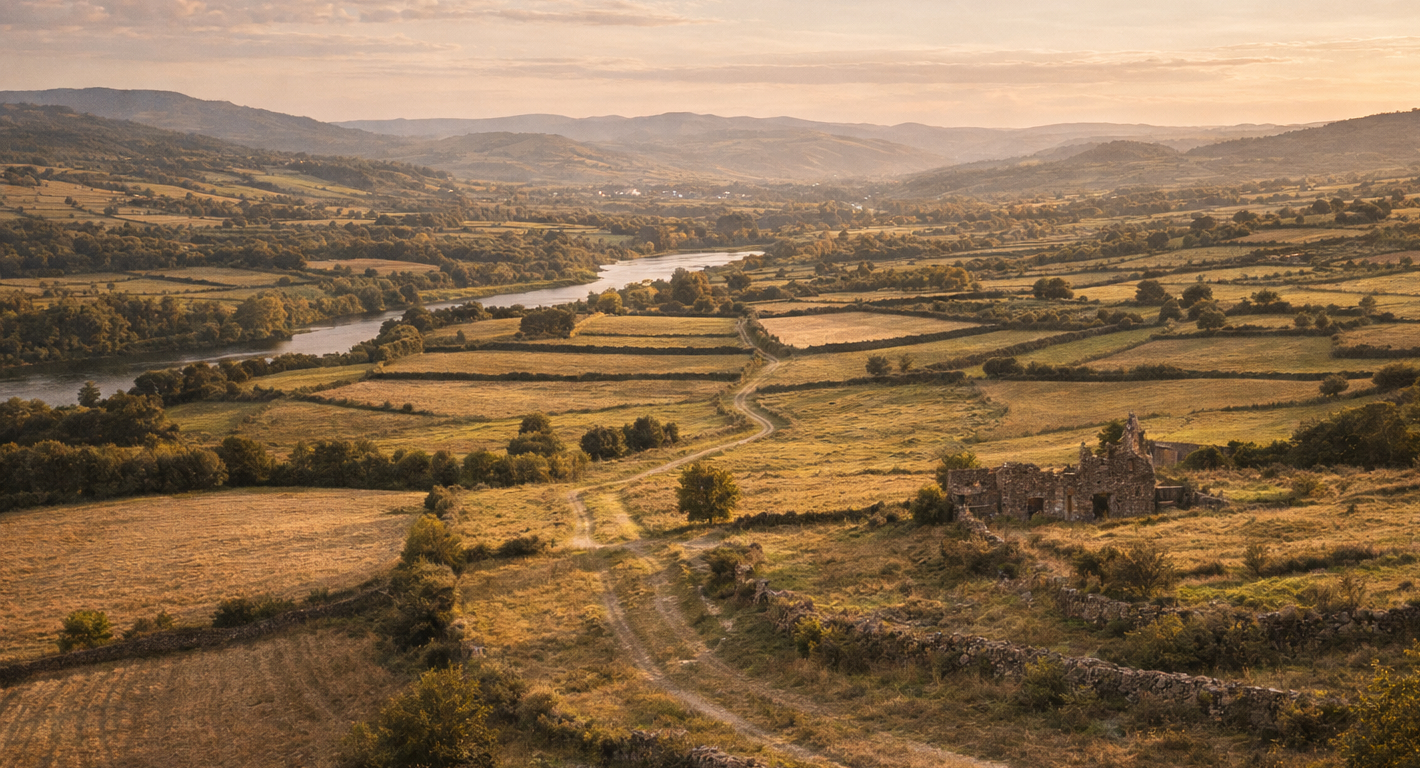
The first step in regional reconstruction is cataloguing visible material features and their spatial relationships. Old hedgerows, terraces, abandoned settlements, and relict roadways form a distributed archive that records economic choices, labor investment, and settlement hierarchies. Interpreting these features involves dating, mapping, and considering how later activities may have altered or obscured earlier patterns. Together they provide a baseline for questions about continuity and change across a region.

Human mobility and settlement patterns
Patterns of habitation and movement shape how landscapes look and how regions functioned. Settlement density, nucleation versus dispersed farms, and proximity to trade routes all leave detectable marks on land use and resource distribution. These traces indicate social organization, property regimes, and connections between communities.
– Settlement clusters often align with water access and arable land.
– Pathways and trackways reveal long-distance movement and economic exchange.
– Temporary camps and seasonal use areas show adaptive strategies.
A combined view of mobility and settlement helps explain why some places persisted as centers while others declined, and suggests how networks knitted a region together.

Natural features as persistent markers
Rivers, ridgelines, wetlands, and soil types provide durable templates that mediate human choice and institutional boundaries. While political borders can shift, natural features often constrain economic possibilities and settlement locations across centuries. Vegetation patterns and floodplain dynamics, for example, indicate former land management and can reveal earlier agricultural regimes. Recognizing these persistent markers anchors historical interpretation to ecological realities.

Methods for interpreting regional evidence
Effective regional analysis blends field survey, remote sensing, archival research, and community knowledge. GIS mapping synthesizes these datasets to reveal spatial patterns that are not obvious at ground level. Comparative study—looking across similar environments or neighboring regions—tests hypotheses about drivers of change and persistence. These methods make it possible to turn dispersed traces into plausible stories about past regional organization.

Conclusion
Environmental clues provide a resilient record of how regions were formed, used, and reorganized over time. Integrating landscape evidence with documentary and archaeological methods produces richer, place-based histories. Such approaches help recover regional identities and processes that written sources alone often obscure.
Previous Post

How Port Cities Shaped Early Trade and Society

Next Post

Tracing Cultural Landscapes Across Historical Regions and Borders

Related Posts

Trieste: A Port at the Edge of Empires
Regions

Trieste: A Port at the Edge of Empires

September 15, 2026
Svalbard: How a Frozen Archipelago Became an International Outpost
Regions

Svalbard: How a Frozen Archipelago Became an International Outpost

September 15, 2026
Orkney: Where Norse Law and Scottish Life Intertwined
Regions

Orkney: Where Norse Law and Scottish Life Intertwined

September 15, 2026
Inside the Covered Streets: The Grand Bazaar and Istanbul’s Life
Regions

Inside the Covered Streets: The Grand Bazaar and Istanbul’s Life

September 15, 2026
Next Post
Tracing Cultural Landscapes Across Historical Regions and Borders

Tracing Cultural Landscapes Across Historical Regions and Borders

Search..

No Result
View All Result

Recent Articles

The Disguise That Broke Chains: Ellen and William Craft

The Disguise That Broke Chains: Ellen and William Craft

September 15, 2026
Bass Reeves: The Marshal Who Hunted Outlaws in Indian Territory

Bass Reeves: The Marshal Who Hunted Outlaws in Indian Territory

September 15, 2026
How the Crystal Palace Turned Glass and Iron into a Modern Stage

How the Crystal Palace Turned Glass and Iron into a Modern Stage

September 15, 2026
Anne Bonny: The Pirate Who Broke Rules and Expectations

Anne Bonny: The Pirate Who Broke Rules and Expectations

September 15, 2026
How Haiti Broke Its Chains: A 1791–1804 Timeline

How Haiti Broke Its Chains: A 1791–1804 Timeline

September 15, 2026

Subscribe Us

By clicking submit, I authorize History Ours and its affiliated companies to: (1) use, sell, and share my information for marketing purposes, including cross-context behavioral advertising, as described in our Terms of Service and Privacy Policy, (2) supplement the information that I provide with additional information lawfully obtained from other sources, like demographic data from public sources, interests inferred from web page views, or other data relevant to what might interest me, like past purchase or location data, (3) contact me or enable others to contact me by email with offers for goods and services from any category at the email address provided, and (4) retain my information while I am engaging with marketing messages that I receive and for a reasonable amount of time thereafter. I understand I can opt out at any time through an email that I receive, or by clicking here

Subscribe To Our Newsletter

By clicking submit, I authorize History Ours and its affiliated companies to: (1) use, sell, and share my information for marketing purposes, including cross-context behavioral advertising, as described in our Terms of Service and Privacy Policy, (2) supplement the information that I provide with additional information lawfully obtained from other sources, like demographic data from public sources, interests inferred from web page views, or other data relevant to what might interest me, like past purchase or location data, (3) contact me or enable others to contact me by email with offers for goods and services from any category at the email address provided, and (4) retain my information while I am engaging with marketing messages that I receive and for a reasonable amount of time thereafter. I understand I can opt out at any time through an email that I receive, or by clicking here.

© 2026 History Ours | All Rights Reserved

  • Contact Us
  • Privacy Policy
  • Terms of Service
  • Unsubscribe
  • Privacy Choices
  • Contact Us
  • Privacy Policy
  • Terms of Service
  • Unsubscribe
  • Privacy Choices

© 2026 History Ours | All Rights Reserved

No Result
View All Result
  • Home
  • History
  • Biographies
  • Eras
  • Regions
  • Timeline

© 2026 History Ours | All Rights Reserved

Skip to content
Open toolbar Accessibility Tools

Accessibility Tools

  • Increase TextIncrease Text
  • Decrease TextDecrease Text
  • GrayscaleGrayscale
  • High ContrastHigh Contrast
  • Negative ContrastNegative Contrast
  • Light BackgroundLight Background
  • Links UnderlineLinks Underline
  • Readable FontReadable Font
  • Reset Reset