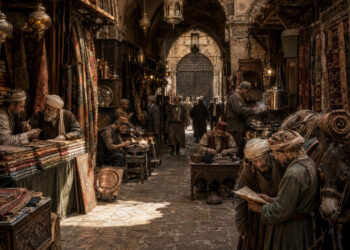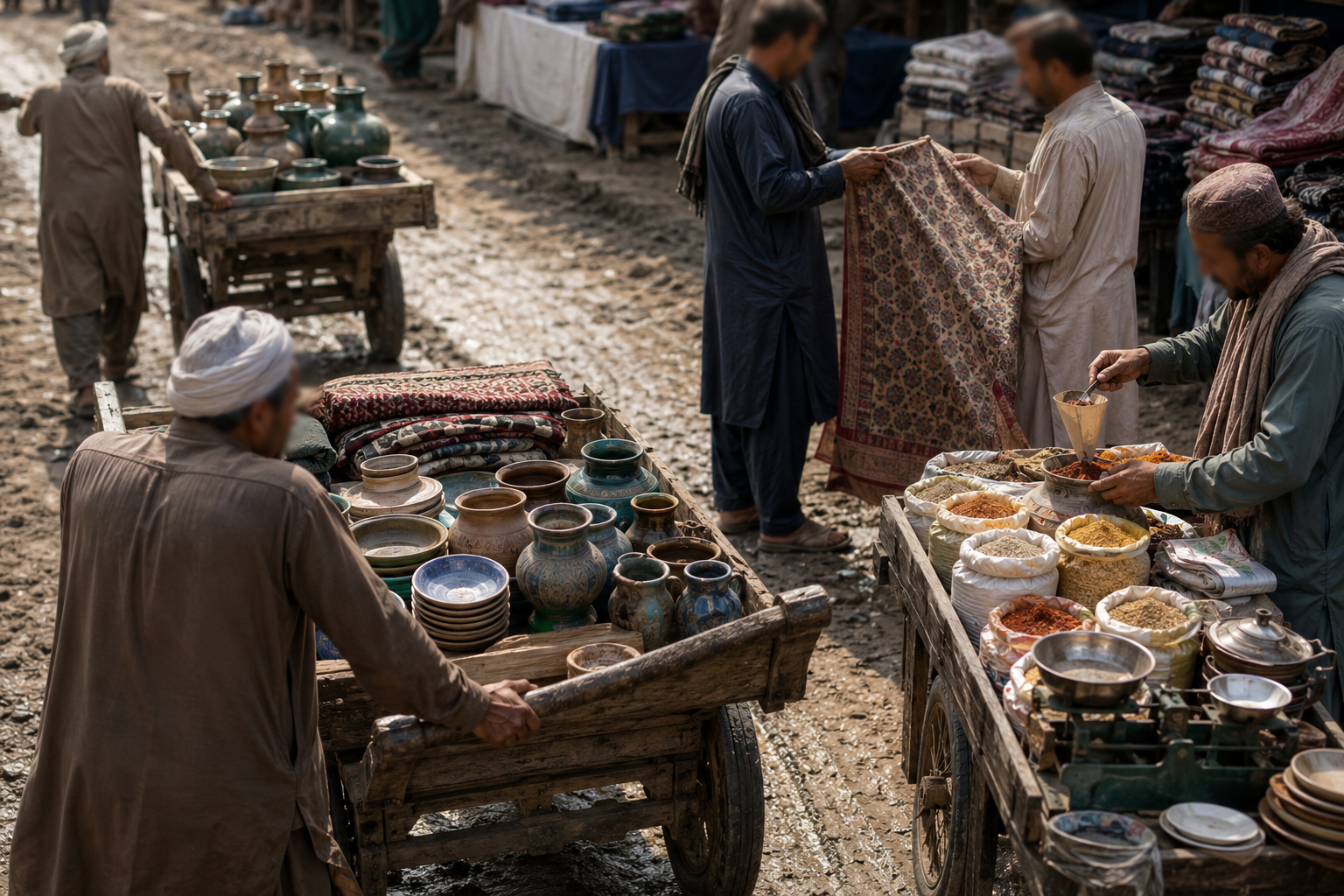
Everyday trade networks quietly shape how regions look, feel, and remember themselves. Markets, itinerant traders, and routine exchanges weave a lattice of economic and cultural connections that often escape grand narratives. By tracing the ordinary movement of goods and people we can see how local identities and landscapes are assembled over time. This article explores the mechanisms by which everyday commerce contributes to regional cultural formation.
Trade Networks as Everyday Structures
Daily routes — from cart tracks to market days — create predictable rhythms that anchor settlements and services. Regular exchange fosters shared standards: measures, languages, culinary tastes and craft techniques circulate with parcels and payments across months and seasons. Over decades these practices harden into expectations, shaping where infrastructure is built and how landscapes are managed, from road maintenance to the placement of communal ovens and warehouses. The repeated presence of traders and customers also influences social hierarchies and local economies, encouraging specialization. Understanding those rhythms reveals the slow accretion of regional commonalities beyond political borders.
These structural patterns are not fixed but adaptable, responding to innovation and crisis. Markets can reroute and practices can shift, yet change often builds on earlier routines. Yet their cumulative effect on regional culture is enduring.
Material Culture and Movement
Objects that travel tell stories: ceramics, textiles, tools and ingredients carry techniques and meanings across places. As items move, so do the craftsmen who repair, imitate or adapt them, creating hybrid styles that mark a region. Shared material repertoires help communities recognize kinship or affiliation with a broader zone. Sometimes ingredients imported into a kitchen lead to entirely new dishes that become local staples. Material circulation thus stitches disparate locales into recognizably regional landscapes.
Archaeological and archival traces of traded objects help historians map invisible connections. These traces allow us to reconstruct the everyday processes that underpin regional identity. Museums and local collections further preserve such material stories for public interpretation.
Institutions and Informal Practices
Formal institutions—guilds, markets, tolls—organize exchange, but informal practices often do more to create cultural cohesion. Rituals tied to market calendars, food-sharing customs, and customary dispute resolutions encode local norms. Trust networks and credit arrangements knit neighbors together over long periods. Such practices circulate alongside goods, making institutions legible and meaningful in daily life.
- Market calendar festivals reinforcing ties.
- Shared measurement and credit customs.
Together these formal and informal systems translate commerce into belonging. They are essential keys to reading a region’s history in ordinary acts. Paying attention to these practices helps recover voices often absent from official records.
Conclusion
Reading everyday trade networks reframes regional history from a top-down account to a lived process. By following goods, people, and practices we reveal how cultural landscapes are made incrementally. Paying attention to these hidden networks enriches our understanding of regional formation.