Regions are not only defined by maps and administrative borders but by repeated practices, memories, and material traces that accumulate over time. Everyday actions — from farming routines to market exchanges and religious observances — weave a sense of place that historians can read alongside documents. Paying attention to these mundane rhythms reveals how communities create continuity amid change. This article outlines practical ways to think about regional history through landscapes, networks, and sources.
By focusing on local practices we recover the textures of past life and the mechanisms of belonging. The following sections offer frameworks for interpreting material and social evidence. Each approach highlights how ordinary behaviors produce lasting regional patterns. Together they suggest methods for richer historical narratives.
Material Traces and Everyday Life
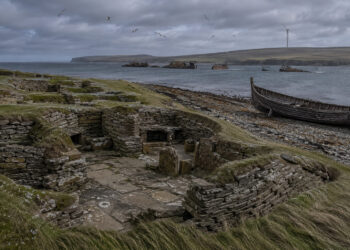
Built features, field patterns, and household objects embody routines that shape regional identity. Paths, walls, and vernacular architecture often reflect long-term adaptations to environment and economy, while artifacts speak to daily choices and mobility. Archaeological remains and landscape features help historians connect short-term events to durable practices. Examining such traces shows how people reproduced social order through material means.
Interpreting material evidence requires combining close observation with contextual knowledge. This lets researchers move from isolated finds to broader patterns of local continuity. Emphasizing the ordinary highlights the work that creates sense of place over generations.
Networks, Trade, and Ritual
Networks of exchange and ritual practice bind settlements into regional systems without formal governance. Markets, seasonal fairs, and pilgrimage routes facilitate flows of goods, ideas, and people that shape regional economies and identities. Ritual calendars and shared celebrations cement relationships and diffuse cultural norms across space. Studying these networks reveals how regions form through interaction rather than top-down design.
Mapping connections clarifies why some practices persist while others fade. Attention to both economic ties and ceremonial life gives a fuller picture of regional cohesion. Networks show the mechanisms of diffusion and resilience in local histories.
Reading Landscape Through Sources
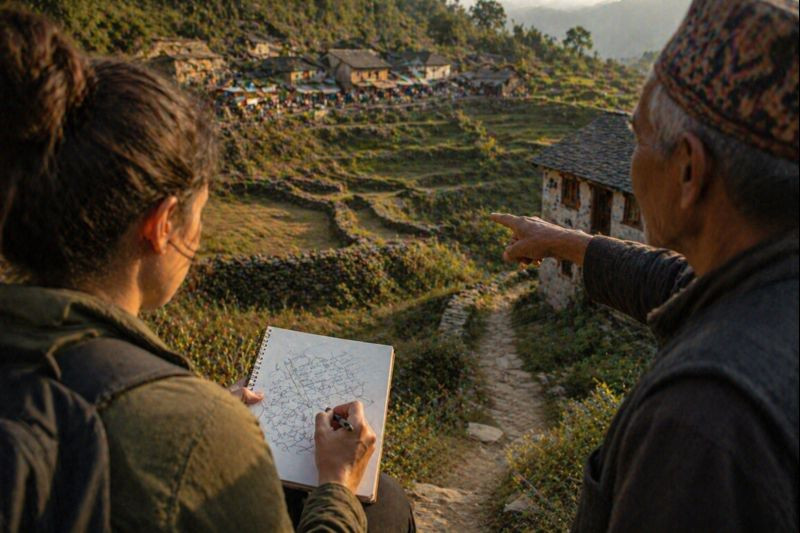
Written records, maps, and oral histories complement material and network evidence, offering perspectives on how people interpreted their own places. Estate inventories, travel accounts, and local chronicles capture attitudes toward land use, status, and belonging that physical traces alone cannot convey. Oral testimony preserves memories of practice and meaning that help explain discontinuities. Cross-referencing different source types strengthens interpretations of regional processes.
Critical source analysis is essential: each type carries biases and silences that must be weighed. Combining sources provides the best chance of reconstructing layered regional narratives. This approach fosters balanced and evidence-based histories.
Methods for Regional Study
Integrating ethnographic observation, landscape survey, archival work, and network analysis produces robust regional histories. Collaborative projects with local communities enhance access to oral archives and living knowledge, while GIS and spatial thinking reveal patterns not evident in single sources. Interdisciplinary methods allow historians to trace continuity and change across time and scale. Methodological pluralism is therefore a practical foundation for regional scholarship.
Researchers should prioritize context, triangulation, and reflexivity in their work. Doing so makes regional histories both rigorous and resonant for contemporary audiences. These methods help translate local practices into meaningful historical narratives.
Conclusion
Regions form through sustained practices that shape landscapes, networks, and memories over time. Focusing on ordinary activities and multiple evidence types reveals how belonging and continuity are made. A practice-centered approach yields richer, more grounded regional histories.