Uncover History’s Secrets with Daily Updates!
Daily News Entertainment
  • Home
  • History
  • Biographies
  • Eras
  • Regions
  • Timeline
No Result
View All Result
History Ours
  • Home
  • History
  • Biographies
  • Eras
  • Regions
  • Timeline
No Result
View All Result
History Ours
No Result
View All Result
Home Regions

Practices and Place: Reassembling Regional Histories

in Regions
Practices and Place: Reassembling Regional Histories

Regions are not merely lines on a map but living assemblages of practices, built environments, and shared memories. To study regional history is to attend to markets, paths, household routines, and ritual sites as sources of lasting meaning alongside formal archives. Focusing on everyday action helps explain how local identities shift, persist, and entangle with broader political changes. This perspective foregrounds ordinary agents and material traces as essential evidence for how places are made and remade.

Landscape and Local Practices

Everyday activities shape landscape over generations: planting patterns, road repairs, communal pastures, and domestic architecture all encode choices and constraints. When historians read these practices, they find recurrent decisions that crystallize into local norms and distinctive spatial arrangements. These patterns reveal how communities managed resources, negotiated conflict, and expressed belonging in practical, observable ways. Combining oral history, maps, and field observation makes visible the practical logic behind settled landscapes and their transformations.

Such readings encourage historians to move beyond single dates or events and to chart the slow accrual of regional form. This focus illuminates how commonplace work and maintenance produce durable regional character.

Material Traces and Everyday Archives

Objects and built remnants often outlive official records and provide a complementary archive for regional inquiry. Pottery shards, boundary stones, courtyard layouts, and tool marks tell stories of consumption, labor, and exchange that paper records miss. These material traces require careful interpretation: context, sequencing, and comparison across sites reveal how habits and technologies diffused. Photographs, property inventories, and small notebooks can bridge gaps between tangible remains and documented practices.

Prioritizing such sources uncovers voices and routines ordinarily absent from state-centered narratives. The result is a fuller account of how places acquired distinctive textures and functions.

Mobility, Networks, and Regional Connection

Regions gain coherence as people, goods, and ideas move through them; routes and networks knit disparate localities into shared worlds. Trade corridors, seasonal migration, religious circuits, and labor exchanges create overlapping layers of interaction that define regional reach. Examining those flows shows how local practices adapted in response to outside influences while shaping wider patterns in turn. Network analysis and microhistorical study together help map the rhythms that sustain or reshape regions.

Understanding mobility highlights that regions are not isolated islands but dynamic zones of interaction. This perspective clarifies how local identity can be both anchored and porous.

Conclusion

Reassembling regional histories means combining practices, material evidence, and networks to recover how places were lived. Attending to everyday action produces richer, more grounded narratives of regional formation. That approach deepens our understanding of how communities create durable yet adaptable senses of place.
Previous Post

Recognizing Layered Time: Interpreting Concurrent Historical Eras

Next Post

Everyday Infrastructures and the Long History of Place

Related Posts

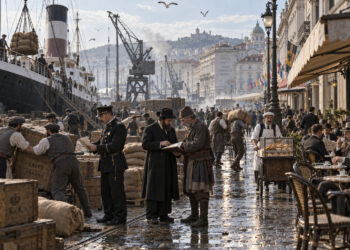
Trieste: A Port at the Edge of Empires
Regions

Trieste: A Port at the Edge of Empires

September 15, 2026
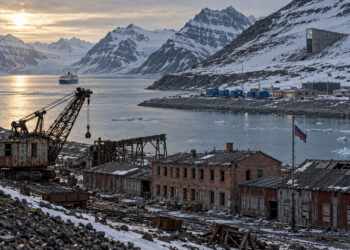
Svalbard: How a Frozen Archipelago Became an International Outpost
Regions

Svalbard: How a Frozen Archipelago Became an International Outpost

September 15, 2026
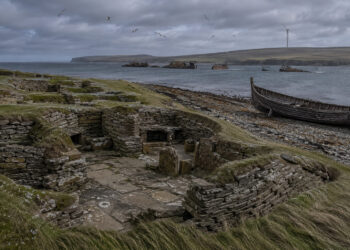
Orkney: Where Norse Law and Scottish Life Intertwined
Regions

Orkney: Where Norse Law and Scottish Life Intertwined

September 15, 2026
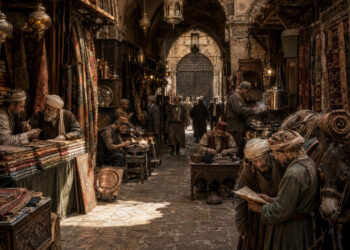
Inside the Covered Streets: The Grand Bazaar and Istanbul’s Life
Regions

Inside the Covered Streets: The Grand Bazaar and Istanbul’s Life

September 15, 2026
Next Post
Everyday Infrastructures and the Long History of Place

Everyday Infrastructures and the Long History of Place

Search..

No Result
View All Result

Recent Articles

The Disguise That Broke Chains: Ellen and William Craft

The Disguise That Broke Chains: Ellen and William Craft

September 15, 2026
Bass Reeves: The Marshal Who Hunted Outlaws in Indian Territory

Bass Reeves: The Marshal Who Hunted Outlaws in Indian Territory

September 15, 2026
How the Crystal Palace Turned Glass and Iron into a Modern Stage

How the Crystal Palace Turned Glass and Iron into a Modern Stage

September 15, 2026
Anne Bonny: The Pirate Who Broke Rules and Expectations

Anne Bonny: The Pirate Who Broke Rules and Expectations

September 15, 2026
How Haiti Broke Its Chains: A 1791–1804 Timeline

How Haiti Broke Its Chains: A 1791–1804 Timeline

September 15, 2026

Subscribe Us

By clicking submit, I authorize History Ours and its affiliated companies to: (1) use, sell, and share my information for marketing purposes, including cross-context behavioral advertising, as described in our Terms of Service and Privacy Policy, (2) supplement the information that I provide with additional information lawfully obtained from other sources, like demographic data from public sources, interests inferred from web page views, or other data relevant to what might interest me, like past purchase or location data, (3) contact me or enable others to contact me by email with offers for goods and services from any category at the email address provided, and (4) retain my information while I am engaging with marketing messages that I receive and for a reasonable amount of time thereafter. I understand I can opt out at any time through an email that I receive, or by clicking here

Subscribe To Our Newsletter

By clicking submit, I authorize History Ours and its affiliated companies to: (1) use, sell, and share my information for marketing purposes, including cross-context behavioral advertising, as described in our Terms of Service and Privacy Policy, (2) supplement the information that I provide with additional information lawfully obtained from other sources, like demographic data from public sources, interests inferred from web page views, or other data relevant to what might interest me, like past purchase or location data, (3) contact me or enable others to contact me by email with offers for goods and services from any category at the email address provided, and (4) retain my information while I am engaging with marketing messages that I receive and for a reasonable amount of time thereafter. I understand I can opt out at any time through an email that I receive, or by clicking here.

© 2026 History Ours | All Rights Reserved

  • Contact Us
  • Privacy Policy
  • Terms of Service
  • Unsubscribe
  • Privacy Choices
  • Contact Us
  • Privacy Policy
  • Terms of Service
  • Unsubscribe
  • Privacy Choices

© 2026 History Ours | All Rights Reserved

No Result
View All Result
  • Home
  • History
  • Biographies
  • Eras
  • Regions
  • Timeline

© 2026 History Ours | All Rights Reserved

Skip to content
Open toolbar Accessibility Tools

Accessibility Tools

  • Increase TextIncrease Text
  • Decrease TextDecrease Text
  • GrayscaleGrayscale
  • High ContrastHigh Contrast
  • Negative ContrastNegative Contrast
  • Light BackgroundLight Background
  • Links UnderlineLinks Underline
  • Readable FontReadable Font
  • Reset Reset