
Uncover History’s Secrets with Daily Updates!
Daily News Entertainment
  • Home
  • History
  • Biographies
  • Eras
  • Regions
  • Timeline
No Result
View All Result
History Ours
  • Home
  • History
  • Biographies
  • Eras
  • Regions
  • Timeline
No Result
View All Result
History Ours
No Result
View All Result
Home Regions

Everyday Infrastructures and the Long History of Place

in Regions
Everyday Infrastructures and the Long History of Place

Places are made not only by spectacular events or grand institutions but by the everyday infrastructures people build, use, and maintain over generations. Roads, markets, wells, and small rituals weave durable patterns into the landscape and shape how communities interact. Paying attention to these ordinary structures reveals continuities and shifts that larger narratives often miss. This piece outlines how material networks, practices, and memory together form the long history of regions.

The Material Foundations of Regions

Material infrastructures—paths, canals, fences, and local workshops—create the skeleton of regional life. They enable trade, labor, and communication, and their placement often reflects older land uses and social orders. Over time, modest modifications accumulate and redirect flows of people and goods, producing distinct regional characters. Archaeological traces and archival maps can help reconstruct these layered networks and reveal unexpected connections.

Recognizing material foundations shifts focus from single dates to processes that unfold across decades. It encourages historians to read ordinary features as evidence of long-term adaptation and negotiation.

Everyday Practices and Local Networks

Daily routines—market bargaining, seasonal fairs, craft workshops, and communal labor—sustain local economies and social ties. These practices circulate knowledge and resources, knitting settlements into networks that transcend administrative boundaries. Oral histories and household records often preserve details about these routines that formal sources overlook. Studying these patterns highlights how ordinary people actively produce regional identity through repetition and innovation.

By tracing networks of exchange and patronage, researchers can map influence and resilience across a region. This approach brings marginalized actors and small-scale institutions into sharper historical focus.

Memory, Monuments, and Minor Sites

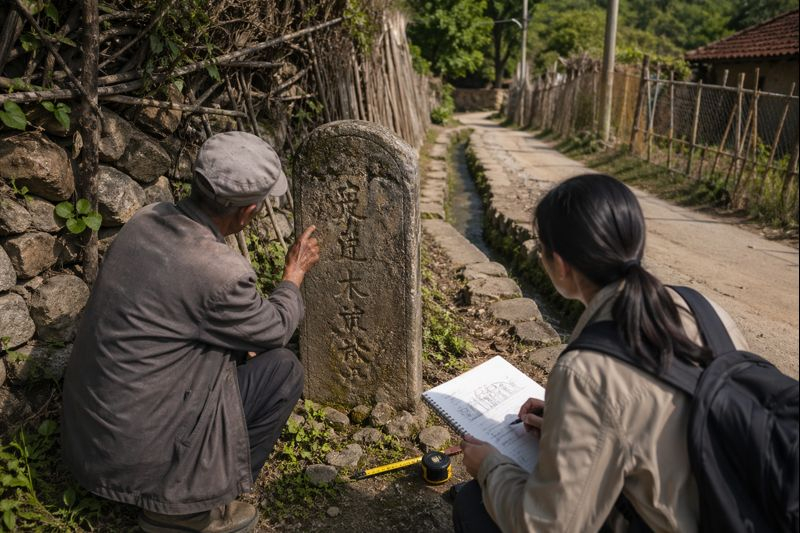
Collective memory attaches to both grand monuments and minor sites such as boundary stones, community wells, or old meeting places. These loci anchor narratives of belonging and contestation, and their meanings can shift with new generations. Local commemorations and informal landmarks often serve as repositories for contested histories and layered identities. Attention to small sites reveals how communities negotiate continuity amid change.

Combining material evidence with stories allows scholars to interpret how places are remembered and repurposed. Minor sites often prove surprisingly durable as carriers of regional meaning.

Methods for Studying Regional Histories

Effective regional study blends sources and scales: landscape archaeology, parish records, maps, oral testimony, and ethnographic observation. Comparative approaches across neighboring locales help locate distinctive features within broader patterns. Digital mapping and participatory research can also open new windows onto everyday infrastructures. Methodological plurality makes it possible to connect micro-histories to larger structural shifts.

Researchers should prioritize collaborative work with local communities to surface hidden archives and ensure interpretations reflect lived experience. Such partnerships enrich scholarship and public understanding alike.

Conclusion

Everyday infrastructures and routines shape regions as much as formal institutions. Attending to material networks, practices, and memory yields a richer account of place over time. This perspective invites scholars and communities to read landscapes as ongoing historical texts.
Previous Post

Practices and Place: Reassembling Regional Histories

Next Post

Creating Timelines to Illuminate Historical Change and Context

Related Posts

Trieste: A Port at the Edge of Empires
Regions

Trieste: A Port at the Edge of Empires

September 15, 2026
Svalbard: How a Frozen Archipelago Became an International Outpost
Regions

Svalbard: How a Frozen Archipelago Became an International Outpost

September 15, 2026
Orkney: Where Norse Law and Scottish Life Intertwined
Regions

Orkney: Where Norse Law and Scottish Life Intertwined

September 15, 2026
Inside the Covered Streets: The Grand Bazaar and Istanbul’s Life
Regions

Inside the Covered Streets: The Grand Bazaar and Istanbul’s Life

September 15, 2026
Next Post
Creating Timelines to Illuminate Historical Change and Context

Creating Timelines to Illuminate Historical Change and Context

Search..

No Result
View All Result

Recent Articles

The Disguise That Broke Chains: Ellen and William Craft

The Disguise That Broke Chains: Ellen and William Craft

September 15, 2026
Bass Reeves: The Marshal Who Hunted Outlaws in Indian Territory

Bass Reeves: The Marshal Who Hunted Outlaws in Indian Territory

September 15, 2026
How the Crystal Palace Turned Glass and Iron into a Modern Stage

How the Crystal Palace Turned Glass and Iron into a Modern Stage

September 15, 2026
Anne Bonny: The Pirate Who Broke Rules and Expectations

Anne Bonny: The Pirate Who Broke Rules and Expectations

September 15, 2026
How Haiti Broke Its Chains: A 1791–1804 Timeline

How Haiti Broke Its Chains: A 1791–1804 Timeline

September 15, 2026

Subscribe Us

By clicking submit, I authorize History Ours and its affiliated companies to: (1) use, sell, and share my information for marketing purposes, including cross-context behavioral advertising, as described in our Terms of Service and Privacy Policy, (2) supplement the information that I provide with additional information lawfully obtained from other sources, like demographic data from public sources, interests inferred from web page views, or other data relevant to what might interest me, like past purchase or location data, (3) contact me or enable others to contact me by email with offers for goods and services from any category at the email address provided, and (4) retain my information while I am engaging with marketing messages that I receive and for a reasonable amount of time thereafter. I understand I can opt out at any time through an email that I receive, or by clicking here

Subscribe To Our Newsletter

By clicking submit, I authorize History Ours and its affiliated companies to: (1) use, sell, and share my information for marketing purposes, including cross-context behavioral advertising, as described in our Terms of Service and Privacy Policy, (2) supplement the information that I provide with additional information lawfully obtained from other sources, like demographic data from public sources, interests inferred from web page views, or other data relevant to what might interest me, like past purchase or location data, (3) contact me or enable others to contact me by email with offers for goods and services from any category at the email address provided, and (4) retain my information while I am engaging with marketing messages that I receive and for a reasonable amount of time thereafter. I understand I can opt out at any time through an email that I receive, or by clicking here.

© 2026 History Ours | All Rights Reserved

  • Contact Us
  • Privacy Policy
  • Terms of Service
  • Unsubscribe
  • Privacy Choices
  • Contact Us
  • Privacy Policy
  • Terms of Service
  • Unsubscribe
  • Privacy Choices

© 2026 History Ours | All Rights Reserved

No Result
View All Result
  • Home
  • History
  • Biographies
  • Eras
  • Regions
  • Timeline

© 2026 History Ours | All Rights Reserved

Skip to content
Open toolbar Accessibility Tools

Accessibility Tools

  • Increase TextIncrease Text
  • Decrease TextDecrease Text
  • GrayscaleGrayscale
  • High ContrastHigh Contrast
  • Negative ContrastNegative Contrast
  • Light BackgroundLight Background
  • Links UnderlineLinks Underline
  • Readable FontReadable Font
  • Reset Reset