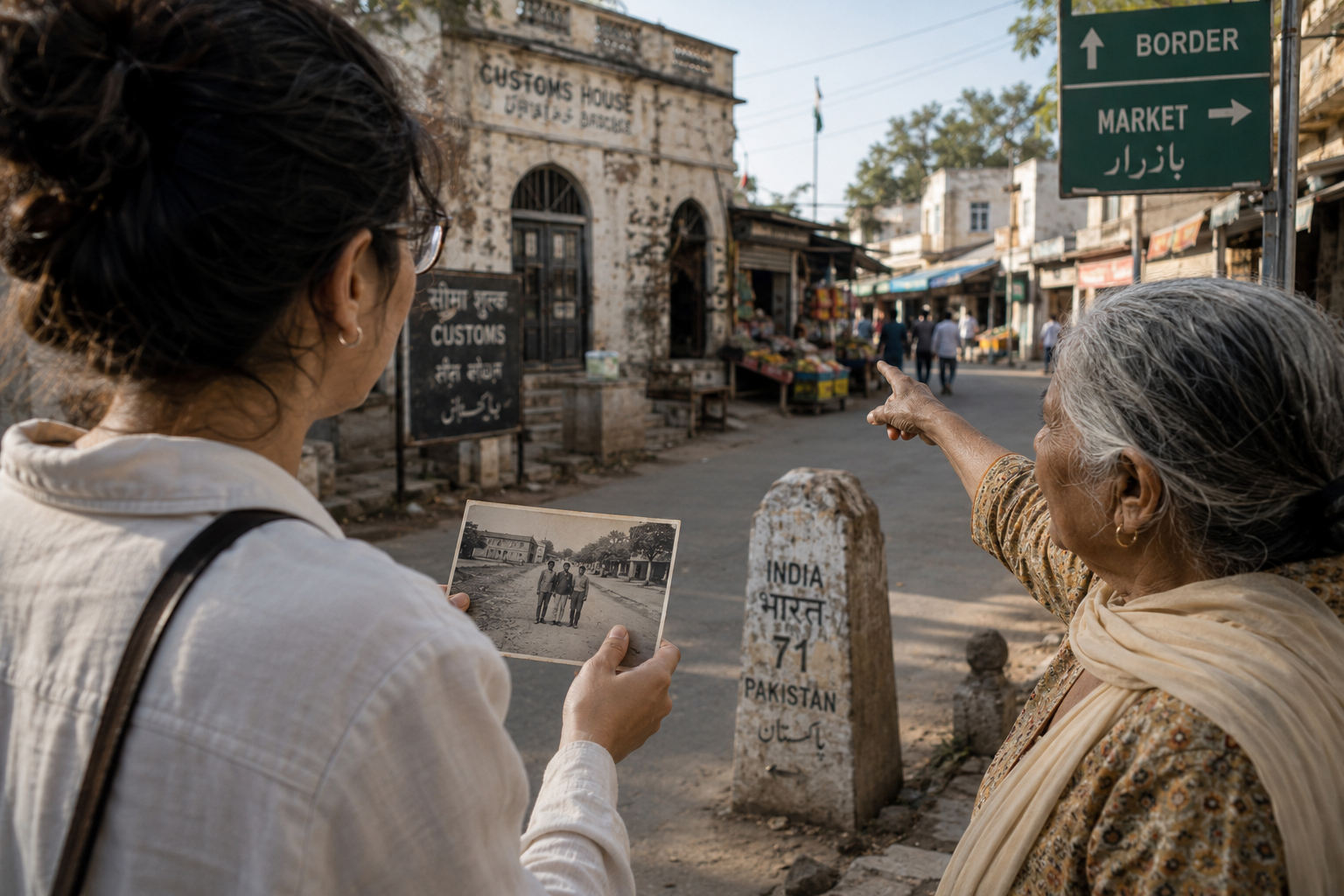
Regions near borders accumulate complex memories shaped by repeated interactions, conflicts, and daily routines. These places resist simple narratives because lived experience and official accounts often diverge, producing layered local histories. Paying attention to everyday practices — work rhythms, marketplaces, rituals — reveals how communities make sense of change over generations. Understanding these practices helps historians recover a grounded sense of regional identity that official maps alone cannot provide.
Historical Layers and Local Narratives
Border zones are archives in themselves: street names, property boundaries, and built forms record shifts in governance, migration, and economy across time. Oral histories and family archives frequently preserve events and meanings that do not appear in state records, offering alternative chronologies and priorities. These layers interact, so that a single place may carry meanings from successive eras that coexist uneasily in the present. Attending to these stratified narratives complicates tidy periodizations and highlights the persistence of local memory.
Scholars working at regional scale must therefore combine material evidence with community testimony. Doing so produces richer accounts that connect everyday life to broader historical processes.
Everyday Practices as Engines of Regional Continuity
Daily routines — markets, seasonal labor, communal celebrations — sustain cultural repertoires that outlast political upheaval. Such practices create social networks and norms that regulate movement, trade, and belonging across borders and frontiers. They are often adaptive, absorbing new elements while maintaining core forms that signal continuity to residents. Tracking how these routines change or endure provides insight into how communities manage uncertainty and assert place-based identity.
By mapping practices rather than only formal institutions, researchers can see how ordinary actions produce durable regional patterns.
Material Traces and the Built Landscape
Buildings, infrastructure, and landscape modifications are tangible witnesses to long-term regional dynamics, revealing investments, disinvestment, and shifting uses of space. Abandoned mills, reconstructed markets, and layered road networks speak to economic cycles and social priorities that shape everyday life. Material analysis paired with local testimony helps interpret these traces, indicating who used space, when, and for what purpose. This combined approach also highlights the ways physical environments channel memory and social reproduction across generations.
Interpreting these traces requires attention to scale and context, connecting micro-level sites to larger regional transformations.
Conclusion
Reading regions through everyday practices and material traces reveals how local memory endures amid change. This perspective foregrounds lived experience and offers a grounded method for reconstructing regional histories. Engaging with both practice and place produces nuanced, resilient narratives of belonging.