Uncover History’s Secrets with Daily Updates!
Daily News Entertainment
  • Home
  • History
  • Biographies
  • Eras
  • Regions
  • Timeline
No Result
View All Result
History Ours
  • Home
  • History
  • Biographies
  • Eras
  • Regions
  • Timeline
No Result
View All Result
History Ours
No Result
View All Result
Home Regions

Regional Narratives: Tracing Place, People, and Memory

in Regions
Regional Narratives: Tracing Place, People, and Memory

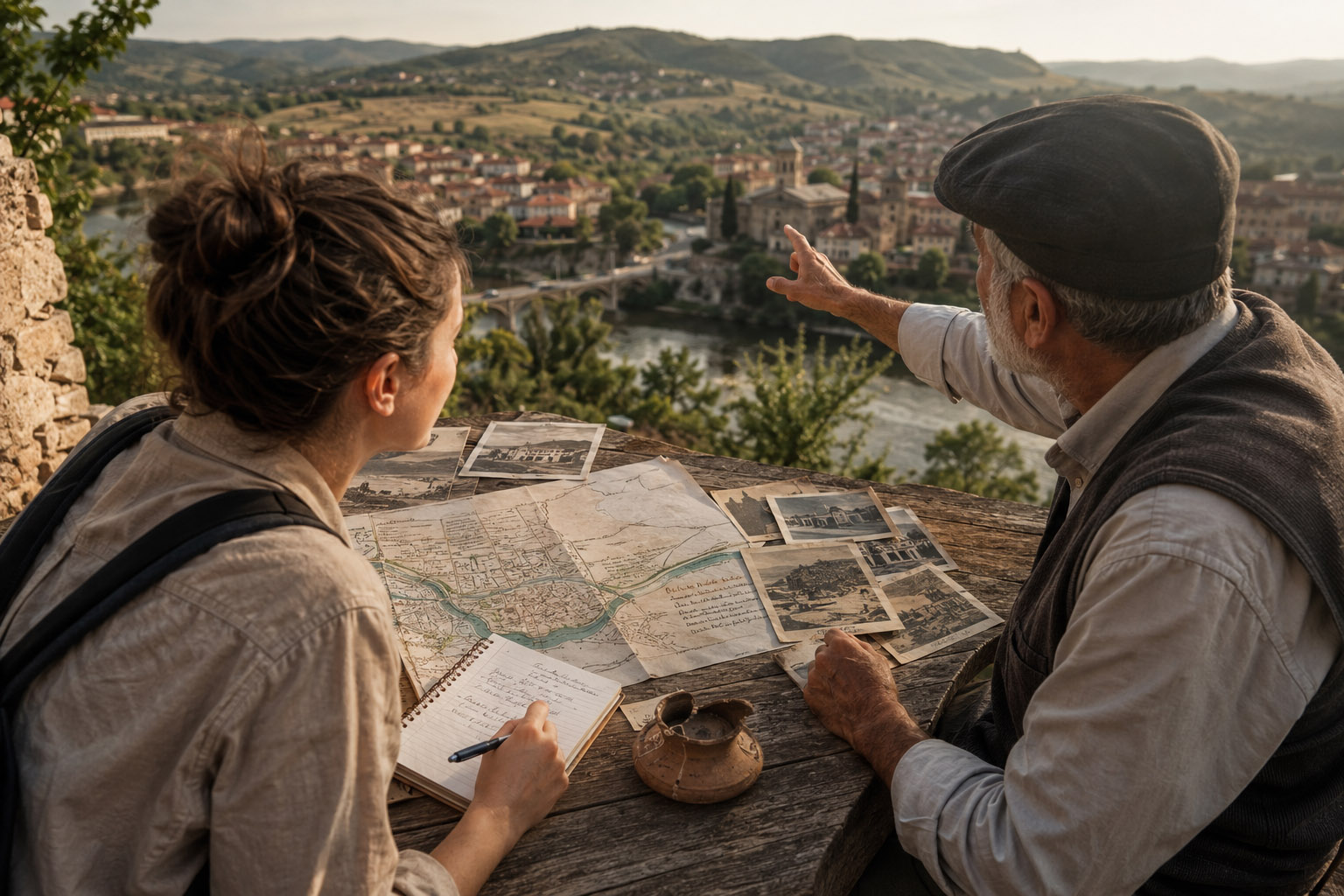
Regions are living tapestries woven from geography, human movement, economic exchange, and memory. Understanding a region means reading the traces left by seasons, trade routes, settlements, and stories passed across generations. Physical features shape options for livelihoods, while communities adapt and reinterpret those features in distinct ways. This introduction frames regional history as a conversation between environment and society.

Landscape and Local Economies

Topography, soil, waterways, and climate have long guided how people use land and organize daily life. Rivers and coasts enable trade and communication, while mountain ranges can isolate communities and foster unique cultural practices. Agricultural patterns, resource extraction, and urban development all reflect a dialogue with the natural setting. Over decades and centuries those economic arrangements leave material and archival records that historians use to reconstruct regional change.

These economic capacities also influence social hierarchies and settlement patterns. Understanding local livelihoods helps explain why towns grew where they did and why certain industries dominated regional identities.

Movement, Migration, and Cultural Exchange

Movement of people—voluntary or forced—shapes regional demographics and cultural landscapes. Migratory flows bring languages, crafts, belief systems, and culinary traditions that intermingle with existing customs. Trade networks and travel corridors act as conduits for innovation and conflict alike, establishing centers of exchange and zones of hybrid identity. Archaeological remains, oral histories, and written records together reveal how mobility created layered regional identities.

Examining migration patterns shows how regions absorb influence and transform over time. Such shifts underline the importance of mobility in both enriching and complicating regional narratives.

Built Environment, Memory, and Identity

Architecture, monuments, and urban layouts encode choices about power, remembrance, and belonging. Public buildings, sacred sites, and commercial districts signal priorities and values across eras. Preservation and reuse of structures can either reinforce dominant narratives or provide space for alternative memories to surface. Scholars read these built forms as texts that help explain how communities remember and reinvent themselves.

Material culture thus acts as a bridge between past and present, shaping how residents and outsiders interpret a region’s story. Attention to built heritage clarifies why some histories endure while others fade.

Conclusion

Regional history emerges from interactions among environment, movement, economy, and memory. Close attention to material and human traces reveals how place and people continually reshape each other. Studying these dynamics offers richer, more nuanced accounts of regional identity and change.

Previous Post

How Landscapes Shape Regional Histories and Local Identity

Next Post

A Stepwise Approach to Sequencing Local Historical Events

Related Posts

How Oysters Shaped the Chesapeake’s Past and Present
Regions

How Oysters Shaped the Chesapeake’s Past and Present

August 28, 2026
Corsica’s Rocky Turn: Genoese Towers, Paoli, and an Island’s Identity
Regions

Corsica’s Rocky Turn: Genoese Towers, Paoli, and an Island’s Identity

August 28, 2026
Mapping Cultural Layers Across Distinct Regional Landscapes
Regions

Mapping Cultural Layers Across Distinct Regional Landscapes

August 28, 2026
How Landscapes Shape Regional Histories and Local Identity
Regions

How Landscapes Shape Regional Histories and Local Identity

August 28, 2026
Next Post
A Stepwise Approach to Sequencing Local Historical Events

A Stepwise Approach to Sequencing Local Historical Events

Search..

No Result
View All Result

Recent Articles

How the Rosetta Stone Broke Egypt’s Silent Code

How the Rosetta Stone Broke Egypt’s Silent Code

August 29, 2026
How the First Transatlantic Telegraph Shrunk the World

How the First Transatlantic Telegraph Shrunk the World

August 29, 2026
How Oysters Shaped the Chesapeake’s Past and Present

How Oysters Shaped the Chesapeake’s Past and Present

August 28, 2026
Corsica’s Rocky Turn: Genoese Towers, Paoli, and an Island’s Identity

Corsica’s Rocky Turn: Genoese Towers, Paoli, and an Island’s Identity

August 28, 2026
Mapping Cultural Layers Across Distinct Regional Landscapes

Mapping Cultural Layers Across Distinct Regional Landscapes

August 28, 2026

Subscribe Us

By clicking submit, I authorize History Ours and its affiliated companies to: (1) use, sell, and share my information for marketing purposes, including cross-context behavioral advertising, as described in our Terms of Service and Privacy Policy, (2) supplement the information that I provide with additional information lawfully obtained from other sources, like demographic data from public sources, interests inferred from web page views, or other data relevant to what might interest me, like past purchase or location data, (3) contact me or enable others to contact me by email with offers for goods and services from any category at the email address provided, and (4) retain my information while I am engaging with marketing messages that I receive and for a reasonable amount of time thereafter. I understand I can opt out at any time through an email that I receive, or by clicking here

Subscribe To Our Newsletter

By clicking submit, I authorize History Ours and its affiliated companies to: (1) use, sell, and share my information for marketing purposes, including cross-context behavioral advertising, as described in our Terms of Service and Privacy Policy, (2) supplement the information that I provide with additional information lawfully obtained from other sources, like demographic data from public sources, interests inferred from web page views, or other data relevant to what might interest me, like past purchase or location data, (3) contact me or enable others to contact me by email with offers for goods and services from any category at the email address provided, and (4) retain my information while I am engaging with marketing messages that I receive and for a reasonable amount of time thereafter. I understand I can opt out at any time through an email that I receive, or by clicking here.

© 2026 History Ours | All Rights Reserved

  • Contact Us
  • Privacy Policy
  • Terms of Service
  • Unsubscribe
  • Privacy Choices
  • Contact Us
  • Privacy Policy
  • Terms of Service
  • Unsubscribe
  • Privacy Choices

© 2026 History Ours | All Rights Reserved

No Result
View All Result
  • Home
  • History
  • Biographies
  • Eras
  • Regions
  • Timeline

© 2026 History Ours | All Rights Reserved

Skip to content
Open toolbar Accessibility Tools

Accessibility Tools

  • Increase TextIncrease Text
  • Decrease TextDecrease Text
  • GrayscaleGrayscale
  • High ContrastHigh Contrast
  • Negative ContrastNegative Contrast
  • Light BackgroundLight Background
  • Links UnderlineLinks Underline
  • Readable FontReadable Font
  • Reset Reset