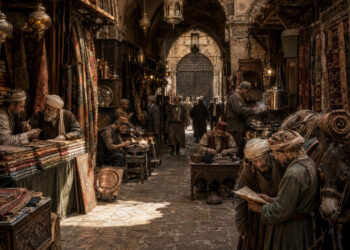


Everyday places — markets, crossroads, courtyards, and small workshops — keep records of regional life that formal archives often miss. These spaces accumulate routines, clashes, and adaptations that shape how communities remember themselves. Studying them reveals continuities and ruptures in how people live, work, and belong across decades. Paying close attention to ordinary sites shifts the focus from grand narratives to lived regional experience.
Everyday Places as Living Archives
Physical sites act as layered archives where material culture and human action intersect. A market stall, a riverbank path, or a communal oven stores gestures, technologies, and exchanges that speak to long-term regional processes. These traces often show how adaptation to economic or environmental change happens at a granular level. Interpreting them requires combining observation with oral testimony to recover practices that leave few official records.
Fieldwork rooted in place can reveal patterns invisible in state documents. Collecting these small histories builds a richer regional picture.
Practices, Rituals, and Regional Belonging
Rituals and routine practices anchor belonging by repeating meanings across generations. Work rhythms, seasonal festivals, and household routines encode values and relations that help define a region’s identity. When these practices shift — through migration, policy, or technology — they reconfigure local senses of community and place. Tracking such changes uncovers how regional identities are negotiated in everyday life.
Attending to practices foregrounds people’s agency in making place. It also highlights the unevenness of change within regions.
Material Traces and Power Relations
Material remains like walls, fields, and tools carry stories of access and exclusion as much as of continuity. Roads and irrigation canals map investments and political priorities that structure regional opportunity. At the same time, marginal spaces can become sites of innovation and resistance. Reading material traces alongside archival records helps to surface hidden power dynamics.
This combined evidence shows where resources were concentrated and where they were withheld. Understanding these patterns is essential to interpreting regional histories.
Approaches for Regional Research
Methodologies that mix ethnography, spatial analysis, and archival work are especially effective for regional study. Short-term intensive fieldwork, participatory mapping, and oral history capture the textures of everyday life. Geographic information can be layered with personal narratives to reveal how landscapes and memories intersect over time. Collaborative approaches also ensure that local voices shape the resulting histories.
Researchers should prioritize ethical engagement and long-term listening. This approach builds trust and produces nuanced regional accounts.
Conclusion
Everyday spaces are indispensable sources for understanding regional history. They reveal how people produce meaning through routine, material practices, and responses to power. Embracing these places widens our historical imagination about regions.