
Uncover History’s Secrets with Daily Updates!
Daily News Entertainment
  • Home
  • History
  • Biographies
  • Eras
  • Regions
  • Timeline
No Result
View All Result
History Ours
  • Home
  • History
  • Biographies
  • Eras
  • Regions
  • Timeline
No Result
View All Result
History Ours
No Result
View All Result
Home Timeline

Designing Engaging Timelines for Historical Websites

in Timeline
Designing Engaging Timelines for Historical Websites

Introduction

Timelines help readers understand sequences, context, and causality in history.
A well-structured timeline clarifies relationships between events while remaining navigable.
For history websites, balancing depth with readability ensures visitors stay engaged.
This article outlines practical planning, design, and technical tips to build effective timelines.

Planning Your Timeline

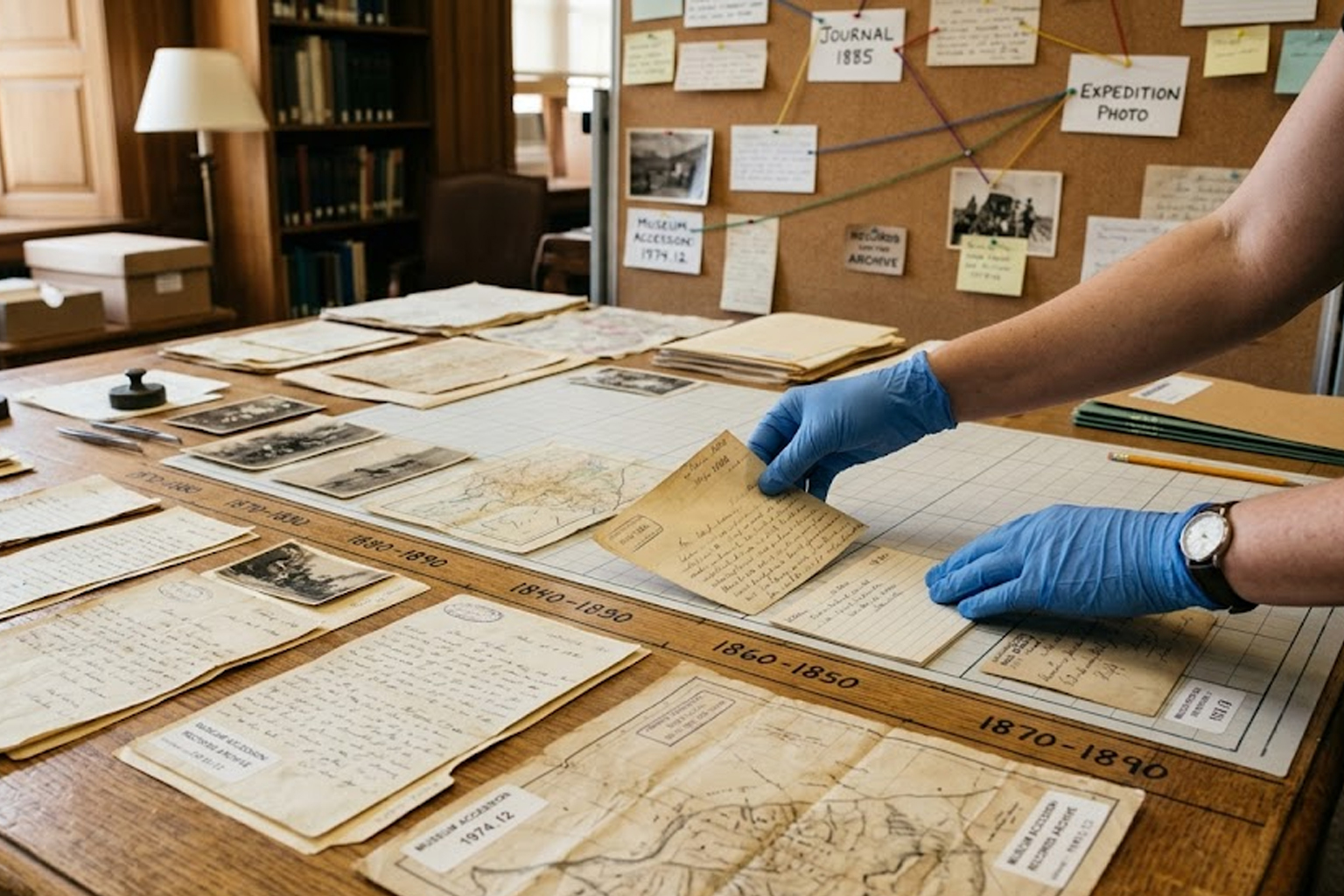
Begin by defining the timeline’s scope, audience, and core narrative so each entry serves a purpose. Prioritize events and group related items to avoid clutter and allow users to scan quickly. Decide on temporal granularity — years, months, or days — based on available sources and user needs. Include provenance and links to primary materials so researchers can verify and explore further.

  • Chronological sequence with thematic bands
  • Comparative parallel timelines
  • Event-focused microtimelines

Aim for clarity over completeness and provide filters to narrow views. Simple controls help newcomers while allowing deeper dives for researchers.

Design and Accessibility

Use a clear visual hierarchy with consistent typography, color coding, and spacing to guide attention. Ensure color contrast and provide text alternatives for visual elements so assistive technologies can interpret content. Implement responsive layouts that adapt to different screens, prioritizing touch-friendly controls on mobile. Test with users and accessibility tools to find and fix navigation or comprehension barriers.

  • High contrast palettes and large, readable fonts
  • Keyboard navigation and ARIA labels
  • Scalable timelines for assistive tech

Label elements clearly and avoid ambiguous icons. Regular audits catch regressions and keep the timeline usable over time.

Technical Tips

Choose a platform or library that supports your content volume and interactivity requirements. Lightweight HTML and JSON data structures improve performance and simplify updates. Cache common queries and lazy-load distant events to keep initial load times low. Provide export options (CSV, PDF) and permalinks for citation and sharing.

  • Static frameworks for small collections
  • Database-driven backends for large datasets

Document your data model and include versioning for transparency. Use semantic markup and meaningful permalinks to support research and citations.

Interaction and Storytelling

Use interactivity to layer context rather than to obscure the main chronology, giving readers optional deep dives. Tooltips, expandable entries, and story-mode views let you present both summary and rich detail without overwhelming the timeline. Allow users to filter by theme, tag, or geography so tailored perspectives emerge from the same dataset. Connect events to external primary sources, images, and maps so timelines act as gateways to further research.

  • Tooltip previews and expanded detail panels
  • Zoom and pan with clear reset controls

Balance animations and responsiveness to avoid distracting users. Gather analytics and qualitative feedback to refine features that actually help comprehension.

Conclusion

Well-planned timelines communicate complex histories clearly and invite exploration.
Prioritize structure, accessible design, and maintainable data to keep timelines useful.
Iterate with users and publish provenance to build trust and long-term value.


Previous Post

Regional Layers: Tracing Landscapes Through Local Histories

Next Post

Building Accessible Historical Timelines for Public Audiences

Related Posts

How Haiti Broke Its Chains: A 1791–1804 Timeline
Timeline

How Haiti Broke Its Chains: A 1791–1804 Timeline

September 15, 2026
From Horses to Wires: How the Pony Express Met the Telegraph
Timeline

From Horses to Wires: How the Pony Express Met the Telegraph

September 15, 2026
From Swamps to Shortcut: A Timeline of the Panama Canal
Timeline

From Swamps to Shortcut: A Timeline of the Panama Canal

September 15, 2026
1815–1818: The Tambora Eruption and the Year Without a Summer
Timeline

1815–1818: The Tambora Eruption and the Year Without a Summer

September 15, 2026
Next Post
Building Accessible Historical Timelines for Public Audiences

Building Accessible Historical Timelines for Public Audiences

Search..

No Result
View All Result

Recent Articles

Edo: Japan’s Urban Revolution of Lanterns and Printshops

Edo: Japan’s Urban Revolution of Lanterns and Printshops

September 16, 2026
How the Little Ice Age Changed Everyday Life in Europe

How the Little Ice Age Changed Everyday Life in Europe

September 16, 2026
The Disguise That Broke Chains: Ellen and William Craft

The Disguise That Broke Chains: Ellen and William Craft

September 15, 2026
Bass Reeves: The Marshal Who Hunted Outlaws in Indian Territory

Bass Reeves: The Marshal Who Hunted Outlaws in Indian Territory

September 15, 2026
How the Crystal Palace Turned Glass and Iron into a Modern Stage

How the Crystal Palace Turned Glass and Iron into a Modern Stage

September 15, 2026

Subscribe Us

By clicking submit, I authorize History Ours and its affiliated companies to: (1) use, sell, and share my information for marketing purposes, including cross-context behavioral advertising, as described in our Terms of Service and Privacy Policy, (2) supplement the information that I provide with additional information lawfully obtained from other sources, like demographic data from public sources, interests inferred from web page views, or other data relevant to what might interest me, like past purchase or location data, (3) contact me or enable others to contact me by email with offers for goods and services from any category at the email address provided, and (4) retain my information while I am engaging with marketing messages that I receive and for a reasonable amount of time thereafter. I understand I can opt out at any time through an email that I receive, or by clicking here

Subscribe To Our Newsletter

By clicking submit, I authorize History Ours and its affiliated companies to: (1) use, sell, and share my information for marketing purposes, including cross-context behavioral advertising, as described in our Terms of Service and Privacy Policy, (2) supplement the information that I provide with additional information lawfully obtained from other sources, like demographic data from public sources, interests inferred from web page views, or other data relevant to what might interest me, like past purchase or location data, (3) contact me or enable others to contact me by email with offers for goods and services from any category at the email address provided, and (4) retain my information while I am engaging with marketing messages that I receive and for a reasonable amount of time thereafter. I understand I can opt out at any time through an email that I receive, or by clicking here.

© 2026 History Ours | All Rights Reserved

  • Contact Us
  • Privacy Policy
  • Terms of Service
  • Unsubscribe
  • Privacy Choices
  • Contact Us
  • Privacy Policy
  • Terms of Service
  • Unsubscribe
  • Privacy Choices

© 2026 History Ours | All Rights Reserved

No Result
View All Result
  • Home
  • History
  • Biographies
  • Eras
  • Regions
  • Timeline

© 2026 History Ours | All Rights Reserved

Skip to content
Open toolbar Accessibility Tools

Accessibility Tools

  • Increase TextIncrease Text
  • Decrease TextDecrease Text
  • GrayscaleGrayscale
  • High ContrastHigh Contrast
  • Negative ContrastNegative Contrast
  • Light BackgroundLight Background
  • Links UnderlineLinks Underline
  • Readable FontReadable Font
  • Reset Reset