
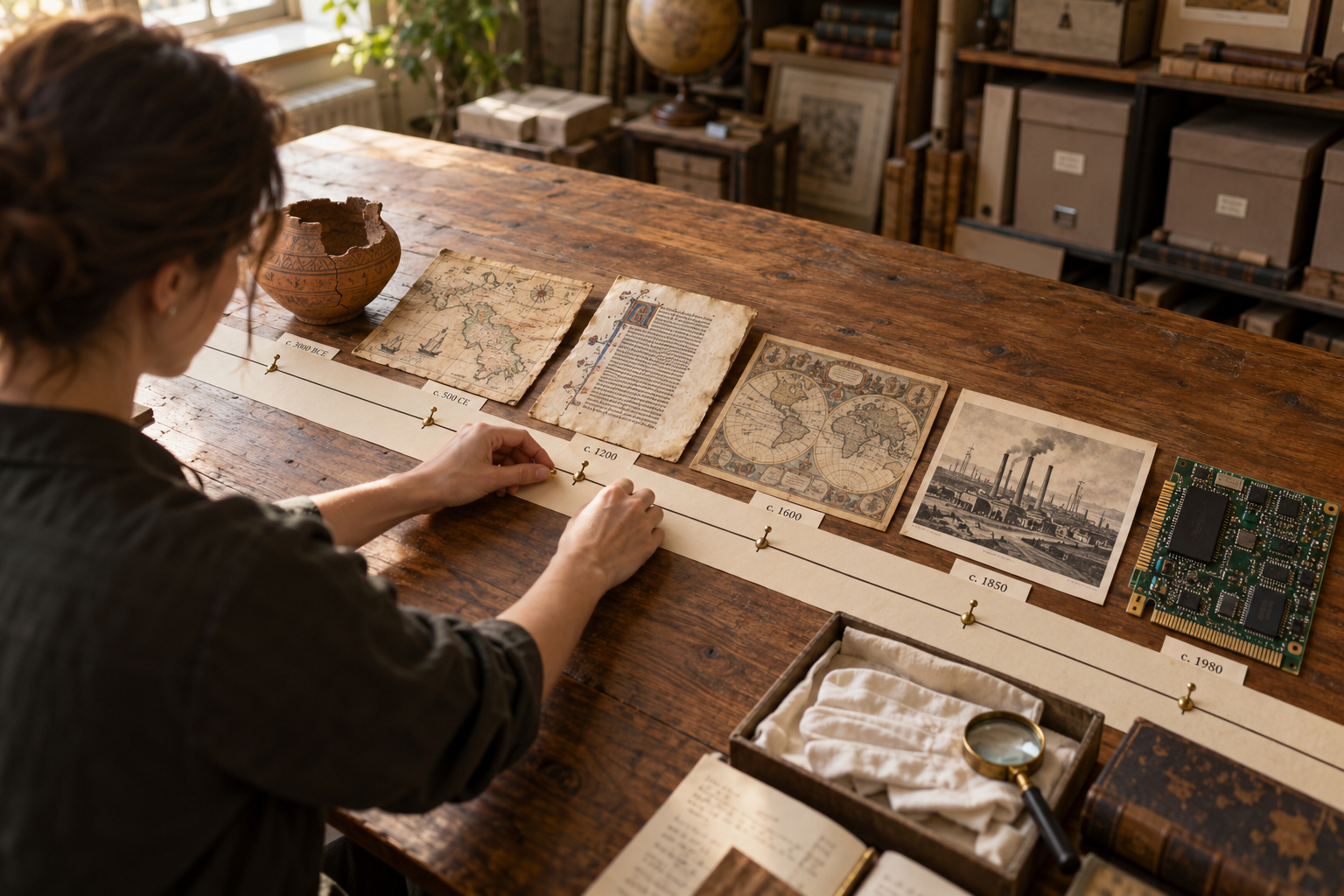
Understanding historical milestones helps us trace how societies evolve over time. Timelines collect those pivotal moments and reveal patterns across eras and regions. A clear chronology highlights causes and consequences that shape cultural and political life. Curated timelines support educators, students, and curious readers exploring continuity and change. This article outlines key phases and methods for constructing useful historical timelines.
Recognizing how to sequence events and choose reliable sources improves both clarity and insight. Thoughtful timelines guide interpretation and invite deeper inquiry.
Early Civilizations and Foundations
The emergence of agriculture, urban centers, and writing marks foundational milestones in early civilization. These innovations enabled sustained population growth, administrative systems, and the preservation of records. Early legal codes, trade networks, and religious institutions structured long-term social order. Archaeological and textual evidence informs how these initial changes set the stage for later complexity.
Recognizing these beginnings helps situate later developments in context. They remain cornerstones in most historical timelines. They provide anchor points for comparative study across eras.
Medieval Transformations
The medieval era produced transformative processes such as state formation, religious reform, and technological diffusion. Shifts in agriculture, craft production, and long-distance exchange reshaped local economies and social hierarchies. Intellectual movements and legal traditions influenced governance and cultural identity across successive generations. Regional interactions during this period demonstrate how networks expand and recombine earlier legacies.
Mapping these transitions reveals continuity beyond apparent ruptures. Timelines that include these shifts offer deeper explanatory power. This perspective aids both research and public history.
Industrialization and Global Change
Industrialization accelerated urbanization, mass production, and dramatic changes in labor and consumption. New transportation and communication technologies compressed distances and integrated markets on an unprecedented scale. Environmental impacts and demographic shifts from this era are essential timeline markers for modern history. Including economic indicators and social movements clarifies the links between technological change and lived experience.
These milestones connect local stories to broader global dynamics. They help readers see the long-term consequences of rapid change.
Modern Timelines and Digital Tools
Contemporary historians use digital tools to visualize timelines, layer data, and reveal hidden patterns. Interactive platforms allow users to filter events by theme, region, or chronology for targeted analysis. Source curation, metadata, and interpretive notes improve accuracy and educational value of timelines. Combining narrative context with visual structure makes complex histories accessible to diverse audiences.
Digital methods democratize timeline creation while demanding careful source critique. They expand how we teach and engage with the past.
Conclusion
Constructing effective historical timelines requires attention to pivotal milestones, context, and evidence. Thoughtful sequencing illuminates causality and continuity across periods. Well-designed timelines empower learners to connect events and interpret long-term change.