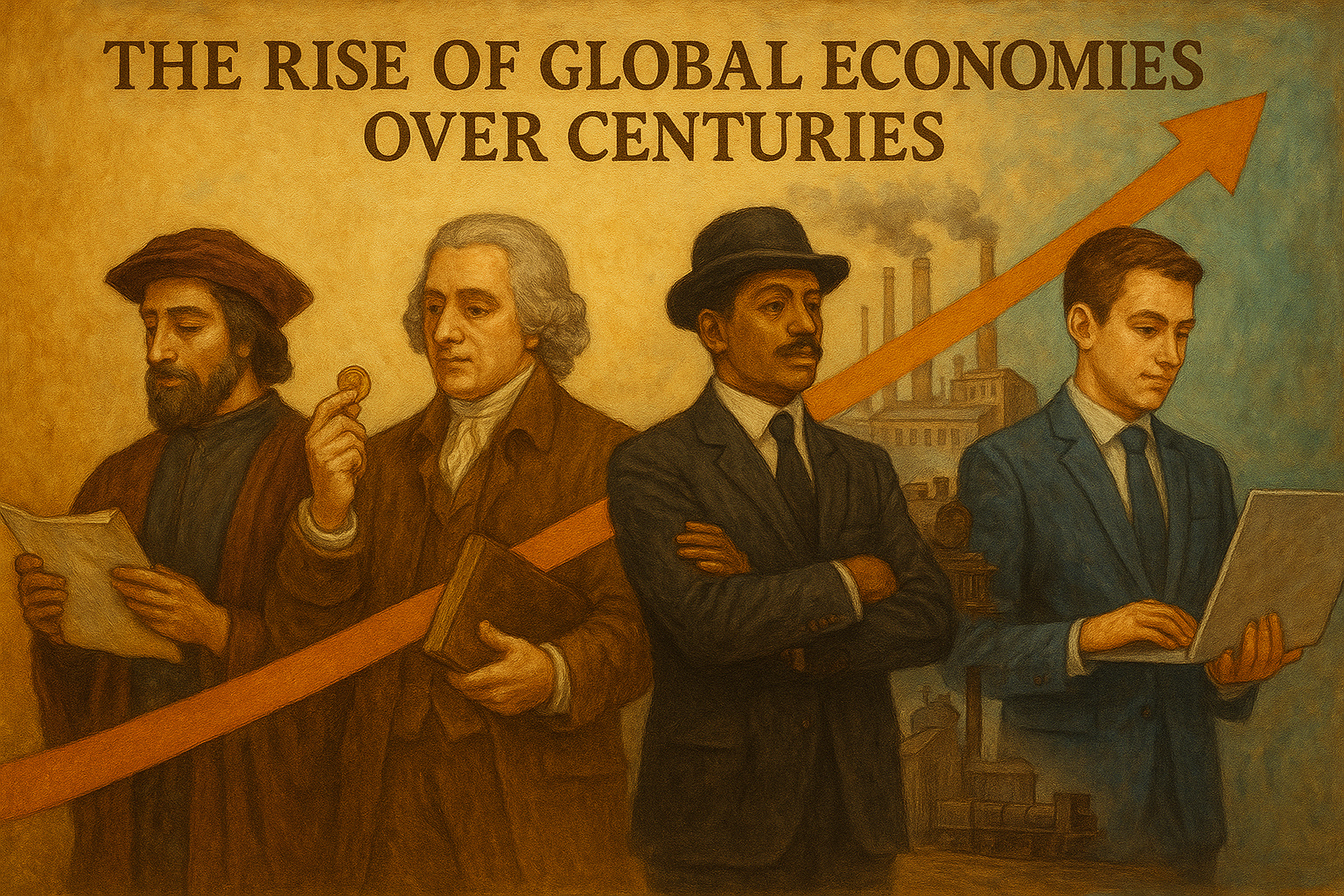
The story of global economies is a story of human progress—how people traded, innovated, and connected across borders to shape the world we live in today. Over centuries, economies expanded from small local marketplaces to vast international networks powered by technology, transportation, and shared opportunity. Understanding this evolution helps us see how global growth was built piece by piece through collaboration, competition, and constant change.
Early Trade Networks and the Birth of Global Exchange
Global economic development began long before modern nations existed. Ancient trade routes like the Silk Road connected empires, enabling the exchange of goods, ideas, and culture. Spices, textiles, metals, and knowledge traveled across continents, laying the foundation for international commerce. These early exchanges demonstrated that economic strength grew not from isolation but from connection.
Industrialization and the Acceleration of Growth
The Industrial Revolution marked a turning point, shifting economies from manual labor to machine-driven production. Nations with access to technology, energy, and skilled labor surged forward, creating manufactured goods at unprecedented scale. Innovations in transportation—such as steamships and railways—linked countries faster than ever, allowing goods to move efficiently across global markets. This era transformed local economies into major global players and sparked rapid urbanization and economic expansion.
The Rise of Modern Financial Systems
As trade expanded, the need for banking, credit, and stable currencies became essential. Modern financial institutions emerged, enabling investments, long-distance commerce, and international partnerships. Central banks, stock exchanges, and global corporations began shaping economic growth, influencing how nations interacted and competed. This shift created a more structured global economy that could sustain complex markets.
Technology and the Digital Global Economy
In the 20th and 21st centuries, technology revolutionized economic growth once again. Computers, automation, and the internet connected businesses and consumers across continents with just a click. Digital platforms allowed companies to sell globally, enabled remote work, and opened new industries around innovation and data. Today’s global economy thrives on speed, information, and worldwide collaboration, making boundaries more flexible than ever before.
Conclusion
The rise of global economies reflects centuries of human creativity, exchange, and advancement. From ancient trade routes to digital marketplaces, each era built upon the last to create a world where nations are deeply interconnected. Understanding this evolution helps us appreciate how global economies continue to grow, adapt, and shape the future of commerce and cooperation.