

Introduction
Eleanor Hartwell dedicated her career to recovering everyday voices from neglected archives.
Her meticulous cataloguing and contextual reading revealed networks of trade, kinship and belief that traditional narratives had overlooked.
Working across manuscripts, court records and oral fragments, she emphasized connections between local events and broader social change.
Hartwell’s approach encouraged historians to pause, read slowly, and value the fragmentary as evidence.
Early Years and Archival Practice
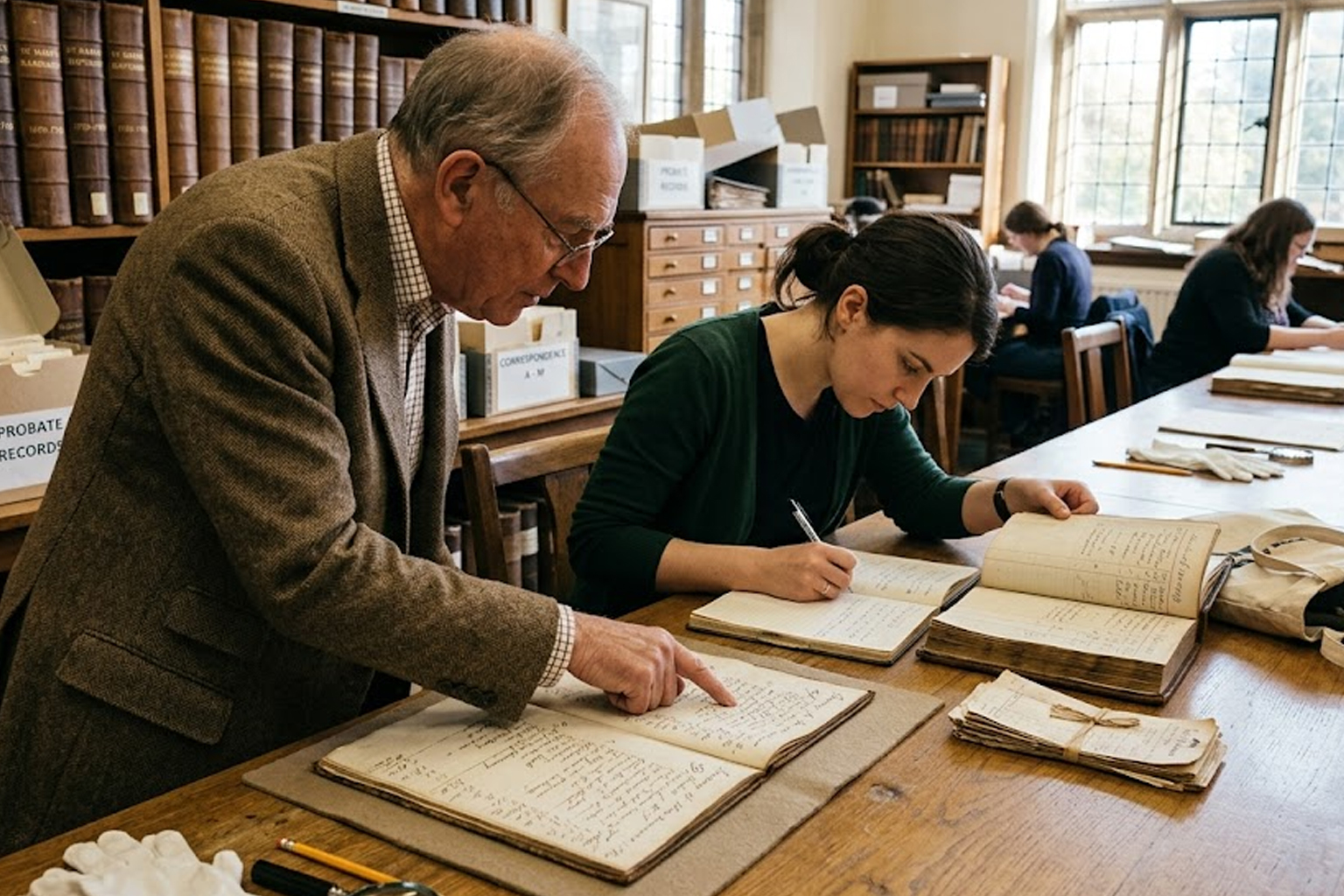
Born into a family of teachers, Hartwell developed an early fascination with notebooks, old receipts and family letters. She trained as an archivist and historian, combining cataloguing precision with narrative sensitivity. Her fieldwork often took her to provincial repositories where she unearthed material that had been dismissed as mundane. These discoveries soon formed the foundation for her first influential essays on marginal records.
Her early years established a pattern: listen carefully to documents and follow where they lead. That patience became a hallmark of her research and teaching.
Method and Breakthroughs
Hartwell championed a method she called “contextual triangulation,” which paired small-scale evidence with economic and social indicators. By cross-referencing probate inventories with parish accounts and merchants’ logs she reconstructed daily life with surprising detail. One breakthrough demonstrated how seasonal labor migrations influenced political petitions and local elections. Her publications reframed topics like poverty, migration and informal economies as interconnected phenomena rather than isolated facts.
This methodological clarity made her work accessible to scholars in multiple fields. It also inspired archival projects to digitize and classify previously overlooked materials.
Legacy and Influence
Over a forty-year career, Hartwell mentored generations of researchers who adopted archival curiosity and interdisciplinary methods. Museums and libraries credited her with prompting new cataloguing standards that highlighted context and provenance. Graduate seminars named after her emphasized practice alongside theory, training students to read both documents and silences. Her influence persists in projects that prioritize community voices and collaborative history-making.
Her legacy is visible not only in scholarship but in how institutions preserve stories. Future historians continue to build on her insistence that small sources can reshape large narratives.
Teaching and Public Engagement
Hartwell was as committed to teaching as to research, believing that students should practice archival skills alongside critical reading. She designed courses that paired hands-on work in repositories with classroom debate, encouraging students to present their findings to local communities. Her public lectures and collaborations with museums translated academic work into accessible exhibits and community workshops. These efforts widened the audience for historical scholarship and fostered civic partnerships that supported local heritage projects.
Through teaching and outreach, she made history relevant beyond the academy. Her emphasis on public scholarship continues to influence how historians engage with wider audiences.
Conclusion
Eleanor Hartwell’s life reminds us that empathy and rigor change what we know.
Her work models a careful, connective history that values ordinary lives.
Students and institutions carry forward her methods into new questions.