
Uncover History’s Secrets with Daily Updates!
Daily News Entertainment
  • Home
  • History
  • Biographies
  • Eras
  • Regions
  • Timeline
No Result
View All Result
History Ours
  • Home
  • History
  • Biographies
  • Eras
  • Regions
  • Timeline
No Result
View All Result
History Ours
No Result
View All Result
Home Biographies

Mary Anning: Fossils, Reputation, and Scientific Change

in Biographies
Guilds and Craft Networks: Shaping Preindustrial Urban Economies

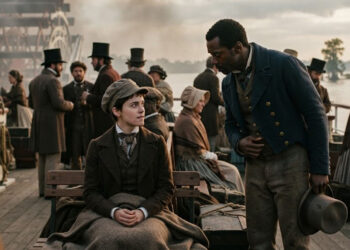
Mary Anning’s discoveries along coastal cliffs reshaped early ideas about prehistoric life and deep time.
Born into a working-class family, she combined practical skill with a keen observational eye to unearth remarkable specimens.
Without formal academic standing she nevertheless became central to networks of collectors, dealers, and naturalists who relied on her finds.
Her life highlights tensions between expertise, credit, and the institutional structures of nineteenth-century science.

Early Life and Fossil Discoveries

Anning learned to find and prepare fossils while helping her family make a living from coastal tourism and collecting. She famously uncovered complete ichthyosaur skeletons and a nearly complete plesiosaur, discoveries that challenged prevailing ideas about extinct life. Her meticulous preparation of specimens made them valuable for study and display, attracting attention beyond her local community. Her work demonstrated how field practice and artisanal skill could produce evidence that redirected scientific debates.

– Key finds included the first correctly identified ichthyosaur skeleton and a nearly intact plesiosaur skeleton, both rare at the time.
– She also found important fossil fish and fossilized plants that enriched natural history collections.

Although she lacked formal training, Anning’s competent preparation and accurate observations made her contributions scientifically reliable. Collectors and scholars increasingly relied on her material to formulate new ideas about extinction and Earth’s history.

Scientific Recognition and Challenges

Despite the importance of her finds, Anning encountered barriers to formal recognition in scientific circles dominated by institutional elites. Men in universities and learned societies often described and published on specimens she found, sometimes without acknowledging her contributions fully. Financial insecurity and gendered social expectations limited her access to the resources that might have allowed greater independence or public acclaim during her lifetime. Even so, a number of prominent naturalists praised her skill and sought her expertise when identifying and interpreting fossils.

Her situation underscores how authority in science has historically depended on institutional access as much as on empirical discovery. Over time, correspondence and published acknowledgments revealed the essential role she played, even if credit was uneven.

Legacy and Cultural Memory

Anning’s posthumous reputation has grown as historians and scientists reassessed the social forces that shaped scientific knowledge. Museums and collections now cite her finds as foundational to paleontology, and modern scholarship emphasizes her role as a bridge between practical collecting and theoretical interpretation. Her story has also become a case study for examining gender, class, and the production of scientific authority. Efforts to preserve and display specimens she discovered help public audiences connect with the material history of science.

Today her name appears in exhibitions, educational resources, and scholarly work that aim to correct earlier omissions and highlight diverse contributors to scientific progress. Her life invites rethinking who gets credit and why it matters.

Conclusion

Mary Anning’s life reminds us that scientific progress often depends on practical skill as much as theoretical authority. Her discoveries continue to inform paleontology and challenge how credit is assigned. Remembering her work helps broaden the story of who builds science.
Previous Post

Maria Sibylla Merian: Exploring Nature Through Art and Science

Next Post

How Long-Term Change Shaped Historical Eras

Related Posts

The Disguise That Broke Chains: Ellen and William Craft
Biographies

The Disguise That Broke Chains: Ellen and William Craft

September 15, 2026
Bass Reeves: The Marshal Who Hunted Outlaws in Indian Territory
Biographies

Bass Reeves: The Marshal Who Hunted Outlaws in Indian Territory

September 15, 2026
Ellen Craft: Passing as a Planter to Secure Freedom
Biographies

Ellen Craft: Passing as a Planter to Secure Freedom

September 15, 2026
Chien‑Shiung Wu: The Physicist Who Proved Parity’s Failure
Biographies

Chien‑Shiung Wu: The Physicist Who Proved Parity’s Failure

September 15, 2026
Next Post
How Long-Term Change Shaped Historical Eras

How Long-Term Change Shaped Historical Eras

Search..

No Result
View All Result

Recent Articles

Edo: Japan’s Urban Revolution of Lanterns and Printshops

Edo: Japan’s Urban Revolution of Lanterns and Printshops

September 16, 2026
How the Little Ice Age Changed Everyday Life in Europe

How the Little Ice Age Changed Everyday Life in Europe

September 16, 2026
The Disguise That Broke Chains: Ellen and William Craft

The Disguise That Broke Chains: Ellen and William Craft

September 15, 2026
Bass Reeves: The Marshal Who Hunted Outlaws in Indian Territory

Bass Reeves: The Marshal Who Hunted Outlaws in Indian Territory

September 15, 2026
How the Crystal Palace Turned Glass and Iron into a Modern Stage

How the Crystal Palace Turned Glass and Iron into a Modern Stage

September 15, 2026

Subscribe Us

By clicking submit, I authorize History Ours and its affiliated companies to: (1) use, sell, and share my information for marketing purposes, including cross-context behavioral advertising, as described in our Terms of Service and Privacy Policy, (2) supplement the information that I provide with additional information lawfully obtained from other sources, like demographic data from public sources, interests inferred from web page views, or other data relevant to what might interest me, like past purchase or location data, (3) contact me or enable others to contact me by email with offers for goods and services from any category at the email address provided, and (4) retain my information while I am engaging with marketing messages that I receive and for a reasonable amount of time thereafter. I understand I can opt out at any time through an email that I receive, or by clicking here

Subscribe To Our Newsletter

By clicking submit, I authorize History Ours and its affiliated companies to: (1) use, sell, and share my information for marketing purposes, including cross-context behavioral advertising, as described in our Terms of Service and Privacy Policy, (2) supplement the information that I provide with additional information lawfully obtained from other sources, like demographic data from public sources, interests inferred from web page views, or other data relevant to what might interest me, like past purchase or location data, (3) contact me or enable others to contact me by email with offers for goods and services from any category at the email address provided, and (4) retain my information while I am engaging with marketing messages that I receive and for a reasonable amount of time thereafter. I understand I can opt out at any time through an email that I receive, or by clicking here.

© 2026 History Ours | All Rights Reserved

  • Contact Us
  • Privacy Policy
  • Terms of Service
  • Unsubscribe
  • Privacy Choices
  • Contact Us
  • Privacy Policy
  • Terms of Service
  • Unsubscribe
  • Privacy Choices

© 2026 History Ours | All Rights Reserved

No Result
View All Result
  • Home
  • History
  • Biographies
  • Eras
  • Regions
  • Timeline

© 2026 History Ours | All Rights Reserved

Skip to content
Open toolbar Accessibility Tools

Accessibility Tools

  • Increase TextIncrease Text
  • Decrease TextDecrease Text
  • GrayscaleGrayscale
  • High ContrastHigh Contrast
  • Negative ContrastNegative Contrast
  • Light BackgroundLight Background
  • Links UnderlineLinks Underline
  • Readable FontReadable Font
  • Reset Reset