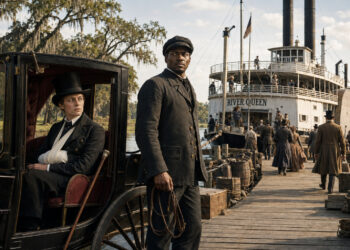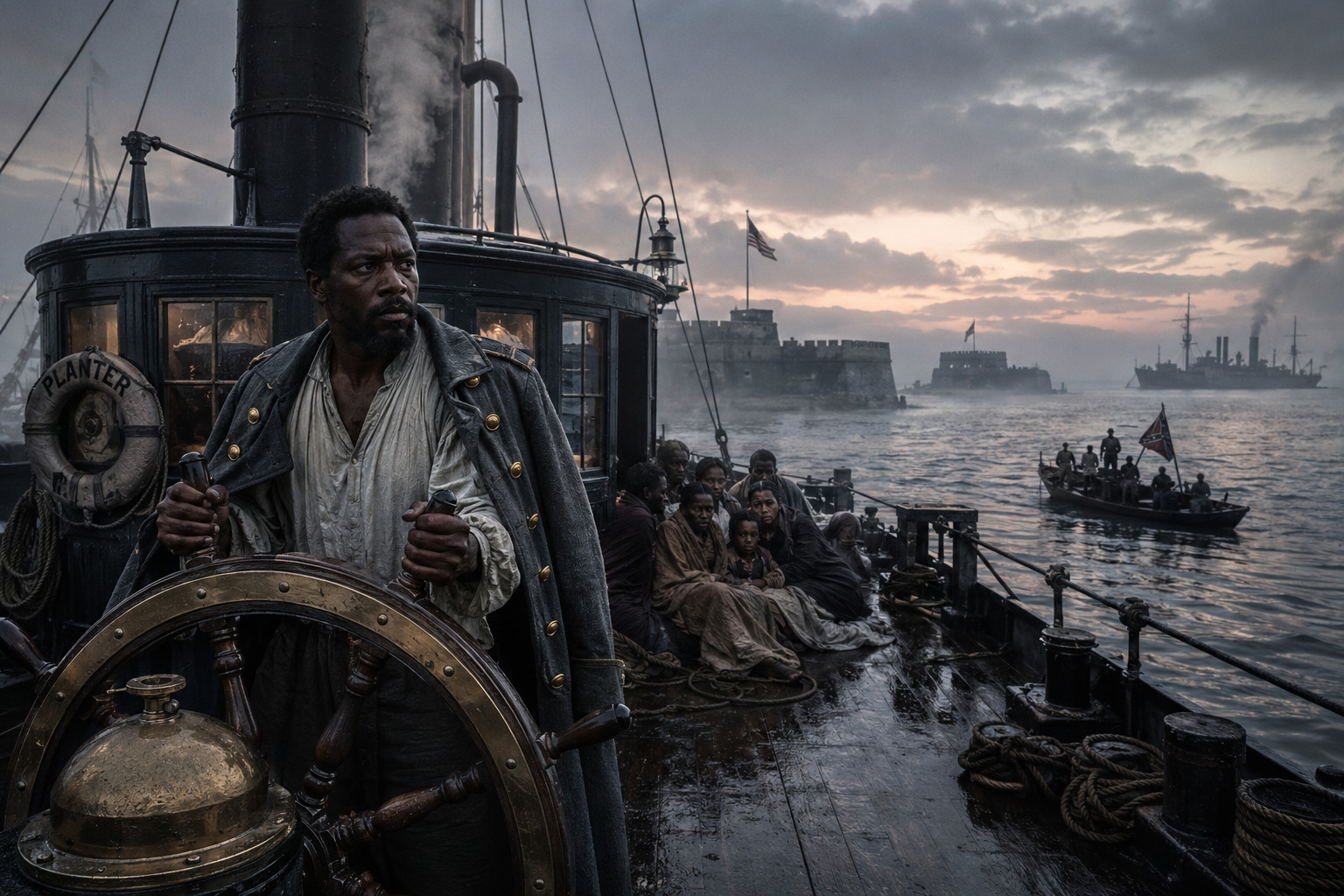
Robert Smalls was born into slavery along South Carolina’s Sea Islands and learned the water the way others learned the streets. As a harbor pilot for the Confederate transport Planter, he handled the ropes, read currents and tides, and memorized the signals that governed traffic in and out of Charleston Harbor. That intimate knowledge—acquired under duress—would become the instrument of his freedom.
The morning the Planter slipped away
In the small hours of May 13, 1862, Smalls climbed aboard the Planter not as a passenger but as a man with a plan. He took control of the wheel, set a course through the same channels he had followed countless times, and used the crew’s routines and signals to navigate past Confederate batteries and picket ships. Under cover of legitimate-looking movement, he steered the vessel toward the Union blockade where a waiting Federal warship recognized the escape and took the Planter and its passengers aboard.
Smalls did more than save himself. He brought his family and several other enslaved people to freedom, and he delivered a Confederate vessel, its weapons and useful intelligence into Union hands. For a moment the daring of one man reshaped the map of possibility for many others: newspapers and soldiers alike seized on his story, and leaders in the North quickly realized how valuable experienced Black pilots and sailors could be for the Union cause.
From the wheel to public office
Once under Union protection, Smalls served as a pilot and captain for Federal operations along the Southern coast, guiding ships and helping recruit African Americans into the Union forces. After the war, he stayed in public life. He held office in South Carolina’s state government and later represented his district in the U.S. House of Representatives during Reconstruction, pressing for schools, veterans’ pensions, and civil rights measures at a perilous moment for Black political power.
Smalls knew how to move between worlds: the language of the sea and the language of law. His public career was uneven—marked by victories, setbacks and the relentless hostility of opponents—but his presence in elected office carried a blunt message about who could claim citizenship and leadership in a nation emerging from civil war.
Conclusion
Robert Smalls’s life compresses a dramatic wartime exploit and the long, slower work of remaking civic life. The image that sticks is simple and stubborn: a Black man, born into bondage, taking the helm of a Confederate ship and steering it to freedom. That single act altered his fate and left a clear, stubborn mark on American memory—an insistence that knowledge and courage could rewrite the rules, even under fire.