
Uncover History’s Secrets with Daily Updates!
Daily News Entertainment
  • Home
  • History
  • Biographies
  • Eras
  • Regions
  • Timeline
No Result
View All Result
History Ours
  • Home
  • History
  • Biographies
  • Eras
  • Regions
  • Timeline
No Result
View All Result
History Ours
No Result
View All Result
Home Eras

1816: How a Volcano Turned Summer Into Crisis

in Eras
1816: How a Volcano Turned Summer Into Crisis

In April 1815 a volcano on the Indonesian island of Sumbawa blew apart. Mount Tambora’s eruption was among the most powerful in recorded history, hurling ash and sulfur high into the atmosphere. Those particles circled the globe, scattering sunlight and lowering temperatures for months afterward. The result was not a gradual change but an immediate, visible one: skies stayed hazy, sunsets reddened, and a single year—1816—came to be remembered as the “Year Without a Summer.”

Food, frost, and weather that refused to behave

The odd weather showed itself in small, stubborn details that added up to crisis. In parts of New England people reported snow in June and frosts in July; freshwater bays ice-skated weeks into what should have been warm weather. Across Europe, unseasonable cold and heavy rains ruined harvests of grain and potatoes. With fields waterlogged or frozen at crucial moments, yields collapsed and food became scarce.

Scarcity mattered fast. Bakeries cut back; governments worried about social unrest. In some regions bread riots flared, while others saw poor harvests force shifts in migration and employment—workers who had counted on the year’s harvest suddenly had to move, change jobs, or pawn belongings to survive. The climatic shock exposed the fragility of early nineteenth-century agriculture, which lacked widespread storage, chemical fertilizers, or rapid transport to smooth local shortfalls.

Strange cultural echoes of a bad summer

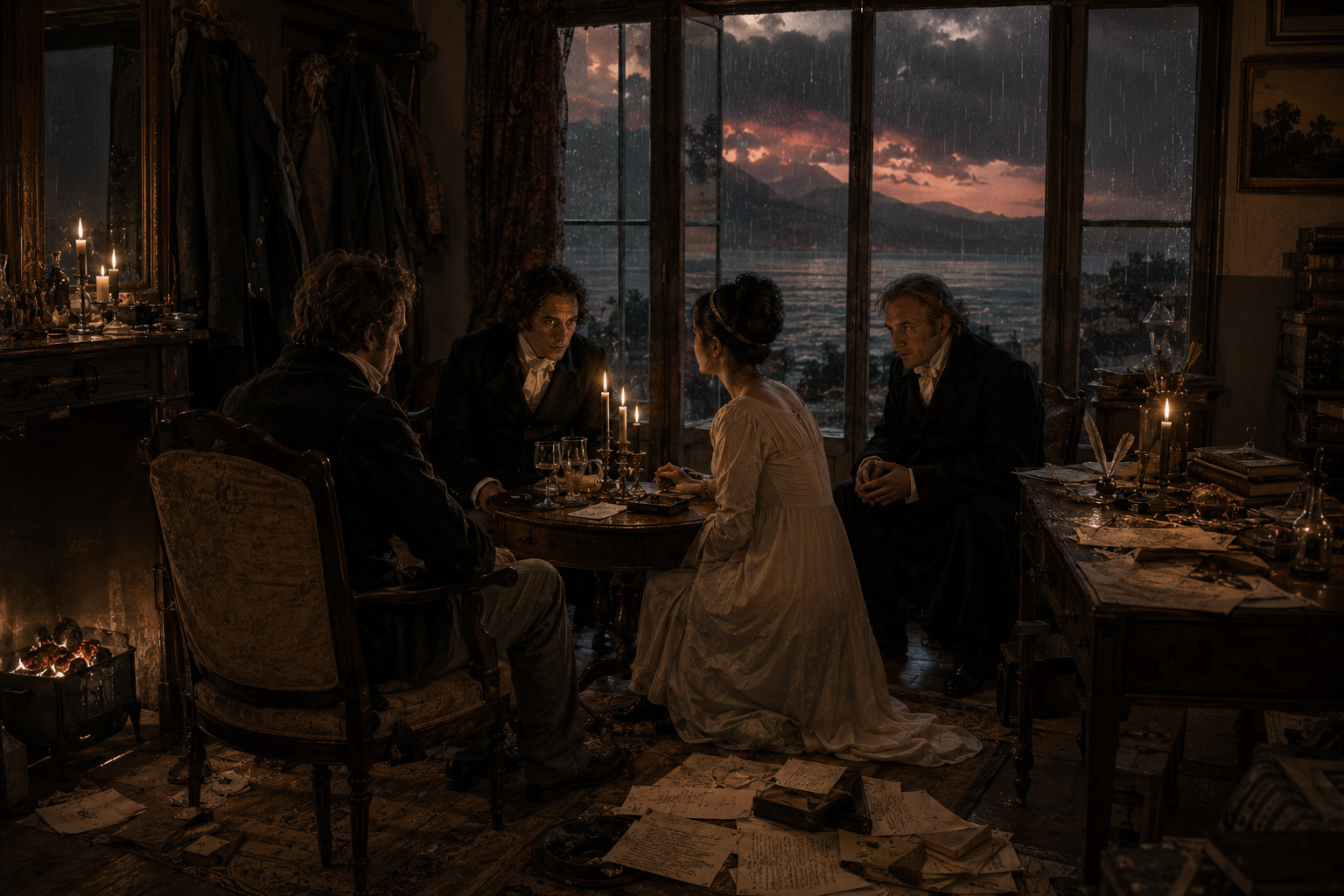
The weather left traces beyond markets and fields. In Switzerland, a damp cold summer gathered together a curious circle of writers at Lake Geneva—Lord Byron, Percy Shelley, Mary Godwin (later Shelley), and Dr. John Polidori. Forced indoors by storms, they entertained each other with ghost stories; that milieu produced Mary Shelley’s Frankenstein and Polidori’s tale that helped found the vampire genre. Across Europe, artists and writers picked up themes of melancholy, upheaval, and ruin that found an audience already primed by real hardship.

Practical adaptations followed too. Farmers experimented with different crops and sowing times; merchants and officials debated grain exports and relief. In the longer view, the episode nudged interest in meteorology and the global connections of climate—how an eruption in one ocean could reshape harvests and moods thousands of miles away.

Conclusion

1816 was not merely a bad season; it was a reminder that human life sits inside a larger planetary system. Tambora’s eruption turned weather into headline news and showed how quickly climate shocks could ripple through economies, communities, and culture. For a year, the world learned the hard lesson that a single, violent event could rewrite a season and leave a surprisingly wide trail of consequences.
Previous Post

Robert Smalls: The Enslaved Pilot Who Captured a Confederate Steamer

Next Post

When Empires Fell: The Late Bronze Age Collapse

Related Posts

Pax Mongolica: How Mongol Rule Rewired the Old World
Eras

Pax Mongolica: How Mongol Rule Rewired the Old World

September 15, 2026
Life Under the Tokugawa: How Edo Japan Rewrote Social Order
Eras

Life Under the Tokugawa: How Edo Japan Rewrote Social Order

September 15, 2026
When Empires Fell: The Late Bronze Age Collapse
Eras

When Empires Fell: The Late Bronze Age Collapse

September 15, 2026
How the Dutch Golden Age Remade Everyday Europe
Eras

How the Dutch Golden Age Remade Everyday Europe

September 2, 2026
Next Post
When Empires Fell: The Late Bronze Age Collapse

When Empires Fell: The Late Bronze Age Collapse

Search..

No Result
View All Result

Recent Articles

Bass Reeves: The Marshal Who Hunted Outlaws in Indian Territory

Bass Reeves: The Marshal Who Hunted Outlaws in Indian Territory

September 15, 2026
How the Crystal Palace Turned Glass and Iron into a Modern Stage

How the Crystal Palace Turned Glass and Iron into a Modern Stage

September 15, 2026
Anne Bonny: The Pirate Who Broke Rules and Expectations

Anne Bonny: The Pirate Who Broke Rules and Expectations

September 15, 2026
How Haiti Broke Its Chains: A 1791–1804 Timeline

How Haiti Broke Its Chains: A 1791–1804 Timeline

September 15, 2026
From Horses to Wires: How the Pony Express Met the Telegraph

From Horses to Wires: How the Pony Express Met the Telegraph

September 15, 2026

Subscribe Us

By clicking submit, I authorize History Ours and its affiliated companies to: (1) use, sell, and share my information for marketing purposes, including cross-context behavioral advertising, as described in our Terms of Service and Privacy Policy, (2) supplement the information that I provide with additional information lawfully obtained from other sources, like demographic data from public sources, interests inferred from web page views, or other data relevant to what might interest me, like past purchase or location data, (3) contact me or enable others to contact me by email with offers for goods and services from any category at the email address provided, and (4) retain my information while I am engaging with marketing messages that I receive and for a reasonable amount of time thereafter. I understand I can opt out at any time through an email that I receive, or by clicking here

Subscribe To Our Newsletter

By clicking submit, I authorize History Ours and its affiliated companies to: (1) use, sell, and share my information for marketing purposes, including cross-context behavioral advertising, as described in our Terms of Service and Privacy Policy, (2) supplement the information that I provide with additional information lawfully obtained from other sources, like demographic data from public sources, interests inferred from web page views, or other data relevant to what might interest me, like past purchase or location data, (3) contact me or enable others to contact me by email with offers for goods and services from any category at the email address provided, and (4) retain my information while I am engaging with marketing messages that I receive and for a reasonable amount of time thereafter. I understand I can opt out at any time through an email that I receive, or by clicking here.

© 2026 History Ours | All Rights Reserved

  • Contact Us
  • Privacy Policy
  • Terms of Service
  • Unsubscribe
  • Privacy Choices
  • Contact Us
  • Privacy Policy
  • Terms of Service
  • Unsubscribe
  • Privacy Choices

© 2026 History Ours | All Rights Reserved

No Result
View All Result
  • Home
  • History
  • Biographies
  • Eras
  • Regions
  • Timeline

© 2026 History Ours | All Rights Reserved

Skip to content
Open toolbar Accessibility Tools

Accessibility Tools

  • Increase TextIncrease Text
  • Decrease TextDecrease Text
  • GrayscaleGrayscale
  • High ContrastHigh Contrast
  • Negative ContrastNegative Contrast
  • Light BackgroundLight Background
  • Links UnderlineLinks Underline
  • Readable FontReadable Font
  • Reset Reset